CM Rekha Gupta: Mission Green Delhi hits plantation target
Synopsis
Delhi CM Rekha Gupta declared Mission Green Delhi's plantation target met on September 25, 2026, citing 70 lakh saplings and 1.47 lakh citizen volunteers. She announced a shift from plantation to protection, spotlighting the harder task of keeping urban saplings alive.
Key Takeaways
Mission Green Delhi has officially met its plantation target, according to CM Rekha Gupta 's announcement on September 25, 2026 .
70 lakh saplings were reportedly planted as part of the initiative.
More than 1.47 lakh Delhiites participated directly in the plantation drive.
The campaign was conducted under the Seva Sankalp Abhiyan public-service framework.
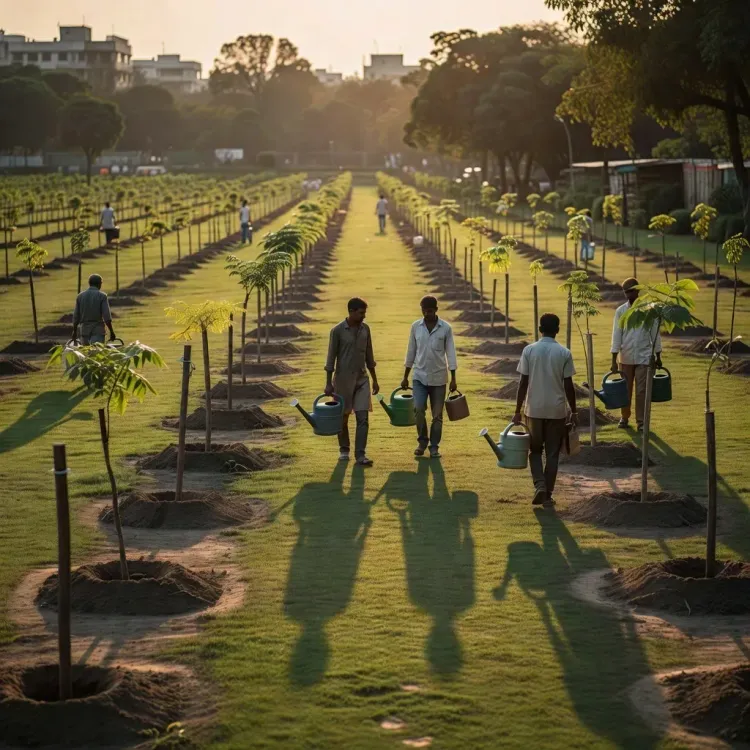
Gupta announced a shift to a 'protection phase,' acknowledging that sapling survival in urban environments requires sustained follow-through.
Sapling survival rates in dense Indian cities are a documented challenge and will be a key metric to watch over the coming monsoon seasons.
Seventy lakh saplings in the ground, more than a lakh and a half Delhiites showing up to dig and plant — Delhi Chief Minister Rekha Gupta announced on Friday, September 25, 2026, that Mission Green Delhi has achieved its plantation target, calling it a testament to what collective civic will can accomplish in one of the world's most polluted capitals.
What Mission Green Delhi set out to do
Mission Green Delhi is a tree plantation initiative built on citizen participation, designed to push the capital's urban green cover upward in the face of chronic air pollution and the urban heat island effect. Delhi governments have run annual plantation drives for over a decade, but this edition, folded into the broader Seva Sankalp Abhiyan — a public-service campaign channelling citizen energy into civic causes — leaned hard into community ownership. The result, according to Gupta's announcement: 70 lakh saplings planted with 1.47 lakh-plus residents joining the effort.
In her post, Gupta framed the milestone in the language of shared pride: 'Delhi, we did it together!' Her message closed with a deliberate pivot — 'From Plantation to Protection' — signalling that the administration is conscious the work does not end with a sapling in the soil.
The harder challenge: keeping saplings alive
That pivot matters more than it might seem. Urban plantation drives across India have a well-documented Achilles heel: sapling survival rates in dense, heat-stressed city environments are notoriously uneven, and the gap between trees planted and trees that survive to maturity can be substantial. Without sustained watering, maintenance, and anti-encroachment protection, headline numbers can flatter to deceive.
Gupta's explicit framing of a 'protection phase' is an acknowledgement of exactly that risk. How the Delhi government tracks and publishes survival-rate data over the next two monsoon seasons will be the real scorecard for Mission Green Delhi — and the metric environmental advocates will be watching closely.
Why Delhi's green cover drive carries outsized stakes
Delhi consistently ranks among the world's most polluted major cities, with particulate matter levels spiking each winter as cold air traps vehicle exhaust, construction dust, and crop-burning smoke from neighbouring states. Urban tree cover does not solve that problem alone, but it reduces ground-level temperatures, improves air quality at the micro level, and — crucially — builds a civic habit of environmental stewardship. Large-scale participation figures like 1.47 lakh residents carry political symbolism as much as ecological weight: they demonstrate public buy-in at a moment when urban environment policy is increasingly a ballot-box issue.
The Seva Sankalp Abhiyan framing also places the drive within a wider BJP tradition of voluntary public-service mobilisation, linking environmental action to a larger narrative of citizen duty and party-led governance.
Seventy lakh saplings is a beginning. The city will measure this moment not in the planting, but in the canopy that — or doesn't — appear above Delhi's streets in the years ahead.
Point of View
Publicly accessible monitoring mechanism for sapling survival, or whether the 70 lakh figure remains a one-day headline. Urban environmental credibility, increasingly tied to electoral sentiment in Indian cities, will hinge on the answer.
NationPress
25 Sept 2026
Frequently Asked Questions
What is Mission Green Delhi?
Mission Green Delhi is a tree plantation initiative by the Delhi government aimed at increasing urban green cover through large-scale, citizen-driven afforestation drives.
How many saplings were planted under Mission Green Delhi?
Delhi CM Rekha Gupta announced that 70 lakh saplings were planted under Mission Green Delhi, though these figures are based on government claims and have not been independently verified.
What is the Seva Sankalp Abhiyan?
Seva Sankalp Abhiyan is a public-service campaign that channels citizen participation into civic and environmental activities, under which Mission Green Delhi's plantation drive was organised.
Why is sapling survival a concern in Delhi's plantation drives?
Urban plantation drives across India face a well-documented challenge: dense, heat-stressed city environments cause high sapling mortality, meaning the number of trees that survive to maturity is often significantly lower than the number planted.
What happens after the Mission Green Delhi plantation phase?
CM Rekha Gupta has announced a shift 'From Plantation to Protection,' indicating the government intends to focus on maintaining and safeguarding the planted saplings going forward.