Mizoram Peace Accord turns 40: Governor hails four decades of unbroken peace
Synopsis
Forty years after a landmark accord ended two decades of insurgency, Mizoram stands as one of India's most peaceful states — and increasingly, a globally cited model of conflict resolution. Governor General Vijay Kumar Singh used the Ruby Jubilee of Remna Ni to launch a formal case study of the accord's legacy, signalling that the lessons of 1986 are being institutionalised for policymakers worldwide.
Key Takeaways
The Mizoram Peace Accord (Memorandum of Settlement) was signed on 30 June 1986 , ending nearly two decades of armed insurgency.
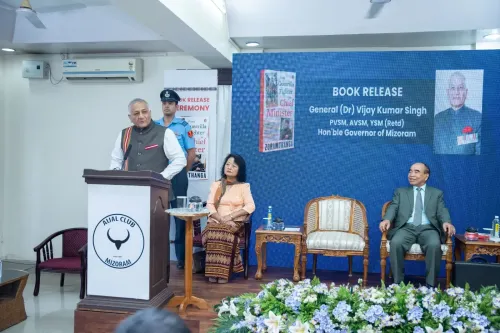
Governor General Vijay Kumar Singh (Retd) addressed the Ruby Jubilee commemoration of Remna Ni in Aizawl on 30 June 2025 .
Mizoram became the 23rd state of India on 20 February 1987 , following the accord.
The Governor formally launched 'The Case Study of the Enduring Legacy of the Mizo Peace Accord' project.
The accord is widely cited as a model of conflict resolution in India's Northeast and internationally.
A premiere screening of the 'Mizo Peace Accord Documentary Series' by Strat News Global was held at the event.
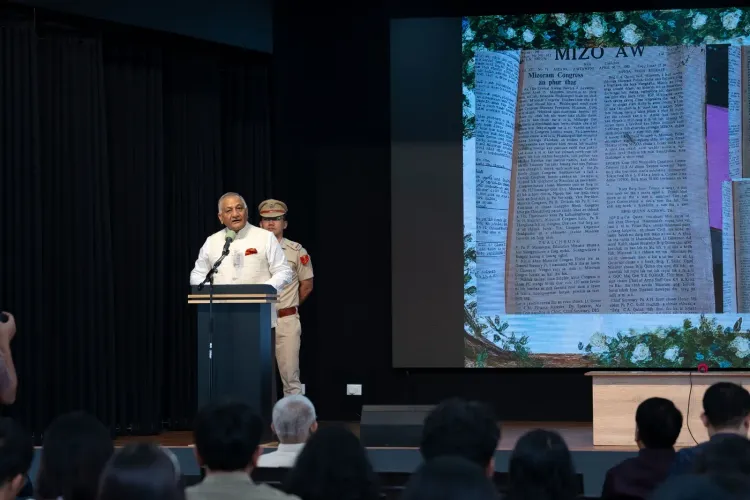
Mizoram Governor General Vijay Kumar Singh (Retd) on Tuesday, 30 June 2025, lauded the state's four uninterrupted decades of peace since the signing of the Mizoram Peace Accord, calling it a remarkable accomplishment in the history of conflict resolution. Speaking at the Ruby Jubilee commemoration of Remna Ni (Peace Day) in Aizawl, he noted that Mizoram has remained completely free of disturbances since the accord was inked on 30 June 1986.
The Commemoration Event
The Ruby Jubilee observance was jointly organised by the Zoram Research Foundation and Aijal Club, under the theme 'From the Frontlines of '66 to 40 Years of Peace'. As part of the event, Governor Singh formally launched a project titled 'The Case Study of the Enduring Legacy of the Mizo Peace Accord', aimed at providing insights for policymakers and peace-building practitioners. A special premiere screening of the 'Mizo Peace Accord Documentary Series', produced by Strat News Global, was also held.
Significance of the 1986 Accord
The Mizoram Peace Accord, officially called the Memorandum of Settlement, was signed on 30 June 1986, bringing an end to nearly two decades of armed insurgency in the northeastern state. In its wake, Mizoram was elevated from Union Territory status to full statehood, becoming the 23rd state of India on 20 February 1987. The accord has since been widely cited as a model of conflict resolution and peace-building, not only within India's Northeast but internationally.
What the Governor Said
'There is progress without any hesitation. This peace process involves everyone, and this achievement belongs to the people of Mizoram,' Governor Singh said, urging citizens not to take peace for granted but to continuously nurture and strengthen it.
He described the accord as a 'shining example of reconciliation, statesmanship and democratic commitment.' Recalling the devastating famine of 1959 that preceded the insurgency, he underscored the importance of learning from history and taking timely corrective action to prevent public hardships from escalating into larger crises.
Peace as a Development Catalyst
Governor Singh stressed that sustained peace has allowed democratic institutions and developmental activities to flourish in Mizoram, making it one of the most peaceful states in the country. He credited underground groups embracing the democratic process as a turning point. He also called on citizens to step beyond insularity — forging alliances, acquiring new ideas, and harnessing local talent in the spirit of the accord. 'We need to go out of our comfort zone, learn, forge alliances and get better ideas to develop our land and people. We have tremendous talent, and in the spirit of the Peace Accord, we must harness this talent,' he added.
Broader Implications
The Governor expressed hope that the launched case study project would offer meaningful value to policymakers working on conflict resolution and nation-building, both within India and beyond. Notably, the Mizoram model has been referenced in academic and diplomatic circles as a template for negotiated settlements in protracted insurgencies — a legacy that the Ruby Jubilee seeks to document and preserve for future generations.
Point of View
Marginalisation, unaddressed grievances — are not historical curiosities. The launch of a formal case study project is a constructive step, but its value depends on whether its findings actually reach active conflict zones in India's Northeast and beyond, rather than remaining an academic exercise.
NationPress
29 Sept 2026
Frequently Asked Questions
What is the Mizoram Peace Accord?
The Mizoram Peace Accord, officially known as the Memorandum of Settlement, was signed on 30 June 1986 between the Government of India and the Mizo National Front, ending nearly two decades of armed insurgency in the northeastern state. Following the accord, Mizoram was granted full statehood and became the 23rd state of India on 20 February 1987.
What is Remna Ni and why is it observed on 30 June?
Remna Ni, meaning 'Peace Day' in Mizo, is observed annually on 30 June to mark the anniversary of the signing of the Mizoram Peace Accord in 1986. It commemorates the end of two decades of insurgency and the beginning of an era of peace, stability, and development in the state.
What happened at the Ruby Jubilee commemoration in 2025?
The Ruby Jubilee of Remna Ni was jointly organised by the Zoram Research Foundation and Aijal Club in Aizawl on 30 June 2025, under the theme 'From the Frontlines of '66 to 40 Years of Peace.' Governor General Vijay Kumar Singh launched a case study project on the accord's legacy and a documentary series premiere was held.
Why is the Mizoram Peace Accord considered a model for conflict resolution?
The accord successfully ended a prolonged armed insurgency through negotiation, reconciliation, and democratic integration, without prolonged military escalation. It has since been cited by academics, policymakers, and international observers as a replicable template for resolving protracted insurgencies, particularly in South and Southeast Asia.
Who organised the Ruby Jubilee commemoration of Remna Ni?
The Ruby Jubilee commemoration was jointly organised by the Zoram Research Foundation and Aijal Club. Governor General Vijay Kumar Singh (Retd) was the chief guest, and the event included the launch of a peace accord case study project and a premiere screening of the Mizo Peace Accord Documentary Series.