Giriraj Singh shares PM Modi's advice on carpooling, heatwave awareness
Synopsis
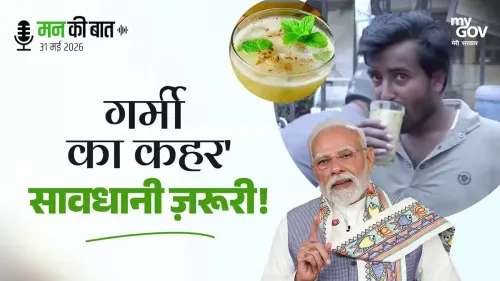
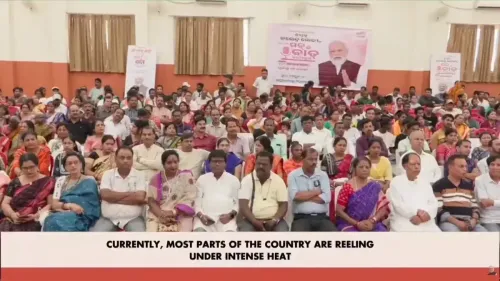
Prime Minister Narendra Modi has advised Union ministers to carpool for official commutes, maintain active public engagement, and promote heatwave awareness. Union Textiles Minister Giriraj Singh shared the directive on 29 May 2026 via the NaMo App, reflecting the government's recurring push for austerity and climate-adaptive communication ahead of peak summer.
Key Takeaways
PM Modi has advised Union ministers to adopt carpooling for official commutes as an austerity and sustainability measure.
Ministers have been asked to stay actively connected with ordinary citizens as part of public outreach.
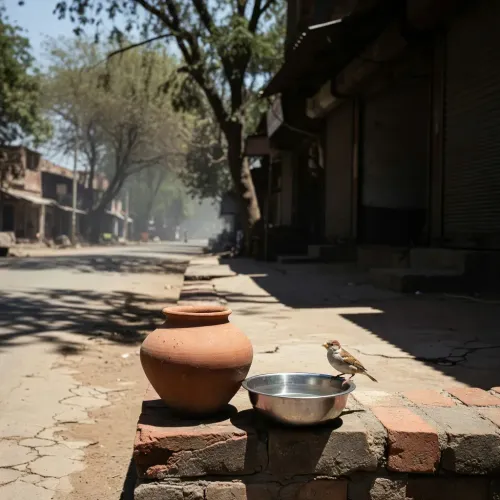
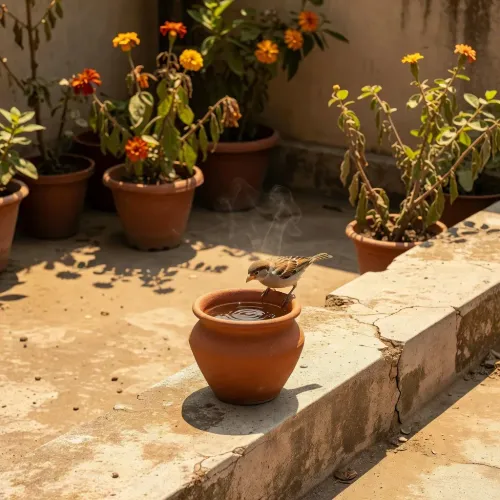
The advisory includes a directive to step up heatwave awareness campaigns among the public during peak summer.
The guidance was shared by Union Textiles Minister Giriraj Singh via the NaMo App on 29 May 2026 .
The heatwave directive aligns with the NDMA's national guidelines and state-level Heat Action Plans in place since 2016 .
Similar behavioural advisories to the cabinet have been a recurring feature of the Modi government since 2014 .
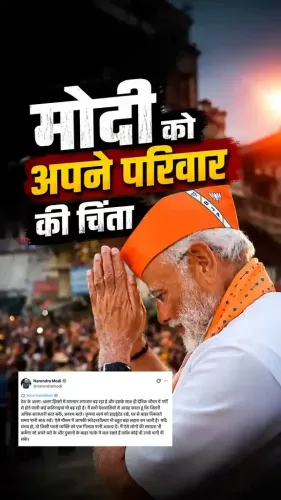
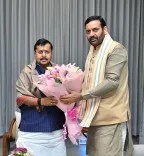
Union Textiles Minister Giriraj Singh on Friday, 29 May 2026 shared a post highlighting that Prime Minister Narendra Modi has advised Union ministers to adopt carpooling, maintain active public outreach, and step up heatwave awareness efforts among citizens.
Context
The post, shared via the NaMo App, relays guidance reportedly issued by PM Modi to the Union Council of Ministers. The advisory covers three distinct behavioural directives: adopting carpooling for official commutes, staying connected with ordinary citizens, and actively promoting awareness about the dangers of heatwaves. The timing coincides with peak summer conditions across much of India, when heat-related health risks are at their highest.
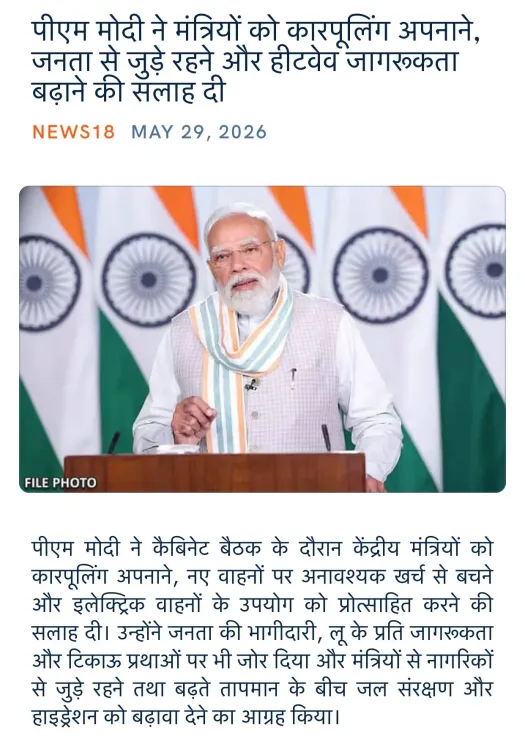
The Hindi text of the post reads: 'PM Modi ne mantriyon ko carpooling apnane, janta se jude rehne aur heatwave jagrukta badhane ki salah di' — translated as 'PM Modi advises ministers to adopt carpooling, stay connected with the public, and promote heatwave awareness.'
Policy Backdrop
PM Modi's practice of issuing low-cost, high-visibility behavioural directives to his cabinet dates to the early days of his government. As far back as 2014, the incoming administration signalled fiscal discipline by asking ministers to curtail official perks and overseas travel. Such advisories have since become a recurring feature of cabinet management, reinforcing an image of austerity and public accountability.
On heatwave preparedness, the National Disaster Management Authority (NDMA) issued national guidelines in 2016, which were subsequently expanded into state-level Heat Action Plans. These plans combine early-warning systems, public communication campaigns, and inter-agency coordination to reduce heat-related mortality. Ministers being asked to amplify heatwave messaging aligns directly with this established framework.
The carpooling directive echoes themes from the Smart Cities Mission, launched in 2015, which piloted shared-mobility solutions in selected urban centres as part of a broader push for sustainable urban transport.
Stakeholders and Impact
The immediate audience for these directives is the Union Council of Ministers — a group whose public behaviour carries significant symbolic weight. When senior ministers visibly carpool or engage in grassroots outreach, it can reinforce government messaging on austerity and civic responsibility to a wider public.
For urban commuters, a ministerial push on carpooling could lend fresh momentum to shared-mobility initiatives that have struggled to achieve scale outside a handful of cities. On the heatwave front, intensified ministerial communication could help reach vulnerable populations — including outdoor labourers, the elderly, and low-income households — who are most exposed to extreme heat but least connected to formal advisory systems.
What's Next
Analysts will watch whether the Cabinet Secretariat issues a formal circular translating the carpooling advisory into an operational protocol for ministries. On climate adaptation, state governments are expected to submit compliance reports on their Heat Action Plans to the NDMA ahead of the 2027 summer season. The degree to which ministers actively amplify heatwave safety messaging over the coming weeks will be an early indicator of how seriously the advisory is being acted upon. Together, these three directives — austerity, outreach, and climate communication — reflect a broader governing philosophy that prizes visible, cost-light signals of administrative responsiveness.
Point of View
Public connect, heatwave messaging — is a textbook example of the government using cabinet optics to signal multiple policy priorities simultaneously at near-zero fiscal cost. The carpooling nudge revives a shared-mobility agenda that has stalled at the pilot stage, while the heatwave directive plugs ministers into an existing NDMA communication architecture ahead of what forecasters expect to be another severe summer. Giriraj Singh's decision to amplify the message through the NaMo App rather than a press statement underlines how the BJP's digital ecosystem increasingly functions as an internal party-government communication channel. Together, the directives reinforce a governing style that prizes visible, low-cost behavioural signals over structural reform — effective for optics, but reliant on sustained follow-through to produce measurable outcomes.
NationPress
13 Oct 2026
Frequently Asked Questions
What advice did PM Modi give to Union ministers in May 2026?
PM Modi advised Union ministers to adopt carpooling for official travel, stay connected with the public, and actively promote heatwave awareness among citizens.
Why is PM Modi asking ministers to carpool?
The carpooling advisory reflects the government's longstanding emphasis on austerity and sustainable transport, echoing directives issued as early as 2014 and themes from the Smart Cities Mission launched in 2015.
What is India's heatwave action plan?
India's heatwave preparedness framework is led by the National Disaster Management Authority, which issued national guidelines in 2016 later expanded into state-level Heat Action Plans combining early warnings, public communication, and inter-agency coordination.
Who is Giriraj Singh?
Giriraj Singh is the Union Minister of Textiles, a senior BJP leader, and a Lok Sabha MP representing the Begusarai constituency in Bihar.
What is the NaMo App?
The NaMo App is a mobile platform associated with PM Narendra Modi and the BJP, used for political communication, government updates, and outreach to party workers and the public.