PM Modi at 11 years: bold reforms, assertive governance & India's global rise since 2014
Synopsis
Twelve years after a historic mandate reshaped Indian politics, Modi's tenure has rewritten the rules of governance — from 500 million bank accounts and a unified GST to the Balakot strikes and a G20 presidency. The record is vast, the debates sharper, and India's place in the world unmistakably different from where it stood in May 2014.
Key Takeaways
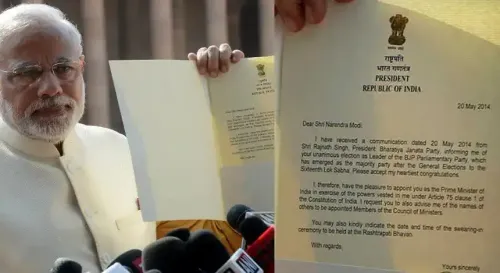
The NDA under Narendra Modi won a clear Lok Sabha majority on 16 May 2014 , ending a decade of UPA rule.
Pradhan Mantri Jan Dhan Yojana opened more than 500 million bank accounts, bringing millions into the formal financial system.
GST , rolled out in 2016 , unified India's indirect-tax structure into a single pan-India market.
The Balakot air strikes (2019) marked a shift to proactive deterrence against cross-border terrorism.
Ayushman Bharat is billed as the world's largest publicly funded health-insurance scheme.
India's G20 presidency (2023) and rising global supply-chain role have reinforced the 'Brand India' narrative under Modi's foreign policy.
Eleven years after Narendra Modi was sworn in as India's 14th Prime Minister on 26 May 2014, his tenure stands as one of the most consequential stretches of post-Independence governance — defined by sweeping structural reforms, a harder security posture, and a deliberate repositioning of India in the global order. The National Democratic Alliance (NDA), led by the Bharatiya Janata Party (BJP), won a clear majority in the 2014 Lok Sabha elections, results of which were declared on 16 May 2014 — ending a decade of Congress-led United Progressive Alliance (UPA) rule amid voter anger over alleged corruption and coalition instability.
Financial Inclusion and the Digital Leap
Modi's first term opened with mission-scale welfare programmes. The Pradhan Mantri Jan Dhan Yojana (PMJDY), launched in 2014, brought more than 500 million unbanked Indians into the formal financial system. The governing philosophy — 'Sabka Saath, Sabka Vikas, Sabka Vishwas' (together with all, progress for all, trust of all) — framed inclusivity as a political and administrative priority.
The Digital India initiative expanded internet connectivity, enabled Aadhaar-linked Direct Benefit Transfer (DBT), and supercharged UPI-based payments, reducing subsidy leakages and building one of the world's most sophisticated public digital infrastructure stacks. The Goods and Services Tax (GST), rolled out in 2016, unified India's fragmented indirect-tax regime into a single pan-India market — a reform successive governments had attempted and shelved for over a decade.
Manufacturing, Startups, and Economic Reorientation
Flagship schemes — Startup India, Make in India, and later Production-Linked Incentive (PLI) programmes — were designed to attract global capital and establish India as a credible manufacturing alternative to China. Eased foreign direct investment (FDI) norms across key sectors reinforced that positioning. On the social side, Ayushman Bharat — billed as the world's largest publicly funded health-insurance scheme — and the Pradhan Mantri Garib Kalyan Anna Yojana, which provided free foodgrains to hundreds of millions during the COVID-19 pandemic, anchored the government's pro-poor narrative.
Income-tax relief, including upward revisions to the tax-free slab for middle-income earners, extended that compact to salaried urban India.
Security Posture and the Balakot Moment
The Modi era has been marked by a notably harder line on national security. The Balakot air strikes in 2019 — carried out in response to the Pulwama attack — were widely interpreted as a strategic shift toward proactive deterrence against cross-border terrorism, breaking from the restrained responses of previous administrations. Domestically, the emphasis on 'minimum government, maximum governance' translated into e-governance platforms, time-bound project clearances, and the PM Gati Shakti infrastructure-planning framework, which seeks to synchronise road, rail, port, and logistics investments across ministries.
India's Recalibrated Global Role
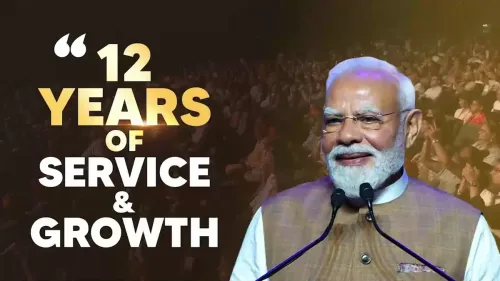
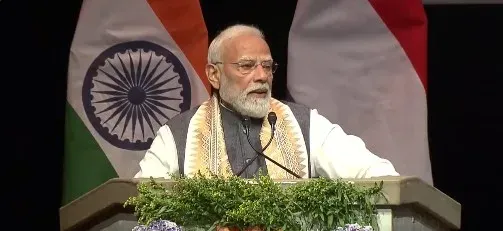
Under Modi, India has pursued a more multipolar and assertive foreign policy — balancing ties with the United States, Russia, and the Gulf simultaneously, while expanding strategic partnerships across the Indo-Pacific. India's growing role in global supply-chain diversification, its G20 presidency in 2023, and Modi's personal connect with overseas Indian diasporas have collectively strengthened the 'Brand India' narrative. Addressing a large gathering of the Indian diaspora at The Hague during a recent visit to the Netherlands, Modi reflected: 'After decades, a stable and full majority government was set to be formed in India. From that day to this, the immense belief of the Indians has not let me stop or get tired. This is ongoing nonstop.'
The BJP, meanwhile, leveraged Modi's personal approval ratings and the 'double engine' governance pitch — aligning state governments with the Centre — to expand its footprint well beyond the traditional Hindi heartland, reinforcing its identity as a genuinely national party.
Legacy in the Making
Twelve years since the mandate of 16 May 2014, assessments of the Modi era remain sharply contested — supporters point to scale, delivery, and India's elevated global standing; critics argue that some headline targets on manufacturing's share of GDP and job creation have yet to be fully met. What is less disputed is that the period has fundamentally altered the texture of Indian governance, politics, and international positioning. How those structural shifts translate into long-term outcomes will define the final verdict.
Point of View
Economic formalisation, and geopolitical assertiveness. Each has produced measurable outcomes, yet each also carries unresolved tensions — Jan Dhan accounts exist, but financial deepening remains uneven; GST simplified compliance but small businesses still flag compliance costs; PLI schemes are attracting investment but manufacturing's share of GDP has not structurally broken out. The Balakot moment reset deterrence calculus, but the security environment on both borders remains volatile. The real question heading into the next phase is whether these structural bets compound into durable gains or plateau as the low-hanging fruit of formalisation runs out.
NationPress
5 Oct 2026
Frequently Asked Questions
What is the significance of 16 May 2014 in Indian political history?
On 16 May 2014, the results of India's general election gave the NDA under Narendra Modi a clear parliamentary majority — the first single-party majority in three decades. It ended ten years of Congress-led UPA rule and marked the beginning of Modi's first term as Prime Minister.
What are the major welfare schemes launched under PM Modi?
Key welfare schemes include Pradhan Mantri Jan Dhan Yojana (over 500 million bank accounts), Ayushman Bharat (public health insurance), and Pradhan Mantri Garib Kalyan Anna Yojana (free foodgrains during COVID-19). Aadhaar-linked Direct Benefit Transfer has also been central to reducing subsidy leakages.
What were the Balakot air strikes and why do they matter?
The Balakot air strikes in 2019 were carried out by India in response to the Pulwama terror attack. They are widely seen as a shift in India's security doctrine toward proactive deterrence against cross-border terrorism, departing from the restrained posture of previous governments.
How has India's global standing changed under Modi?
India has pursued a more multipolar foreign policy under Modi, balancing ties with the US, Russia, and the Gulf while expanding Indo-Pacific partnerships. The G20 presidency in 2023 and growing supply-chain diversification interest from global firms have raised India's international profile considerably.
What is the 'double engine' governance model associated with BJP?
The 'double engine' model refers to the BJP's pitch that states governed by the party benefit from better alignment with the Centre on policy and funds. It has been a key electoral argument used to expand BJP's presence beyond its traditional Hindi-heartland base to states across India.