12 years of Modi govt: Welfare, reforms and global rise mark NDA decade
Synopsis
Twelve years in, the Modi government's record is defined by scale — hundreds of millions reached by welfare schemes, a unified tax system, and military operations that reshaped India's security posture. The 2024 mandate was narrower than 2019, but the NDA coalition held. The next chapter hinges on whether economic growth translates into jobs at the pace voters were promised.
Key Takeaways
The Modi-led NDA completes 12 years of uninterrupted governance in June 2025 , spanning three consecutive terms.
The 2024 Lok Sabha election returned the NDA with 293 seats ; the BJP alone won 240 seats in the 543-member House.
Major welfare schemes include PMJDY , PM Awas Yojana , Ayushman Bharat , Ujjwala Yojana , and Jal Jeevan Mission .
The GST , introduced in 2017 , unified over a dozen central and state taxes into a single indirect tax regime.
Security milestones include the 2016 surgical strikes , 2019 Balakot airstrikes , and Operation Sindoor in 2025 .
The government's long-term target is Viksit Bharat@2047 , aiming for developed-nation status by India's centenary of Independence.
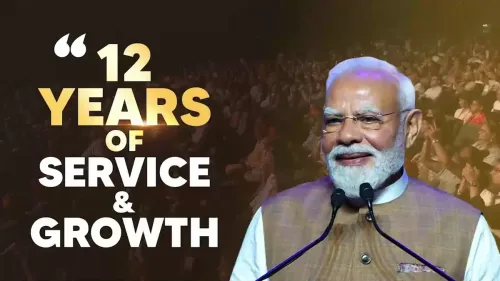
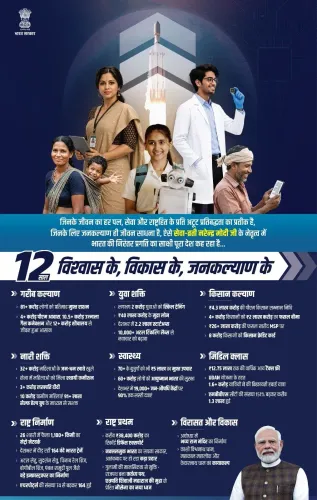
Prime Minister Narendra Modi-led National Democratic Alliance (NDA) government marks 12 years of uninterrupted rule on 10 June 2025, completing another year defined by expansive welfare delivery, structural economic reforms, and a sharply elevated global profile for India. The milestone arrives as the government enters the second year of its third consecutive term.
Welfare at the Core
Modi's administration has consistently positioned inclusive delivery as its ideological anchor. In a post on X, the Prime Minister wrote: 'Over the last 12 years, India has witnessed many transformations and at the core of these changes is the welfare of the poor and downtrodden. We have always been inspired by Antyodaya, and our effort has always been to ensure that the benefits of development reach those who were left behind for decades.'
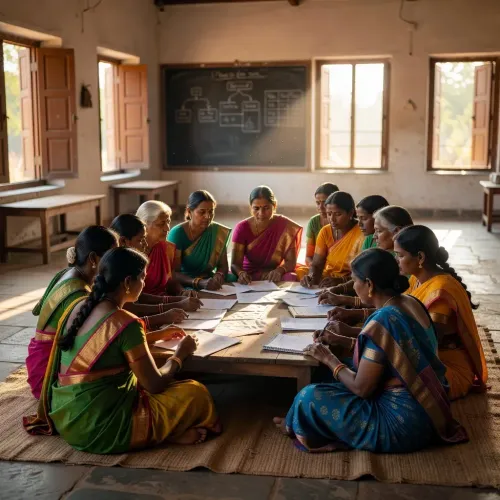
Flagship schemes spanning financial inclusion, housing, sanitation, energy access, and health insurance — including Pradhan Mantri Jan Dhan Yojana (PMJDY), PM Awas Yojana, Swachh Bharat Mission, Ujjwala Yojana, Jal Jeevan Mission, and Ayushman Bharat — have been cited as evidence of a broad-based social security push reaching previously excluded communities.
The Direct Benefit Transfer (DBT) system, linking subsidies to Aadhaar-linked bank accounts, has reportedly reduced leakages across schemes including LPG subsidies and rural employment guarantees. Modi noted on X: 'Through Direct Benefit Transfer and digital platforms, support is reaching people directly and transparently. This has reduced leakages, improved efficiency and strengthened trust in governance.'
Economic Reforms and Digital Push
The government's structural reform record includes the rollout of the Goods and Services Tax (GST) in 2017, which unified more than a dozen central and state levies into a single indirect tax regime, simplifying compliance and reducing cascading-tax effects on manufacturers and traders.
The Digital India initiative drove e-governance, rural broadband connectivity, and paperless service delivery. The Make in India campaign was launched to attract manufacturing investment, streamline regulatory clearances, and develop industrial corridors. Despite global economic headwinds, India maintained a steady growth trajectory, recovering from the Covid-induced slowdown.
Women's empowerment has been a stated priority, with programmes including Beti Bachao Beti Padhao, Mission Shakti, Pradhan Mantri Matru Vandana Yojana, and the constitutional Nari Shakti Vandan Adhiniyam framing the shift from welfare-for-women to women-led development. Farmer-centric schemes — PM-Kisan Samman Nidhi, PM Fasal Bima Yojana, and the Agriculture Infrastructure Fund — have directly benefited millions across rural India.
Electoral Mandate and Political Standing
The 2024 Lok Sabha election returned the NDA with 293 seats in the 543-member House, with the Bharatiya Janata Party (BJP) alone winning 240 seats. The outcome was widely read as an endorsement of stable governance, while also reflecting voter expectations for faster job creation and infrastructure expansion. Alliance partners have remained committed under Modi's leadership, according to the government's own assessment.
Security and Foreign Policy
On national security, the government has maintained a stated policy of zero tolerance toward terrorism, making no distinction between terrorist actors and their state sponsors. Major military operations authorised during the Modi years include the 2016 surgical strikes, the 2019 Balakot airstrikes, and Operation Sindoor in 2025.
On the diplomatic front, India expanded trade negotiations with major partners including the United States, Oman, the United Arab Emirates, Australia, Canada, and the European Union, while deepening engagement through regional groupings such as ASEAN, BIMSTEC, and BRICS to strengthen India's role in global supply chains.
What Comes Next
As the government enters its 13th year, the administration's stated vision of Viksit Bharat@2047 — a developed India by the centenary of Independence — frames its forward agenda. Employment generation, infrastructure scale-up, and the deepening of digital public infrastructure are expected to remain central to the political and policy narrative in the year ahead.
Point of View
And the Modi government's welfare delivery record is genuinely substantial — Jan Dhan, DBT, and Ayushman Bharat moved the needle on inclusion in measurable ways. Yet the gap between headline growth and job creation remains the administration's most persistent vulnerability, one the 2024 election result quietly flagged. The pivot to 'women-led development' and Viksit Bharat framing is politically astute, but the 2047 target is distant enough to defer accountability. The harder question — whether structural reforms like GST and Make in India have durably raised India's manufacturing share — remains open, and 12 years of data should be enough to demand a frank answer.
NationPress
23 Oct 2026
Frequently Asked Questions
What are the key achievements of the Modi government in 12 years?
The Modi government's 12-year record includes landmark welfare schemes such as Ayushman Bharat, PM Awas Yojana, and Jan Dhan Yojana, the rollout of GST in 2017, the Digital India push, and major security operations including the 2016 surgical strikes and 2025 Operation Sindoor. India also expanded trade diplomacy with the US, EU, UAE, and others during this period.
How many terms has the Modi government completed?
The Modi government is currently in its third consecutive term, having first come to power in May 2014. The 2024 Lok Sabha election returned the NDA with 293 seats, extending the alliance's uninterrupted rule to 12 years.
What is Viksit Bharat@2047?
Viksit Bharat@2047 is the Modi government's long-term vision to transform India into a developed nation by 2047, the centenary of its Independence. The framework emphasises inclusive growth, digital infrastructure, and ensuring no citizen or community is left behind in the development journey.
What is Operation Sindoor?
Operation Sindoor is a military operation authorised by the Modi government in 2025 against Pakistan-based terror infrastructure. It follows earlier operations including the 2016 surgical strikes and the 2019 Balakot airstrikes, reflecting the government's stated zero-tolerance policy on terrorism.
How has the Modi government addressed women's empowerment?
The government has introduced multiple women-focused programmes including Beti Bachao Beti Padhao, Mission Shakti, Pradhan Mantri Matru Vandana Yojana, Ujjwala Yojana, and the constitutional Nari Shakti Vandan Adhiniyam. Officials describe the approach as a shift from welfare-for-women to women-led development.