NDA resolution on 12 years of Modi govt: 10 key takeaways
Synopsis
The NDA's formal resolution marking 12 years of Modi rule is part self-congratulation, part political manifesto — covering everything from a record 4,399 days in office to Operation Sindoor and UPI. With the alliance now claiming governance over three-fourths of India's population, the document doubles as a campaign baseline for the electoral battles ahead.
Key Takeaways
Prime Minister Narendra Modi has completed 4,399 days in office, becoming the longest-serving democratically elected PM in consecutive terms, surpassing a 62-year benchmark.
The NDA resolution, adopted on 10 June 2025 , frames 12 years of governance under the principles of 'Sabka Saath, Sabka Vikas, Sabka Vishwas, Sabka Prayas' .
More than 25 crore people have reportedly moved out of multidimensional poverty, according to the resolution's claims.
Infrastructure push includes Vande Bharat trains, UDAN , PM Gati Shakti , and projects worth nearly ₹90 lakh crore .
Security milestones cited include surgical strikes , Operation Sindoor , and creation of the Chief of Defence Staff .
The NDA now claims governance over regions covering more than three-fourths of India's population and territory.
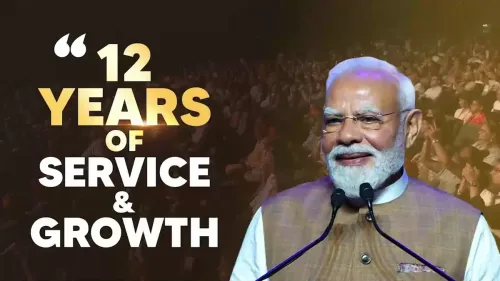
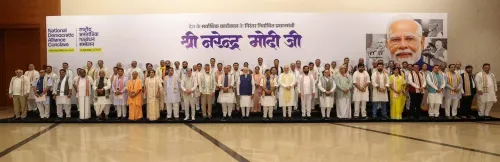
The National Democratic Alliance (NDA) on Wednesday, 10 June 2025 adopted a formal resolution marking 12 years of the Narendra Modi-led Union government, citing sweeping gains in governance, economic transformation, social welfare, and geopolitical standing. The resolution, passed at an NDA meeting in New Delhi, offers the alliance's most comprehensive self-assessment since Modi first took office in 2014.
Record Tenure and Governance Philosophy
The resolution declared that Prime Minister Narendra Modi has become the longest-serving democratically elected Prime Minister in consecutive terms, completing 4,399 days in office and surpassing a 62-year historical benchmark. The NDA framed the past 12 years as an era of 'people-centric development, participative democracy, and performance-oriented governance', anchored in the guiding principle of 'Sabka Saath, Sabka Vikas, Sabka Vishwas, Sabka Prayas'.
Economic and Digital Transformation
On the economic front, the resolution credited structural reforms — including the Goods and Services Tax (GST), labour law overhauls, banking sector clean-up, and ease-of-doing-business measures — for India's transition from the so-called 'Fragile Five' grouping to one of the fastest-growing major economies globally. Digital progress received prominent billing, with the Unified Payments Interface (UPI) and broader digital public infrastructure highlighted as globally recognised achievements. Emerging sectors such as semiconductors, space, and renewable energy, along with the Startup India initiative, were cited as forward-looking growth engines.
Infrastructure, Social Upliftment, and Empowerment
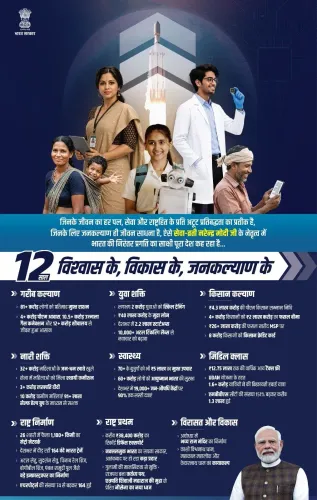
The resolution pointed to large-scale infrastructure expansion — spanning railways, highways, airports, and multimodal logistics hubs — including Vande Bharat trains, the UDAN regional aviation scheme, PM Gati Shakti, and PRAGATI-driven project acceleration reportedly worth nearly ₹90 lakh crore. On social welfare, the NDA claimed that more than 25 crore people have moved out of multidimensional poverty, with last-mile delivery through housing, banking, insurance, and direct benefit transfer systems. Schemes such as 'Beti Bachao Beti Padhao', Self-Help Groups, Drone Didi, and PM-Kisan were highlighted alongside the passage of the Nari Shakti Vandan Adhiniyam as markers of women and farmer empowerment.
National Security and Global Standing
The resolution cited surgical strikes, air strikes, and Operation Sindoor as security milestones, alongside the creation of the Chief of Defence Staff post, implementation of 'One Rank One Pension', and the expansion of indigenous defence manufacturing under 'Aatmanirbhar Bharat'. India's rising global profile was also underscored, with the resolution noting 32 international honours conferred on Prime Minister Modi, active leadership during Covid-19 vaccine diplomacy, and diplomatic promotion of yoga and millets on the world stage.
NDA's Political Expansion
The alliance used the resolution to highlight its own electoral and territorial growth, stating that the NDA now governs regions covering more than three-fourths of India's population and territory. The resolution positioned the alliance as the dominant national political force heading into the next electoral cycle. How opposition parties respond to these claims — particularly on poverty reduction figures and security operations — is likely to shape the political discourse in the weeks ahead.
Point of View
Not an independent audit — and that distinction matters. Claims such as '25 crore lifted from poverty' draw on the Niti Aayog's multidimensional poverty index, a methodology that critics argue sets a low threshold and overstates income mobility. The infrastructure numbers are large but aggregate across a decade; the more telling metric — quality, utilisation, and cost overruns — is absent. Notably, the resolution's emphasis on Operation Sindoor and defence milestones signals that national security will be a central electoral plank, not merely a governance footnote. The alliance's claim to govern three-fourths of India's population is a show of strength, but it also raises the accountability bar: dominance at this scale makes governance failures harder to deflect onto opposition-ruled states.
NationPress
19 Sept 2026
Frequently Asked Questions
What is the NDA resolution on 12 years of Modi government?
It is a formal declaration adopted at an NDA meeting on 10 June 2025, marking 12 years of the Narendra Modi-led Union government. The resolution outlines the alliance's assessment of governance achievements across economic reform, infrastructure, social welfare, national security, and political expansion.
How long has PM Modi been in office according to the resolution?
The resolution states that Prime Minister Narendra Modi has completed 4,399 days in office, making him the longest-serving democratically elected Prime Minister in consecutive terms and surpassing a 62-year historical benchmark.
What poverty reduction claims does the NDA resolution make?
The resolution claims that more than 25 crore people have moved out of multidimensional poverty over the past 12 years, attributing this to welfare schemes covering housing, banking, insurance, and direct benefit transfers. The figure is drawn from multidimensional poverty index data, which uses a broader set of indicators beyond income alone.
Which security milestones are highlighted in the NDA resolution?
The resolution cites surgical strikes, air strikes, and Operation Sindoor as key security achievements, along with the creation of the Chief of Defence Staff post, implementation of 'One Rank One Pension', and expansion of indigenous defence manufacturing under 'Aatmanirbhar Bharat'.
How much of India does the NDA claim to govern after 12 years?
The resolution states that the NDA now governs regions covering more than three-fourths of India's population and territory, positioning the alliance as the dominant national political force ahead of future electoral contests.