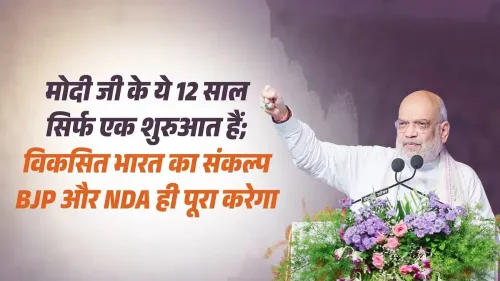
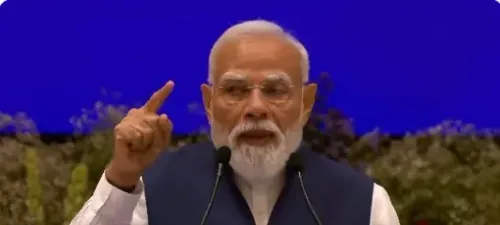
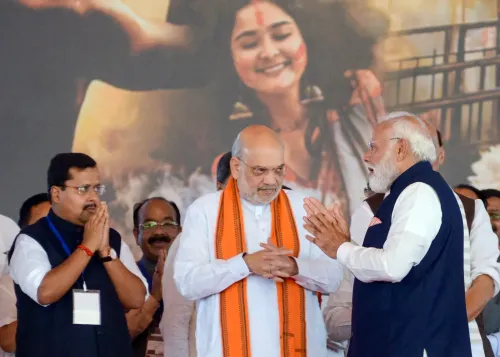
NDA marks Modi's 12-year governance milestone, passes 'Performance Leadership' resolution
Synopsis
The NDA's formal resolution marking Modi's 12-year tenure is part governance report card, part political consolidation — arriving as the alliance governs states covering over three-fourths of India's population. The claim of 4,399 consecutive days in office and the 'Fragile Five to fastest-growing' narrative are the coalition's clearest attempt yet to frame 2025 as a mandate-renewal moment ahead of the electoral cycle.
Key Takeaways
The NDA passed a formal resolution on 10 June 2025 in New Delhi marking 12 years of the Narendra Modi -led government.
PM Modi has completed 4,399 consecutive days in office, making him the longest-serving democratically elected Prime Minister in consecutive terms.
The resolution was moved by Andhra Pradesh CM N.
Chandrababu Naidu and read out by Union Minister Anupriya Patel .
Key milestones cited include GST , UPI , Operation Sindoor , and claims that over 25 crore people have exited multidimensional poverty.
Projects worth approximately ₹90 lakh crore were reportedly accelerated via the PM Gati Shakti and PRAGATI platforms.
The NDA now governs states representing more than three-fourths of India's population and territory.
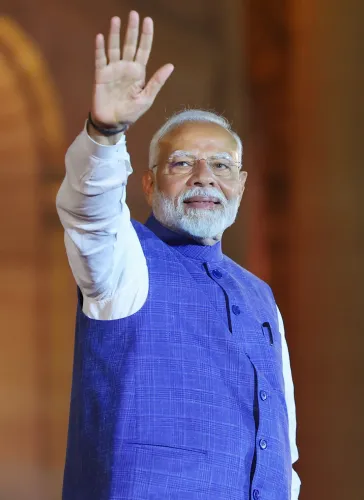
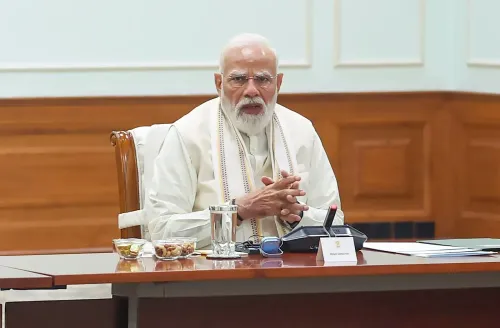
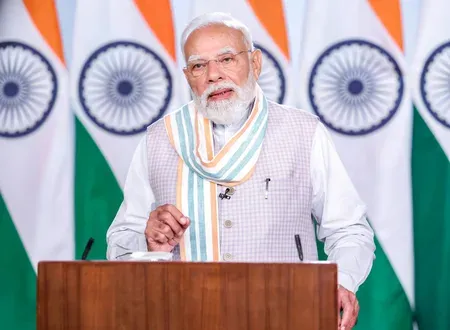
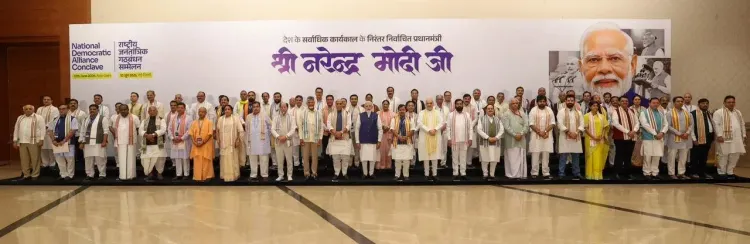
The National Democratic Alliance (NDA) on Wednesday, 10 June 2025, passed a formal resolution at a high-level coalition meeting in New Delhi, marking 12 years of the Narendra Modi-led Union government and describing the period as one of 'people-centric development, participative democracy and performance-oriented governance.' The resolution came as the coalition acknowledged that Prime Minister Narendra Modi has now completed 4,399 consecutive days in office, making him the longest-serving democratically elected Prime Minister in consecutive terms in India's history.
How the Resolution Was Adopted
The proposal was moved by Andhra Pradesh Chief Minister N. Chandrababu Naidu and seconded by Nagaland Chief Minister Neiphiu Rio. It drew support from a wide cross-section of NDA leaders, including Union Home Minister Amit Shah, Defence Minister Rajnath Singh, and alliance partners Jitan Ram Manjhi, H.D. Kumaraswamy, Eknath Shinde, Chirag Paswan, Jayant Chaudhary, and Vishnu Deo Sai. Union Minister Anupriya Patel formally read out the resolution. The NDA noted that India had seen 13 Prime Ministers in the preceding 62 years, framing Modi's uninterrupted tenure as an instance of exceptional continuity.
Economic and Structural Reforms Highlighted
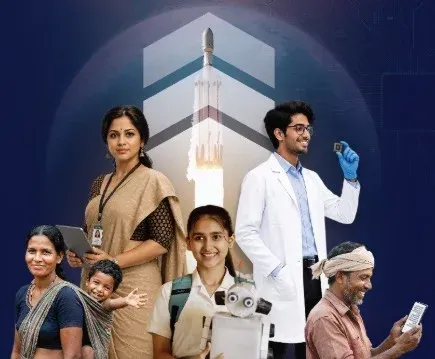
The resolution credited the past 12 years with sweeping structural changes — among them the rollout of the Goods and Services Tax (GST), labour law reforms, the repeal of obsolete statutes, banking sector recapitalisation, and a reduction in non-performing assets. The NDA argued that these measures helped India move from being grouped among the so-called 'Fragile Five' economies to becoming one of the world's fastest-growing major economies. The alliance also pointed to the rise of India's startup ecosystem and emerging sectors such as semiconductors, renewable energy, drones, space technology, and advanced manufacturing as evidence of structural diversification.
Infrastructure, Digital Finance and Welfare
On infrastructure, the NDA cited railway modernisation under the Amrit Bharat Station Scheme, the introduction of Vande Bharat trains, expanded airport connectivity under the UDAN scheme, and the development of multimodal transport hubs. The PM Gati Shakti National Master Plan and the PRAGATI platform were highlighted, with the resolution claiming that projects worth approximately ₹90 lakh crore have been accelerated through improved inter-agency coordination. The Unified Payments Interface (UPI) was described as a global benchmark in digital finance. On welfare, the resolution claimed that more than 25 crore people have moved out of multidimensional poverty, and cited schemes including PM-Kisan, Beti Bachao Beti Padhao, Drone Didi, and PM-JANMAN for tribal welfare.
Defence, Security and Foreign Policy
The NDA listed surgical strikes, air strikes, Operation Sindoor, the creation of the Chief of Defence Staff post, and the implementation of 'One Rank One Pension' as key security milestones. It said India has taken a firm stand against terrorism while advancing indigenous defence manufacturing under the Aatmanirbhar Bharat framework. In foreign policy, the resolution pointed to increased diplomatic outreach, vaccine diplomacy during Covid-19, the adoption of the International Day of Yoga by 190 countries, and efforts to recover stolen antiquities and promote millets on the global stage.
Political Expansion and the Road Ahead
The resolution noted that the NDA now governs states representing more than three-fourths of India's population and territory — a significant expansion since 2014. Reaffirming its commitment to Viksit Bharat 2047, the coalition said it would continue working toward inclusive development and cooperative federalism. This comes amid the alliance's broader effort to consolidate its political narrative ahead of upcoming state elections, making the resolution as much a political statement as a governance audit.
Point of View
By design, a political document — and this one doubles as an early campaign brief. The 'Fragile Five to fastest-growing' framing is broadly supported by GDP rankings, but the claim that 25 crore people have exited multidimensional poverty draws on a methodology that critics argue undercounts structural deprivation. The ₹90 lakh crore 'accelerated projects' figure conflates pipeline value with actual delivery — a distinction the resolution does not make. Most tellingly, the gathering's composition — NDA's full coalition spectrum endorsing the resolution — signals the alliance is already stress-testing its unity narrative well before the next electoral test.
NationPress
26 Oct 2026
Frequently Asked Questions
What did the NDA resolution on Modi's 12-year milestone say?
The NDA resolution, passed on 10 June 2025 in New Delhi, described the past 12 years of the Narendra Modi-led government as a phase of 'people-centric development, participative democracy and performance-oriented governance.' It cited structural reforms such as GST, digital infrastructure growth via UPI, defence milestones including Operation Sindoor, and welfare claims including 25 crore people exiting multidimensional poverty.
Why is PM Modi described as the longest-serving democratically elected Prime Minister in consecutive terms?
The NDA noted that Modi has completed 4,399 consecutive days in office as of 10 June 2025, a record for uninterrupted democratic tenure in India. By comparison, the coalition pointed out that India had 13 Prime Ministers across the preceding 62 years, underscoring what it called exceptional continuity of leadership.
Who moved and seconded the NDA resolution?
The resolution was moved by Andhra Pradesh Chief Minister N. Chandrababu Naidu and seconded by Nagaland Chief Minister Neiphiu Rio. It was formally read out by Union Minister Anupriya Patel, with support from Home Minister Amit Shah, Defence Minister Rajnath Singh, and several other NDA leaders.
What economic achievements did the NDA highlight in the resolution?
The NDA credited the government with implementing GST, labour reforms, banking sector recapitalisation, and reducing non-performing assets. It also pointed to India's rise from the 'Fragile Five' group of vulnerable economies to one of the world's fastest-growing major economies, alongside growth in startups, semiconductors, renewable energy, and digital payments via UPI.
What is Viksit Bharat 2047 and how does it feature in the resolution?
Viksit Bharat 2047 is the government's long-term vision to make India a developed nation by the centenary of its independence. The NDA resolution reaffirmed the coalition's commitment to this goal, framing the 12-year milestone as a foundation for the next phase of inclusive development and cooperative federalism.