PM Modi on cultural respect as bridge to global trust
Synopsis
Prime Minister Narendra Modi on 29 June 2026 shared a message on cultural respect and global harmony, pairing a Hindi reflection on trust-building with a Sanskrit verse that links contextual wisdom to moral leadership — underscoring India's civilisational approach to diplomacy.
Key Takeaways
PM Modi posted on 29 June 2026 emphasising that respecting diverse world cultures increases trust and cooperation among peoples.
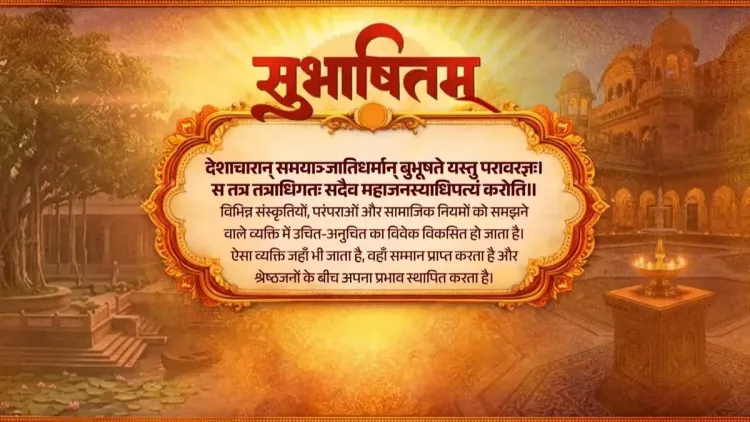
He cited a Sanskrit shloka arguing that one who honours the customs and dharma of each land attains respect and leadership wherever he goes.
The message reinforces India's diplomatic philosophy rooted in pluralism and the concept of Vasudhaiva Kutumbakam (the world is one family).
The post reflects a pattern of PM Modi connecting contemporary policy positions to India's classical intellectual and cultural heritage.
The messaging aligns with India's ongoing engagement with the Global South and its positioning as a voice for civilisational dialogue and mutual respect.
Prime Minister Narendra Modi on Monday, 29 June 2026 shared a message on cultural respect and inter-civilisational harmony, invoking an ancient Sanskrit verse to argue that honouring diverse cultures deepens trust, cooperation, and brotherhood among peoples.
Context
In his post, PM Modi wrote in Hindi: 'दुनिया की अलग-अलग संस्कृतियों का सम्मान करने से लोगों के बीच विश्वास और सहयोग की भावना बढ़ती है।' ('Respecting the diverse cultures of the world increases the spirit of trust and cooperation among people. This further strengthens mutual understanding and brotherhood.')
He accompanied this thought with a Sanskrit shloka from classical Indian literature: 'देशाचारान् समयाञ्जातिधर्मान् बुभूषते यस्तु परावरज्ञः। स तत्र तत्राधिगतः सदैव महाजनस्याधिपत्यं करोति॥' The verse translates broadly as: 'One who knows the higher and the lower — and honours the customs, traditions, and dharma of each land and community — always attains leadership and respect among the people, wherever he goes.'
Policy Backdrop
The post reflects a recurring theme in Modi's international engagement — the idea that India's civilisational heritage, with its tradition of pluralism and 'Vasudhaiva Kutumbakam' (the world is one family), provides a philosophical foundation for modern diplomacy. This outlook has underpinned India's presidency of the G20 in 2023, its leadership of the Global South dialogue, and bilateral engagements across Asia, Africa, the Middle East, and the West.
The use of Sanskrit verses in public communication is a consistent feature of PM Modi's messaging, aimed at connecting contemporary policy positions to India's classical intellectual tradition. The verse cited here is associated with the importance of contextual wisdom — understanding local customs and values — as a prerequisite for moral and social authority.
Stakeholders and Impact
The message carries resonance both domestically and internationally. Within India, it signals the government's continued emphasis on cultural pride and civilisational confidence as pillars of national identity. For an international audience, particularly in the context of India's active multilateral diplomacy, it reinforces New Delhi's positioning as a voice for dialogue, pluralism, and mutual respect across civilisations.
The post also arrives as India deepens engagement with the Global South, where cultural sensitivity and non-imposing diplomacy are viewed as differentiators from Western-led frameworks. Civil society groups, academics, and diplomats who follow India's soft-power outreach are likely to note the deliberate invocation of classical Sanskrit wisdom in a modern digital forum.
What's Next
The philosophical framing in PM Modi's post is likely to feed into upcoming diplomatic engagements and multilateral forums where India seeks to articulate a distinct civilisational voice. As New Delhi continues to expand its global partnerships, the emphasis on cultural respect and contextual understanding may shape both the tone and substance of India's foreign policy communications in the months ahead.
Point of View
Blending classical Indian wisdom with modern diplomatic messaging. The post fits a broader arc in which New Delhi seeks to present India not merely as an emerging economic power but as a civilisational anchor for a multipolar world. By grounding the argument for cultural respect in ancient verse, Modi frames India's pluralist diplomacy as timeless rather than transactional. At a moment when global multilateralism faces stress, this kind of messaging positions India as a stabilising, bridge-building voice.
NationPress
27 Sept 2026
Frequently Asked Questions
What did PM Modi post on 29 June 2026?
PM Modi shared a message in Hindi and Sanskrit arguing that respecting the diverse cultures of the world builds trust, cooperation, and brotherhood among peoples, and cited a classical Sanskrit verse linking cultural wisdom to moral leadership.
What is the Sanskrit shloka Modi quoted and what does it mean?
The shloka states that one who knows the higher and the lower — and honours the customs, traditions, and dharma of each land and community — always attains leadership and respect among the people wherever he goes. It is drawn from classical Indian literature emphasising contextual wisdom.
What is Vasudhaiva Kutumbakam and how does it relate to Modi's post?
'Vasudhaiva Kutumbakam' is an ancient Sanskrit phrase meaning 'the world is one family.' Modi's message on cultural respect and global harmony is consistent with this philosophy, which has been a cornerstone of India's diplomatic identity, notably during its G20 presidency in 2023.
Why does PM Modi frequently use Sanskrit verses in his public posts?
PM Modi regularly incorporates Sanskrit shlokas to connect contemporary policy or social messages to India's classical intellectual tradition, reinforcing a narrative of civilisational continuity and cultural pride both for domestic audiences and internationally.
How does Modi's cultural respect message connect to India's foreign policy?
India under Modi has positioned itself as a voice for the Global South and civilisational dialogue, emphasising pluralism and non-imposing engagement. Messages like this one reinforce New Delhi's diplomatic brand as a bridge-builder rooted in mutual respect rather than ideological imposition.