Modi surpasses Nehru as longest-serving elected PM: Ex-Nagaland CM draws rare contrast
Synopsis
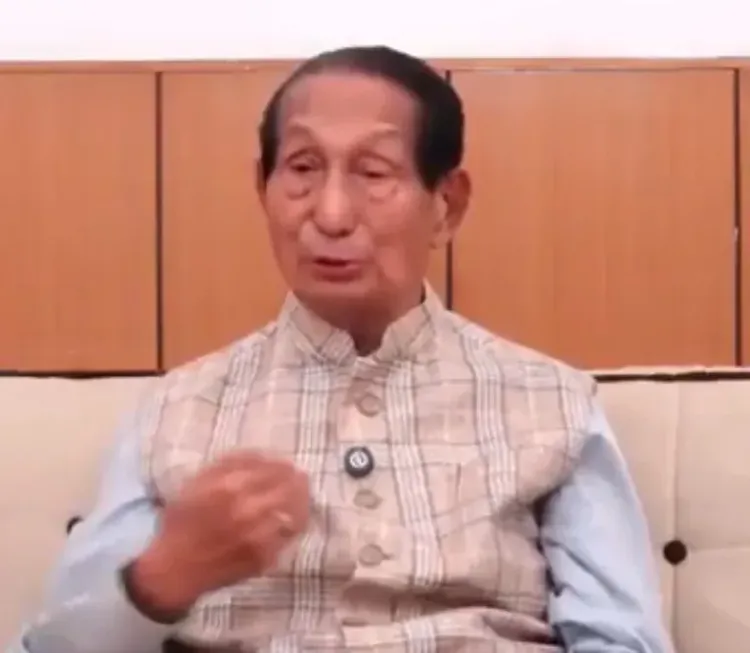
A man who personally served Jawaharlal Nehru has offered the most pointed contrast yet between India's two longest-serving elected Prime Ministers — as Modi crosses 4,399 days in office, edging past Nehru's record. S.C. Jamir's verdict: one was a philosopher, the other is a practitioner. Coming from a Nehru-era insider, that distinction carries unusual weight.
Key Takeaways
PM Narendra Modi crossed 4,399 days in office on 10 June 2025 , surpassing Jawaharlal Nehru's record of 4,398 days as India's longest-serving elected Prime Minister in continuous tenure.
Jamir , former Chief Minister of Nagaland and ex- Parliamentary Secretary to Nehru , described Nehru as a 'philosopher' and Modi as a 'practical man.' Jamir noted that Modi engages directly with issues without intermediaries, unlike Nehru who largely worked through officers and institutions.
On North-East development, Jamir said budgets during his tenure as CM were just ₹10-20 crore , compared to significantly larger investments today.
Jamir credited Modi with securing two landmark political agreements with Naga underground groups — a first in the peace process.
He contrasted Nehru's Soviet-style licence raj economy with Modi's open-growth model, linking the shift to India's rise as a fast-growing major economy.
Prime Minister Narendra Modi on 10 June 2025 surpassed Jawaharlal Nehru's record of 4,398 days in office — completing 4,399 days as India's longest-serving elected Prime Minister in continuous tenure. As the milestone drew national attention, S.C. Jamir, a political veteran who served as Parliamentary Secretary to Nehru and later as Chief Minister of Nagaland, offered a rare first-hand comparison of the two leaders.
The Philosopher and the Practitioner
'Panditji was a philosopher. Modi ji is a practical man. That's the difference,' said Jamir, drawing a sharp distinction in governance style. He noted that while Nehru largely worked through officers and institutions, Modi engages directly with issues and individuals. 'If you raise an issue with him, he addresses it personally without intermediaries,' Jamir recalled.
According to Jamir, this direct approach gives Modi firsthand knowledge of challenges across the country — including in the North-East — whereas many concerns during Nehru's era reportedly did not reach the Prime Minister through layers of administration.
Shift from Colonial to Indian Governance Model
'In those days, we were heavily influenced by British etiquette and administrative culture. Today, we have our Indian model, making Prime Minister Modi far more accessible,' Jamir observed. He added that Modi 'speaks openly and expresses freely, unlike many of his predecessors' — a cultural shift in the style of executive leadership that he attributed to a deliberate departure from inherited colonial norms.
North-East Development: A Stark Contrast
Jamir, who led Nagaland as Chief Minister, pointed to a dramatic change in development funding for the region. 'When I was Chief Minister, budgets often ran into just 10-20 crores. But today the investments are on an entirely different scale,' he said. He credited Modi's leadership with ending what he described as decades of neglect of the North-East.
Jamir also highlighted progress on the Naga peace process, calling it one of Modi's most significant achievements. 'For the first time, Naga underground groups agreed to sign two landmark political agreements,' he noted.
Economic Philosophy: From Licence Raj to Open Growth
On the economic front, Jamir drew a contrast between Nehru's planned economy — modelled on Soviet lines — and the liberalised approach under Modi. 'The Nehru government followed a Russian model of planned economy. Everything was controlled through licences. Therefore, we could not develop like we are doing now,' he said. He credited the shift in economic policy with helping India emerge as one of the world's fastest-growing major economies.
The Context Behind the Remarks
Jamir's remarks were shared by a social media handle dedicated to chronicling Modi's public life. This comes amid broader national conversation around the 10 June milestone, with political observers noting that the record is measured in continuous elected tenure — a metric that distinguishes it from total cumulative time in office. Notably, Nehru served across multiple terms between 1952 and 1964, accumulating 4,398 days. Modi's uninterrupted stretch now edges past that mark.
Point of View
A contestable hierarchy. What the remarks do not address is whether direct accessibility translates into better institutional outcomes, or whether bypassing layers of administration carries its own governance risks. The North-East development contrast is real but partial — funding scale has grown, yet several long-standing political disputes, including the Naga framework agreement, remain unsigned at the final stage. The milestone itself — continuous elected tenure — is also a specific metric; Nehru's total influence on Indian governance extended well beyond the electoral calendar. The record is real, but the framing around it deserves scrutiny.
NationPress
26 Oct 2026
Frequently Asked Questions
How has PM Modi surpassed Jawaharlal Nehru's record?
PM Modi crossed 4,399 days in continuous elected office on 10 June 2025 , edging past Nehru's 4,398 days served between 1952 and 1964 . The metric counts uninterrupted elected tenure, making Modi India's longest-serving elected Prime Minister by this measure.
Who is S.C. Jamir and why does his comparison matter?
S.C. Jamir is a former Chief Minister of Nagaland who also served as Parliamentary Secretary to Jawaharlal Nehru in his early career. His direct experience with both leaders gives his comparison unusual credibility as a first-hand political account.
What is the key difference Jamir draws between Nehru and Modi?
Jamir describes Nehru as a 'philosopher' who worked through officers and institutions, and Modi as a 'practical man' who engages directly with issues without intermediaries. He argues this direct approach gives Modi ground-level awareness of challenges across India.
What did Jamir say about North-East development under Modi?
Jamir said that when he was Chief Minister of Nagaland, state budgets were often just ₹10-20 crore . He credited Modi's government with a dramatically larger scale of investment in the North-East , describing the change as something he could 'hardly have imagined earlier.'
What progress has been made on the Naga peace process under Modi?
According to Jamir, one of Modi's most significant achievements has been securing two landmark political agreements with Naga underground groups — the first time such groups agreed to sign formal political accords. The broader Naga framework agreement, however, reportedly remains in progress.