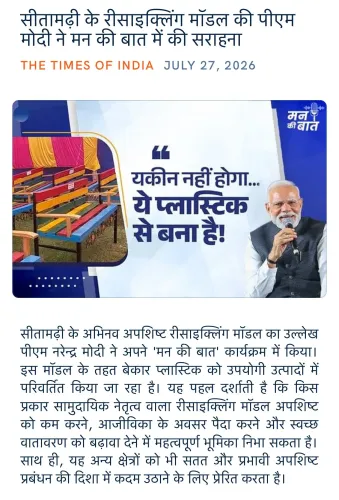
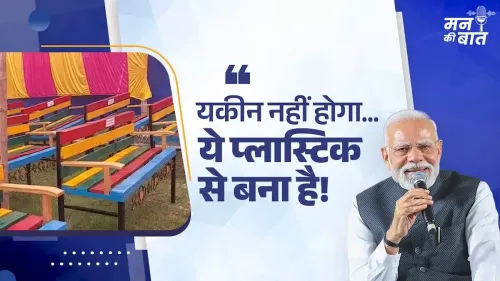
Modi spotlights Sitamarhi's plastic-to-bench model in Mann Ki Baat
Synopsis
A Bihar district turned 8,000 kg of discarded plastic into 85 public benches — and PM Modi just told the entire country about it. Sitamarhi's 'Waste to Wealth' model, featuring a district-administration-industry partnership and local jobs, is the kind of ground-up circular economy story that rarely makes national headlines until Mann Ki Baat puts it there.
Key Takeaways
PM Narendra Modi spotlighted Sitamarhi district , Bihar's plastic recycling initiative on 'Mann Ki Baat' on 27 July .
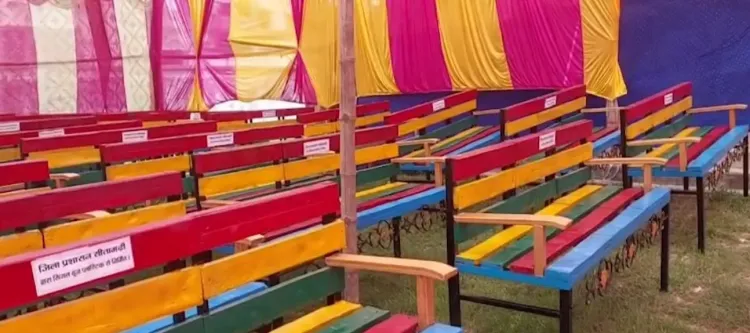
The 'Waste to Wealth' model converts single-use plastic into public benches, each consuming approximately 40 kg of plastic waste.
In one documented phase, 8,000 kg of plastic was collected from four blocks; 4,000 kg was recycled into 85 benches .
Benches are installed in government schools , parks and public spaces, serving both a utility and an educational purpose.
The initiative includes a revenue-sharing model between the district administration and a local industrial partner, while generating local employment.
Prime Minister Narendra Modi, in the latest episode of 'Mann Ki Baat' on 27 July, highlighted a grassroots circular-economy initiative from Sitamarhi district in Bihar that converts single-use plastic waste into durable public benches — drawing national attention to a locally-driven solution to one of the world's most persistent environmental problems.
The Sitamarhi Model
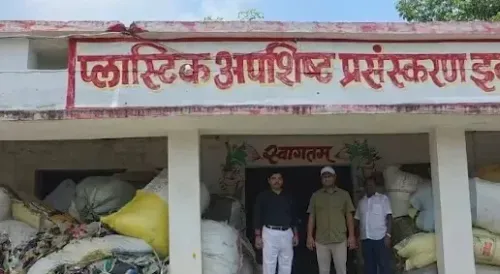
Under the initiative, branded 'Waste to Wealth', single-use plastic collected from across the district is cleaned, sorted and processed before being moulded into benches. Each bench consumes approximately 40 kilograms of single-use plastic and is described as durable, attractive and eco-friendly. The finished benches are being installed in government schools, parks and other public spaces across the district.
In one documented phase, roughly 8,000 kg of single-use plastic was collected from four blocks — Dumra, Riga, Bajpatti and Runnisaidpur. Of that, 4,000 kg was recycled into 85 benches.
How the Initiative Works
The district administration has partnered with a local industrial unit to run the programme. A revenue-sharing arrangement sustains the private partner while supporting the administration's operational costs. The initiative also generates local employment across collection, sorting, transport and processing — embedding economic benefit into the environmental effort.
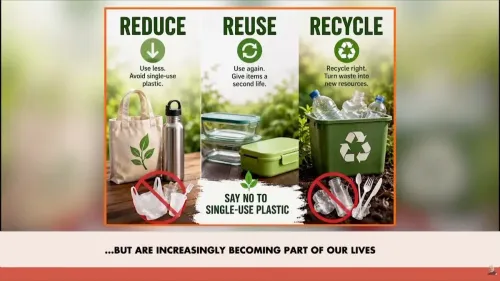
Modi noted that the district administration has played a pivotal role in enabling the partnership, calling out the model as evidence that the principles of 'Reduce, Reuse and Recycle' are becoming part of daily life rather than remaining mere slogans.
Why It Matters
Single-use plastic waste persists in the environment for decades, clogging drains, degrading soil fertility and contaminating water sources. Sitamarhi's approach addresses the problem at the source — through collection, scientific recycling and community infrastructure — rather than relying solely on awareness campaigns.
Notably, the placement of benches in schools carries an educational dimension: children are learning that discarded plastic can, through technology and proper management, become a community asset. This is the kind of behavioural shift that policymakers have struggled to achieve through top-down mandates alone.
The Broader Signal
By featuring the initiative on 'Mann Ki Baat', Modi has effectively amplified a district-level experiment to a national audience, raising the prospect of replication in other states. The Sitamarhi model — combining waste collection, local industry, revenue sharing and public infrastructure — offers a template that other districts with similar plastic waste challenges could adapt.
With India facing mounting pressure on plastic pollution ahead of global treaty negotiations, initiatives like this one offer a practical, replicable example of the circular economy in action. Whether the model scales beyond Bihar will depend on administrative will and the availability of local industrial partners.
Point of View
Which aligns incentives rather than relying on goodwill; that is the structural detail other districts should study. India's single-use plastic challenge is vast, and 85 benches from one district is a proof of concept, not a solution at scale. The real question is whether the Centre or state governments will formalise a procurement or incentive mechanism that takes this from a Bihar story to a national programme.
NationPress
24 Oct 2026
Frequently Asked Questions
What is the Sitamarhi 'Waste to Wealth' plastic recycling initiative?
It is a district-level circular economy programme in Sitamarhi, Bihar, where single-use plastic waste is collected, cleaned, sorted and moulded into durable public benches. Each bench uses approximately 40 kg of plastic, and the benches are installed in government schools, parks and public spaces.
Why did PM Modi mention Sitamarhi on Mann Ki Baat?
Modi highlighted the initiative as a practical example of the 'Reduce, Reuse and Recycle' principles moving from slogan to action. He cited it as a model that combines environmental benefit, public infrastructure and local employment through a community-administration-industry partnership.
How much plastic has been recycled under this initiative?
In one documented phase, approximately 8,000 kg of single-use plastic was collected from four blocks — Dumra, Riga, Bajpatti and Runnisaidpur. Of this, 4,000 kg was recycled into 85 benches.
Who runs the Sitamarhi plastic-to-bench programme?
The Sitamarhi district administration runs the initiative in partnership with a local industrial unit. A revenue-sharing arrangement sustains the private partner while supporting administration costs, and the programme also creates local jobs in collection, sorting, transport and processing.
Can the Sitamarhi model be replicated in other districts?
The model is designed to be replicable — it relies on locally available plastic waste, a local industrial partner and a self-sustaining revenue-sharing structure rather than external grants. PM Modi's Mann Ki Baat mention signals an intent to inspire similar efforts nationwide, though formal scale-up would require state or central policy support.