Prime Minister Modi Leads CCS Meeting Amid Rising Middle East Tensions
Synopsis
In light of escalating Middle Eastern tensions, Prime Minister Modi convened a crucial CCS meeting to reassess India's national security strategy. This meeting follows alarming developments, including US-Israeli airstrikes on Iran, raising fears of broader conflicts that may impact Indian nationals.
Key Takeaways
Prime Minister Modi chaired a crucial CCS meeting.
The meeting addresses escalating tensions in the Middle East.
Key ministers participated in the discussions.
India's national security strategy is under review.
Contingency plans for Indian nationals and energy security were discussed.
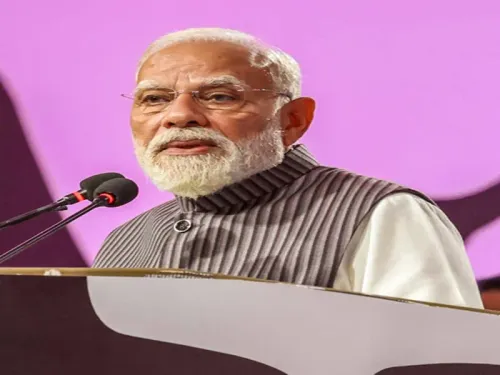
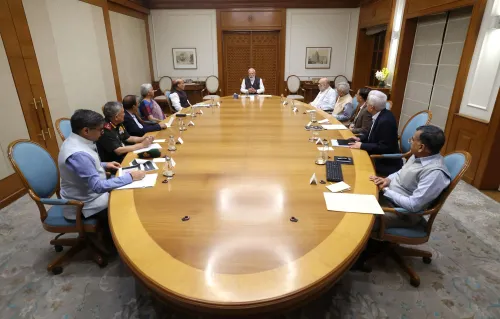
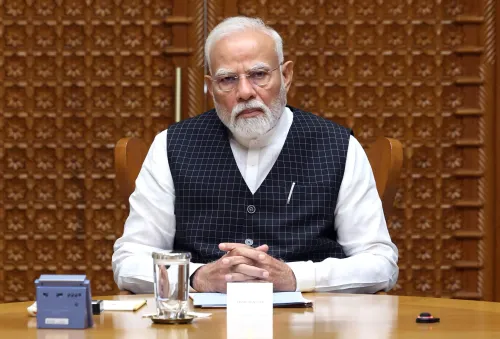
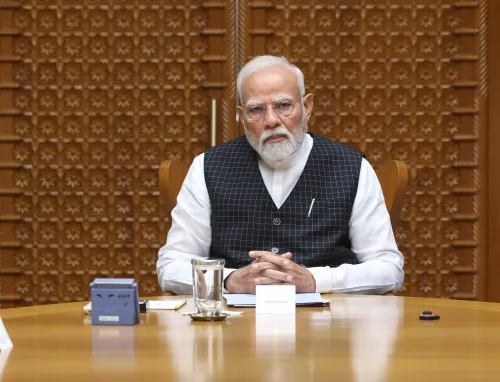
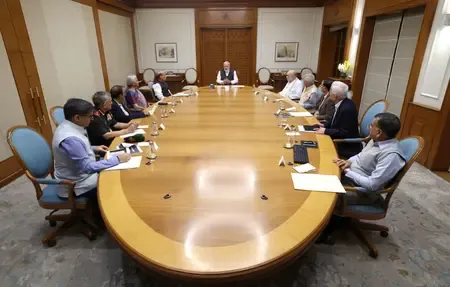
New Delhi, March 1 (NationPress) Prime Minister Narendra Modi presided over a crucial meeting of the Cabinet Committee on Security (CCS) following his return to the capital on Sunday evening, as reported by government sources.
This gathering of the CCS, which serves as India's top authority for security and strategic issues, is set against a backdrop of escalating geopolitical tensions in the Middle East after coordinated US-Israeli airstrikes targeted Iran, further complicating the regional landscape and amplifying global security concerns.
Key ministers in attendance included Defence Minister Rajnath Singh, Home Minister Amit Shah, External Affairs Minister S. Jaishankar, Finance Minister Nirmala Sitharaman, NSA Ajit Doval, and Foreign Secretary Vikram Misri.
Sources indicate that PM Modi returned to Delhi around 9:30 p.m. after completing a two-day visit spanning several states, including Rajasthan, Gujarat, Tamil Nadu, and Puducherry.
According to a government source, "The Prime Minister chaired a meeting of the CCS upon his return to Delhi tonight from his two-day tour of the states."
The CCS, which is tasked with making vital national security decisions, includes the Prime Minister along with the Ministers of Defence, Home, External Affairs, and Finance.
The urgent assembly of the CCS is largely interpreted as a reaction to recent developments in West Asia, including US-Israel strikes on Iranian targets and their subsequent retaliatory actions.
Reports have surfaced about the demise of Iranian Supreme Leader Ayatollah Ali Khamenei amid these tensions, which has escalated fears of a broader conflict.
The gathering aims to assess the repercussions for India's strategic interests, focusing on the safety of Indian nationals in the region, particularly in the UAE and other Gulf countries, as well as energy security, maritime routes, and diplomatic strategies.
India has adopted a measured approach during the Middle East crisis, promoting de-escalation while ensuring the protection of its citizens and economic relationships.
Sources suggest that discussions may encompass contingency plans for potential evacuations, the impact on oil prices, and cooperation with international allies.
This meeting marks yet another instance of high-stakes security assessments as global tensions rise.
PM Modi's swift return and immediate engagement with the CCS highlight the government's proactive strategy in safeguarding national security amidst volatile international circumstances.
Point of View
Emphasizing the need for proactive measures to safeguard Indian nationals and maintain energy security.
NationPress
21 Sept 2026
Frequently Asked Questions
What was the purpose of the CCS meeting chaired by PM Modi?
The CCS meeting aimed to reassess India's national security strategy in light of escalating tensions in the Middle East, particularly following US-Israeli airstrikes on Iran.
Who participated in the CCS meeting?
Key participants included Defence Minister Rajnath Singh, Home Minister Amit Shah, External Affairs Minister S. Jaishankar, Finance Minister Nirmala Sitharaman, NSA Ajit Doval, and Foreign Secretary Vikram Misri.
What are the implications of the Middle East tensions for India?
The tensions may impact the safety of Indian nationals in the region, energy security, maritime routes, and diplomatic positioning.
Has India taken any stance on the Middle East crisis?
India has maintained a balanced approach, advocating for de-escalation while ensuring the safety of its citizens and economic ties.
What developments prompted the CCS meeting?
The meeting was prompted by the recent US-Israeli airstrikes on Iranian targets and the reported death of Iranian Supreme Leader Ayatollah Ali Khamenei.