PM Modi honours CRPF, COBRA forces at Bastar ops base
Synopsis
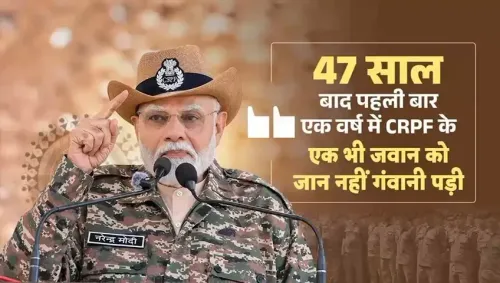
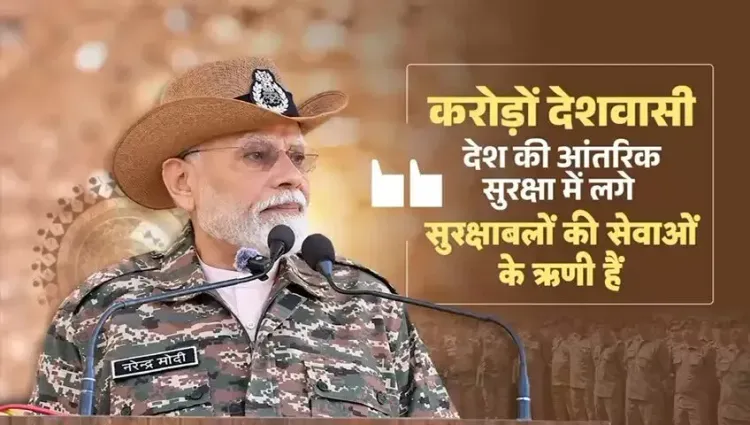
PM Narendra Modi visited a COBRA Operations Base in Bastar on 8 November 2026 and paid tribute to every security formation — CRPF, COBRA, BSF, ITBP, SSB, Bastar Fighters, and women combatants — declaring the nation 'indebted' to their service, as the government presses its Naxal-free campaign.
Key Takeaways
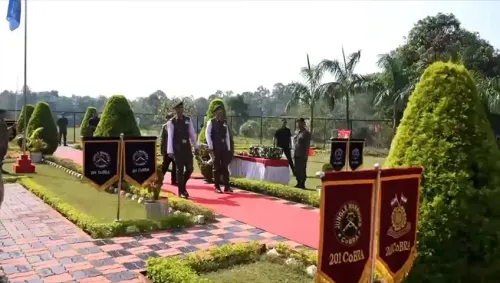
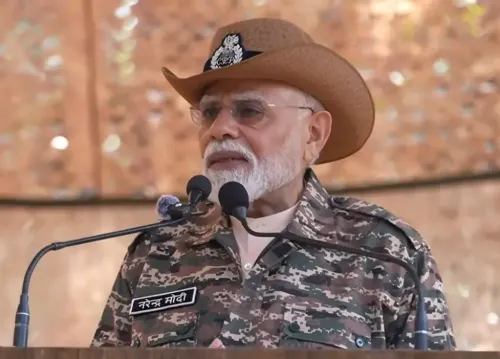
PM Modi visited a COBRA Operations Base in Bastar on 8 November 2026 , making a rare on-ground appearance at a counter-insurgency installation.
He explicitly named CRPF, COBRA, BSF, ITBP, SSB , state police, Bastar Fighters , and women fighters in his tribute — an unusually granular public acknowledgement.
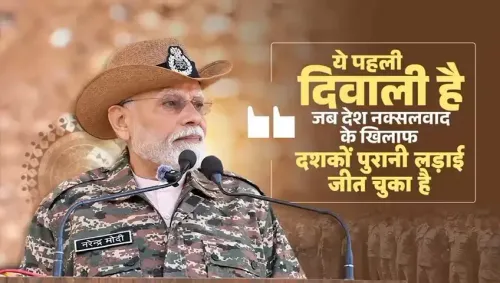
The Prime Minister declared: 'This nation is indebted to your services,' framing the security forces as creditors of the republic.
The visit was tagged #NaxalFreeBastar and #NaxalFreeIndia , signalling the government's continuing declared objective of eliminating Left-Wing Extremism.
COBRA (Commando Battalion for Resolute Action) is the CRPF's specialist jungle-warfare unit and one of the most operationally exposed formations in the Bastar theatre.
India's National Policy and Action Plan on Left Wing Extremism (2015) underpins the security-plus-development framework being pursued in the Red Corridor region.
Standing at a COBRA Operations Base deep in the jungles of Bastar, Prime Minister Narendra Modi told every jawan, constable, and commando guarding India's internal security: 'this nation is indebted to you.' The tribute, shared on Sunday, 8 November 2026 by the Chief Minister's Office of Chhattisgarh, carried the weight of decades of sacrifice in one of India's most contested theatres.
A tribute from the jungle floor of Bastar
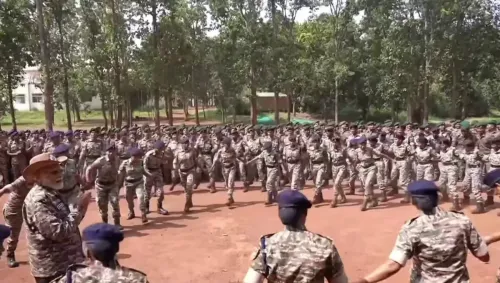
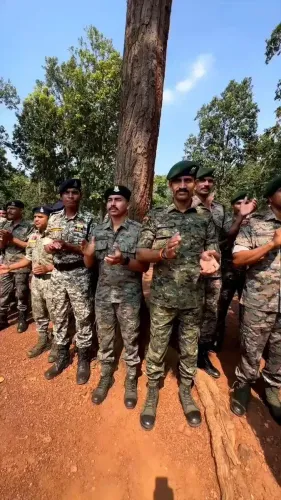
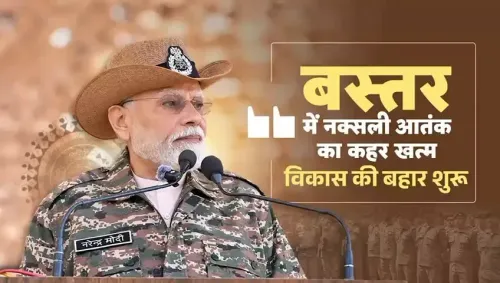
The Prime Minister's words, delivered at the COBRA Operations Base, Bastar, named every formation by name — the CRPF, the COBRA commandos, the BSF, the ITBP, the SSB, state police, the Bastar Fighters special forces, and the women fighters embedded within them. The deliberate roll-call was a statement in itself: no unit left unacknowledged, no sacrifice treated as routine.
Quoting the Prime Minister directly, the post read: 'Yeh desh aapki sewaon ke liye aapka rini hai' — 'This nation is indebted to your services.' The visit's hashtags — #NaxalFreeBastar and #NaxalFreeIndia — signalled the political and operational ambition behind the moment.
COBRA and Bastar Fighters: the sharp edge of counter-Naxal ops
COBRA — the Commando Battalion for Resolute Action — is a specialised wing of the Central Reserve Police Force trained specifically for jungle warfare in Left-Wing Extremism zones. It has borne some of the heaviest operational costs in Bastar's forests over the past two decades. The Bastar Fighters, a local special force drawing from communities in the region, represent a newer, deeply contextual approach — fighters who know the terrain, the dialect, and the stakes personally.
The Prime Minister's choice to stand on their ground — not in a conference room in Raipur or Delhi — was itself a message. Bastar remains the most active remaining theatre of the Red Corridor campaign that once stretched across multiple states.
India's long campaign against Left-Wing Extremism
The Union government's National Policy and Action Plan on Left Wing Extremism, framed in 2015, wove together security operations with road connectivity, banking access, mobile coverage, and welfare delivery in Naxal-affected districts. Chhattisgarh's government has coordinated closely with central paramilitary forces on the security side of that framework, while pushing infrastructure into cleared areas. The twin-track approach — force and development — is the doctrine that the #NaxalFreeIndia campaign embodies.
Successive administrations have chipped steadily at the number of Naxal-affected districts. Bastar, however, has remained the stubborn core — the terrain most difficult to clear, the communities most vulnerable, and the symbolic prize that any declaration of victory will ultimately rest on.
Women fighters and the changing face of counter-insurgency
The Prime Minister's explicit mention of mahila fighters — women fighters — was not incidental. Female combatants have been integrated into Bastar Fighters units, reflecting both operational necessity and a deliberate policy of community-rooted security. Their inclusion in a Prime Ministerial tribute at an operations base marks a quiet but significant shift in how India's security establishment publicly recognises its own forces in the LWE theatre.
Bastar's forests have swallowed too many uniforms over too many years. The Prime Minister's presence at a COBRA base, name-checking every formation down to the state constable, is a signal that Delhi has not looked away — and an implicit promise that the campaign will not stop short of its declared destination.
Point of View
Down to women fighters in Bastar Fighters, reflects a broader effort to frame the LWE campaign as nearing a definitive phase rather than a perpetual stalemate. The #NaxalFreeIndia framing also raises the political stakes: by associating the Prime Minister personally with the end-state, the government is accepting accountability for the timeline. Whether the operational picture in southern Bastar matches the rhetorical confidence will be the story to watch.
NationPress
8 Nov 2026
Frequently Asked Questions
Why did PM Modi visit Bastar in November 2026?
PM Modi visited a COBRA Operations Base in Bastar on 8 November 2026 to pay tribute to central paramilitary forces and state police engaged in counter-Naxal operations, declaring the nation indebted to their service.
What is COBRA force in India?
COBRA stands for Commando Battalion for Resolute Action. It is a specialised unit of the Central Reserve Police Force trained for jungle warfare and deployed primarily in Left-Wing Extremism-affected areas like Chhattisgarh's Bastar.
What are Bastar Fighters?
Bastar Fighters is a special force comprising local recruits from Bastar communities, integrated into counter-insurgency operations. PM Modi specifically mentioned the unit's commandos and women fighters in his tribute.
What is India's policy on Left-Wing Extremism?
India's National Policy and Action Plan on Left Wing Extremism, framed in 2015, combines security operations with development programmes — including roads, banking, and mobile connectivity — in Naxal-affected districts.
Which forces are deployed against Naxals in Chhattisgarh?
Central forces including the CRPF, COBRA, BSF, ITBP, and SSB operate alongside Chhattisgarh state police and specialised units like Bastar Fighters in the counter-insurgency campaign in the state.