Vaishnaw shares Modi's Paris address: India is world's 2nd largest mobile maker
Synopsis
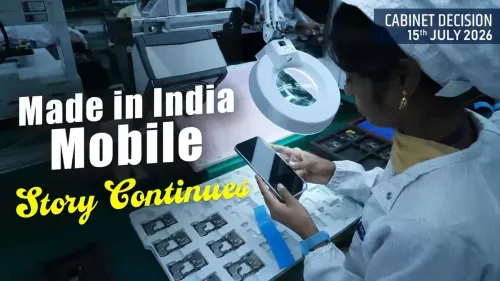
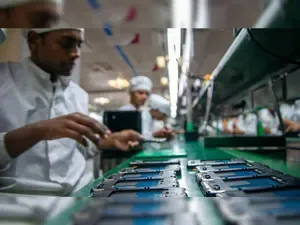
Prime Minister Modi, speaking at a diaspora event in Paris, declared India the world's second-largest mobile phone manufacturer and fastest-growing major economy. Union Minister Vaishnaw amplified the statement, spotlighting gains from the Make in India and PLI schemes that have reshaped India's electronics production landscape.
Key Takeaways
PM Modi stated at a community programme in Paris, France on 19 June 2026 that India is the world's second-largest mobile phone manufacturer.
He also described India as the world's fastest-growing major economy .
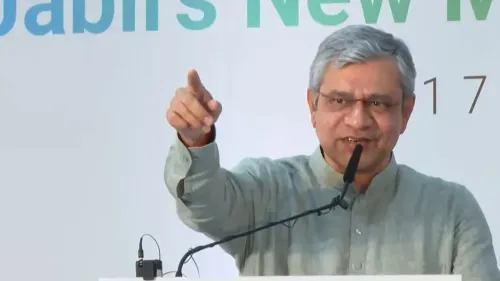
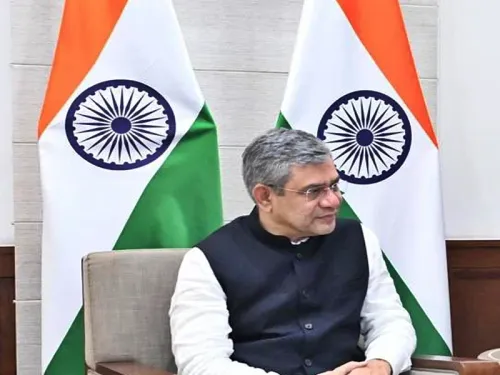
Union Minister Ashwini Vaishnaw shared the statement on X , amplifying the economic messaging in his capacity as Minister for Electronics and IT.
India's mobile manufacturing rise is attributed to the Make in India initiative (launched 2014) and the PLI scheme for electronics (approved 2020).
Government data from around 2021 indicated India had overtaken the United States to become the second-largest mobile phone producer by volume.
The next quarterly mobile production and export figures from the Ministry of Electronics and IT will be a key indicator of sustained sector growth.
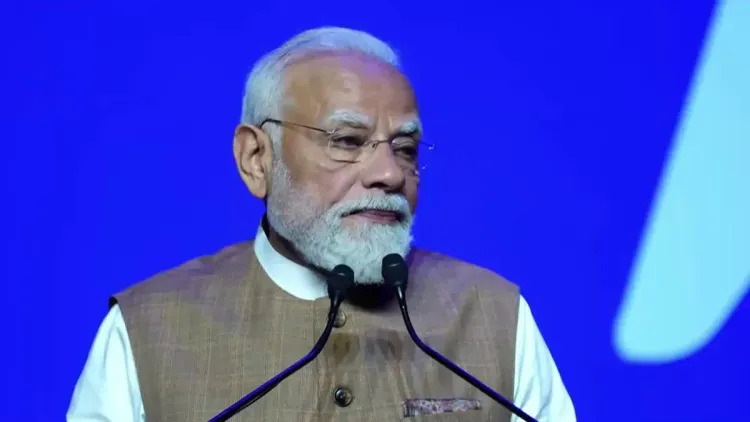
Union Minister Ashwini Vaishnaw on Friday, 19 June 2026 shared a statement by Prime Minister Narendra Modi, delivered at a community programme in Paris, France, in which the Prime Minister declared that India is now the world's second-largest mobile phone manufacturer and the fastest-growing major economy globally.
Context
Speaking to the Indian diaspora in Paris, PM Modi said — 'Bharat aaj duniya ka doosra sabse bada mobile phone manufacturer hai, aur duniya ki fastest-growing major economy bhi' — ('India today is the world's second-largest mobile phone manufacturer, and also the world's fastest-growing major economy'). The remarks were delivered at a community outreach event, a standard feature of prime ministerial visits abroad where India's economic achievements are highlighted to overseas Indians.
Vaishnaw, who holds the portfolio of Electronics and Information Technology in addition to Railways and Information and Broadcasting, amplified the statement on X, underscoring its relevance to the digital manufacturing agenda he oversees.
Policy Backdrop
India's rise as a mobile phone manufacturing hub is closely linked to two flagship policy interventions. The Make in India initiative, launched in September 2014, set the strategic direction of reducing import dependence and building domestic production capacity across sectors including electronics.
The Production Linked Incentive (PLI) scheme for Large Scale Electronics Manufacturing, approved in 2020, provided the financial architecture that drew major handset brands and component suppliers to establish or expand assembly operations within India. Government data released around 2021 indicated India had surpassed the United States to become the second-largest mobile phone producer by volume — a milestone that official messaging has since consistently cited.
Stakeholders and Impact
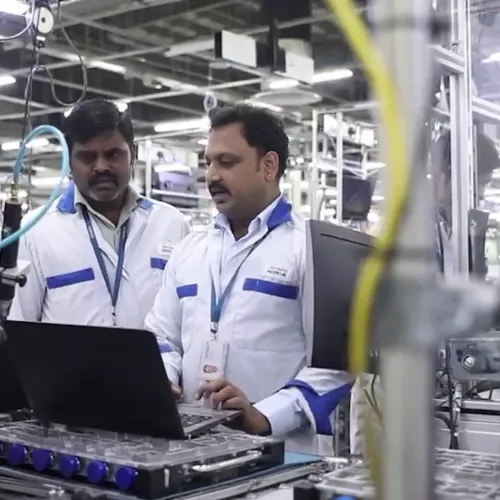
The mobile manufacturing sector's growth has had direct consequences for electronics manufacturers, both domestic and multinational, who have scaled up assembly lines and begun exporting handsets from Indian facilities. The shift from near-total import dependence to significant domestic value addition represents a structural change in India's electronics trade balance.
For the Indian diaspora audiences at events such as the Paris community programme, such data points serve as markers of national economic progress. Diaspora events abroad have become a consistent platform for successive governments to present manufacturing and macroeconomic milestones in a diplomatic context, pairing domestic policy achievements with bilateral engagement.
What's Next
Attention will now turn to the next set of quarterly mobile production and export figures from the Ministry of Electronics and Information Technology, which will indicate whether the sector's growth trajectory is holding. Any follow-up announcements emerging from scheduled India-France bilateral mechanisms during the Prime Minister's visit will also be closely watched by industry and policy observers.
India's positioning as the world's second-largest mobile phone producer, if sustained and deepened through further value addition beyond assembly, could significantly reshape the country's role in global electronics supply chains over the coming decade.
Point of View
With mobile phones serving as the most visible proof point of the PLI framework's success. Vaishnaw's amplification is strategically deliberate — as the minister directly responsible for electronics and IT policy, his endorsement of these numbers reinforces the political ownership of the sector's gains. The framing of India as both a manufacturing powerhouse and the fastest-growing major economy is designed to attract further foreign investment at a moment when global supply chains are being actively restructured away from single-country dependence. Whether the 'second-largest' ranking reflects assembly volume or deeper value addition remains a distinction that industry analysts will continue to probe.
NationPress
17 Sept 2026
Frequently Asked Questions
Is India really the world's second-largest mobile phone manufacturer?
According to government data cited around 2021, India surpassed the United States to become the second-largest mobile phone producer by volume, behind China. PM Modi reiterated this claim at a community programme in Paris in June 2026.
What is the PLI scheme for mobile phones?
The Production Linked Incentive (PLI) scheme for Large Scale Electronics Manufacturing was approved in 2020. It offers financial incentives to companies that manufacture mobile handsets and electronic components in India, and is credited with attracting major brands to set up or expand local production.
Why did PM Modi speak about India's economy in Paris?
PM Modi addressed the Indian diaspora at a community programme in Paris, France, as part of his visit. Diaspora events are a standard feature of prime ministerial foreign trips and are used to highlight India's economic and policy achievements to overseas Indians.
What is Make in India and how does it relate to mobile manufacturing?
Make in India is a flagship government initiative launched in September 2014 to boost domestic manufacturing and reduce import dependence. The mobile phone sector has become one of its most cited success stories, with India moving from importing most handsets to producing and exporting them.
Why did Ashwini Vaishnaw share PM Modi's statement on mobile manufacturing?
Ashwini Vaishnaw is the Union Minister for Electronics and Information Technology, the ministry directly responsible for the PLI scheme and India's electronics manufacturing policy. Sharing PM Modi's statement aligns with his ministerial mandate and reinforces the government's messaging on sector achievements.