PM Modi in Andhra Pradesh, Karnataka: Airport, semiconductor plant and highways launched
Synopsis
In a single day, Modi inaugurated a ₹5,640 crore international airport in Bhogapuram, laid the stone for Andhra's first semiconductor plant targeting 96 million chips a year, unlocked over ₹9,900 crore in renewable energy transmission capacity, cleared ₹1,880 crore in highway projects, and unveiled a cultural centre in Mysuru honouring Swami Vivekananda — one of the most project-dense southern visits of his third term.
Key Takeaways
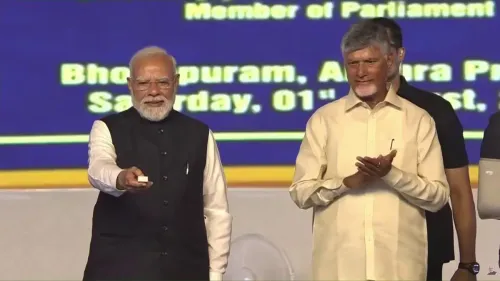
PM Modi inaugurated the Alluri Sitarama Raju International Airport at Bhogapuram , built at over ₹5,640 crore with a capacity of 6 million passengers annually .
Foundation stone laid for the ASIP Semiconductor Project in Visakhapatnam — Andhra Pradesh's first chip plant — at ₹460 crore , targeting 96 million chips per year .
Renewable energy transmission projects worth over ₹9,920 crore inaugurated or initiated, covering Kurnool and Ananthapuram zones linked to the National Grid .
National Highway projects worth ₹1,880 crore dedicated and foundation stones laid, aimed at cutting travel time between Visakhapatnam and Hyderabad .
In Mysuru , Modi inaugurated the Viveka Smaraka — a 81,000+ sq ft cultural youth centre at Niranjana Math commemorating Swami Vivekananda's 1892 visit.
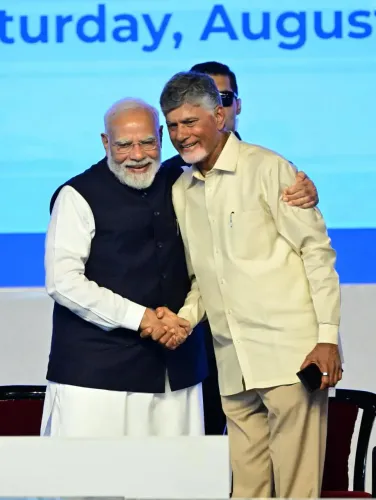
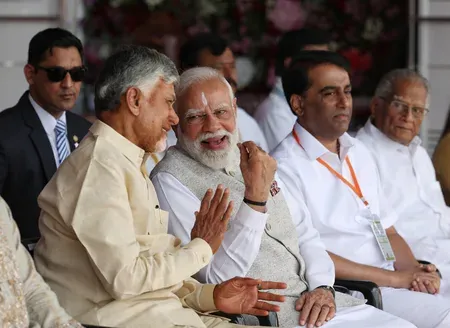
Prime Minister Narendra Modi on Saturday, 1 August undertook a day-long visit to Andhra Pradesh and Karnataka, inaugurating and laying the foundation stones for a clutch of infrastructure, clean energy, semiconductor, and cultural projects totalling thousands of crores in investment. The visit signals the Centre's continued push to accelerate southern India's economic and connectivity backbone.
Bhogapuram Airport: A new gateway for Andhra Pradesh
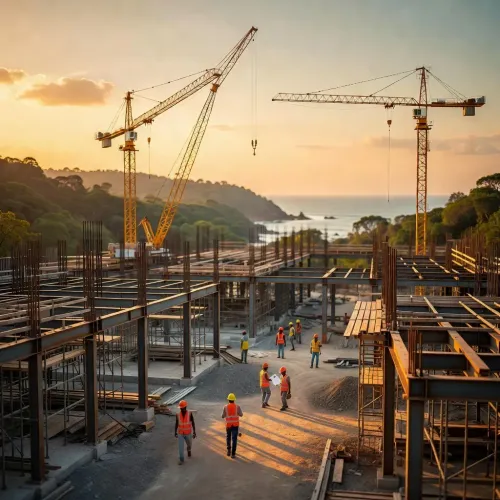
The centrepiece of the Andhra Pradesh leg was the inauguration of the Alluri Sitarama Raju International Airport at Bhogapuram, a greenfield facility developed under the Public-Private Partnership (PPP) model at a cost of over ₹5,640 crore. Designed to handle 6 million passengers annually, the airport is expected to strengthen air connectivity, spur tourism, and attract trade and investment to the region.
Ahead of the visit, Modi posted on social media platform X, describing the airport as 'a modern and futuristic airport that will boost connectivity, commerce and tourism,' adding that 'this project also incorporates principles of sustainability and energy efficiency.'
Semiconductor Push and Renewable Energy Projects
Modi also laid the foundation stone for the ASIP Semiconductor Project in Visakhapatnam — Andhra Pradesh's first semiconductor manufacturing facility approved under the India Semiconductor Mission. The facility, backed by an investment of ₹460 crore, is projected to manufacture nearly 96 million semiconductor chips annually and generate high-skilled employment while building an ancillary ecosystem for chip manufacturing in the state.
On the clean energy front, Modi laid the foundation stone for the Transmission System for Integration of Kurnool-IV Renewable Energy Zone – Phase-I (4.5 GW), being implemented by Powergrid through a Special Purpose Vehicle at an investment of ₹5,550 crore. He also inaugurated transmission systems for the Kurnool Wind Energy Zone and Solar Energy Zone developed at ₹3,550 crore, along with a transmission scheme covering solar zones in Ananthapuram (2,500 MW) and Kurnool (1,000 MW) at a cost of ₹820 crore. Together, these projects are designed to evacuate renewable power from Kurnool and Ananthapuram and feed it into the National Grid for distribution across the country.
National Highway Projects Worth ₹1,880 Crore
The Prime Minister dedicated and laid the foundation stone for National Highway projects worth ₹1,880 crore in Andhra Pradesh. Inaugurated stretches include four-lane access-controlled greenfield highways from Recherla to Guruvaygudem and Guruvaygudem to Devarapalle on NH-365BG, as well as the four-lane Tadipatri Bypass on NH-67. A high-level bridge at Lingasamudram on the Penchalakona–Yerpedu section of NH-565 was also among the foundation stones laid.
These projects are expected to ease traffic congestion in Vijayawada and other urban centres, cut travel time between Visakhapatnam and Hyderabad, and improve road safety across the region.
Mysuru: Viveka Smaraka Inaugurated in Karnataka
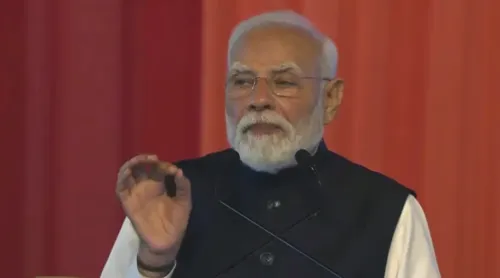
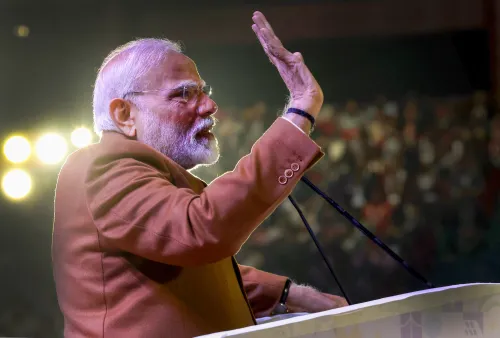
From Andhra Pradesh, Modi travelled to Mysuru, Karnataka, where he inaugurated the Swami Vivekananda Cultural Youth Centre — Viveka Smaraka and addressed a public gathering. The centre commemorates Swami Vivekananda's historic visit to Mysuru in November 1892 during his pan-India journey.
Built at the historic Niranjana Math across a constructed area of over 81,000 square feet, the Viveka Smaraka houses a 4-D Experience Centre, exhibition hall, 700-seat amphitheatre, classrooms, conference rooms, a library, reading room, meditation and yoga hall, a book stall, and dedicated facilities for students preparing for competitive examinations.
Taken together, Saturday's projects span aviation, semiconductors, renewable energy, road infrastructure, and cultural heritage — reflecting the Centre's intent to simultaneously advance economic modernisation and soft-power initiatives in southern India. The next test will be whether timelines for the newly laid foundation stones hold, and whether the semiconductor facility's job projections translate into verifiable outcomes on the ground.
Point of View
A state still finding its footing after bifurcation. The semiconductor announcement is the more consequential long-term signal: at ₹460 crore and 96 million chips annually, the ASIP facility is modest by global standards, but it plants a flag in a sector where India has historically been absent. The Viveka Smaraka in Mysuru adds a cultural-heritage dimension that plays well to the BJP's base in Karnataka ahead of local body elections. What the day's announcements do not answer is the pace of execution — Andhra Pradesh has seen several foundation stones laid over the past decade that moved slowly. The semiconductor plant, in particular, will be worth watching: India's chip ambitions have a credibility problem, and this facility's progress will be an early data point.
NationPress
15 Sept 2026
Frequently Asked Questions
What is the Alluri Sitarama Raju International Airport at Bhogapuram?
It is a greenfield international airport in Bhogapuram, Andhra Pradesh, inaugurated by PM Modi on 1 August. Built under the PPP model at a cost of over ₹5,640 crore, it is designed to handle 6 million passengers annually and is expected to boost tourism, trade, and air connectivity in the region.
What is the ASIP Semiconductor Project in Visakhapatnam?
The ASIP Semiconductor Project is Andhra Pradesh's first semiconductor manufacturing facility, approved under the India Semiconductor Mission with an investment of ₹460 crore. It is projected to produce nearly 96 million chips annually and create high-skilled jobs while building a local ancillary ecosystem.
What renewable energy projects did PM Modi inaugurate or initiate in Andhra Pradesh?
Modi inaugurated transmission systems for the Kurnool Wind and Solar Energy Zones (₹3,550 crore) and the Ananthapuram–Kurnool solar transmission scheme (₹820 crore), and laid the foundation stone for the Kurnool-IV Renewable Energy Zone transmission system (₹5,550 crore, 4.5 GW). All projects are linked to the National Grid.
What is the Viveka Smaraka inaugurated in Mysuru?
The Swami Vivekananda Cultural Youth Centre — Viveka Smaraka — is a cultural and educational complex at Niranjana Math in Mysuru, built across over 81,000 square feet. It commemorates Swami Vivekananda's visit to Mysuru in November 1892 and features a 4-D Experience Centre, a 700-seat amphitheatre, a library, and study facilities for competitive examination aspirants.
Which National Highway projects were covered during PM Modi's Andhra Pradesh visit?
Projects worth ₹1,880 crore were dedicated and initiated, including four-lane greenfield highways on NH-365BG (Recherla–Guruvaygudem and Guruvaygudem–Devarapalle), the Tadipatri Bypass on NH-67, and a high-level bridge at Lingasamudram on NH-565. They are designed to reduce travel time between Visakhapatnam and Hyderabad and ease congestion in Vijayawada.