Rahul Gandhi Backs IDBI Employees, Slams Bank Privatisation

Synopsis
Congress leader Rahul Gandhi attacked the Modi government's planned strategic disinvestment of IDBI Bank on 30 October 2026, contrasting the institution's 1964 founding mission under Congress with what he called a bid-first, price-later sell-off, and declared solidarity with the bank's employees.
Key Takeaways
Rahul Gandhi posted on 30 October 2026 declaring solidarity with IDBI Bank employees amid the bank's proposed privatisation.
IDBI Bank was established in 1964 under a Congress government as a development finance institution to fund industrial growth.
The Modi government announced strategic disinvestment of IDBI Bank in 2019 as part of a broader privatisation agenda.
Gandhi alleged bids were solicited before prices were fixed — a claim rooted in the disinvestment process sequence that remains publicly contested.
IDBI Bank employees and unions have repeatedly raised concerns about job security and service conditions under private ownership.
The IDBI sale is part of a wider policy shift since 2014 away from state-led institution-building toward market-driven ownership of public-sector banks.
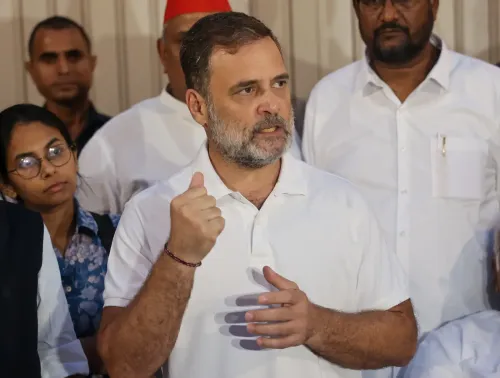
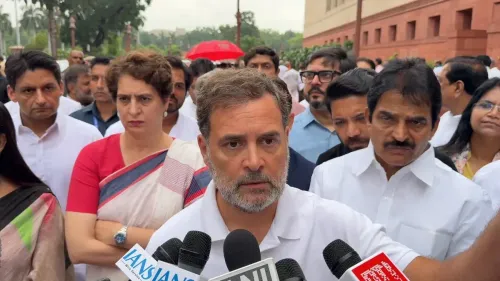
A bank built to industrialise a nation is now, Congress leader Rahul Gandhi argues, being sold off to the highest bidder — and on 30 October 2026, he made clear he is standing with the workers caught in the middle.
In a pointed Hindi-language post on X, Gandhi drew a sharp generational contrast: 'कांग्रेस के time पे बैंक बनते थे। मोदी के time में बिकते हैं।' ('In Congress's time, banks were built. In Modi's time, they are sold.') He alleged that in the current government's approach to IDBI Bank, bids were invited first and prices fixed later — a sequencing he presented as symptomatic of a wider sell-off agenda.
IDBI's six-decade journey — from nation-builder to disinvestment candidate
IDBI Bank traces its origins to 1964, when the Congress government established the Industrial Development Bank of India as a dedicated development finance institution. Its founding mission was unambiguous: channel long-term capital into heavy industry and infrastructure at a moment when private markets could not, or would not, do the job. For decades the institution was the backbone of industrial lending in India, financing steel mills, power plants, and capital-goods factories.
The bank's trajectory changed sharply after 2019, when the Narendra Modi-led central government announced a strategic disinvestment of IDBI Bank as part of a broader privatisation drive designed to reduce the fiscal burden of state-owned enterprises and invite private capital into the banking sector. The proposed sale placed IDBI alongside a clutch of public-sector units that the government identified for ownership transfer — a list that has triggered repeated rounds of parliamentary debate and union protests.
What Gandhi's post means for IDBI's tens of thousands of employees
Gandhi's declaration — 'मैं IDBI बैंक के कर्मचारियों के साथ खड़ा हूँ' ('I stand with the employees of IDBI Bank') — lands at a moment of acute uncertainty for the bank's workforce. IDBI Bank employees and their unions have voiced consistent anxiety about job security, service conditions, and the future of pension commitments under any private owner. Strategic disinvestment, unlike a straightforward stake sale, implies a change in management control — raising questions that routine government assurances have struggled to fully answer.
The Congress framing positions the disinvestment not as a technical fiscal decision but as an ideological rupture: the dismantling of an institution-building philosophy that, in the party's telling, underwrote India's post-independence industrial rise. The BJP-led government's counter-argument — that legacy public-sector banks carry non-performing asset burdens that only private management can resolve — has equal political currency, but Gandhi's post deliberately sidesteps that debate to plant a flag of solidarity with workers on the ground.
The larger privatisation battle playing out in Parliament
IDBI Bank is not an isolated case. The broader policy shift since 2014 has seen successive disinvestment targets set — and frequently revised — in Union Budgets. Banking privatisation in particular has been a legislative flashpoint, with opposition parties arguing that selling public-sector banks concentrates financial power in private hands and weakens universal service obligations in rural and semi-urban India. The outcome of the IDBI strategic sale process, and any parliamentary legislation it may require, remains one of the more consequential unresolved economic questions heading into the next budget cycle.
For now, the Leader of Opposition's public solidarity with IDBI's workforce ensures the disinvestment debate will stay squarely in the political arena — not just the finance ministry's spreadsheets.
Point of View
He frames the disinvestment as a class issue rather than a technocratic one, a register that travels better on social media and in union halls than budget footnotes do. The move also keeps the opposition relevant on economic policy at a moment when the government can argue falling NPA ratios as proof that banking reform works. Whether this solidarity translates into parliamentary pressure or legislative obstruction of any enabling bill will be the real test of its political weight.
NationPress
30 Oct 2026
Frequently Asked Questions
What is IDBI Bank and why is it being privatised?
IDBI Bank was founded in 1964 as the Industrial Development Bank of India to finance large-scale industrial projects. The Modi government announced its strategic disinvestment in 2019 as part of efforts to reduce the fiscal burden of state-owned banks and attract private management expertise.
What did Rahul Gandhi say about IDBI Bank?
Rahul Gandhi posted on X on 30 October 2026 that Congress governments built banks like IDBI to develop industry, while the Modi government is selling them. He alleged bids preceded price-setting in the disinvestment process and declared he stands with IDBI Bank employees.
Will IDBI Bank employees lose their jobs if the bank is privatised?
This remains a key concern. IDBI Bank employees and unions have consistently raised questions about job security, pension commitments, and service conditions under any new private owner, though no final sale has been completed.
What is strategic disinvestment of a bank?
Strategic disinvestment means the government sells a controlling or significant stake in a public-sector entity to a private buyer, transferring management control — unlike a simple stake sale where the state retains majority ownership.
Has IDBI Bank privatisation been completed?
As of the research available, the IDBI Bank strategic disinvestment process was announced in 2019 and has progressed through multiple stages, but a final, completed ownership transfer has not been confirmed in the verified public record.