PM Modi Marks Sardar Patel's 151st Birth Anniversary at Ekta Nagar
Synopsis
Prime Minister Narendra Modi marked Sardar Vallabhbhai Patel's 151st birth anniversary at Ekta Nagar on 31 October 2026, inspecting the National Unity Parade and delivering a nationwide address on unity, security, and the Viksit Bharat vision.
Key Takeaways
PM Narendra Modi attended Rashtriya Ekta Diwas celebrations at Ekta Nagar, Gujarat on 31 October 2026 .
The event marked Sardar Vallabhbhai Patel's 151st birth anniversary .
Modi inspected the National Unity Parade and delivered a nationwide address from the site of the Statue of Unity .
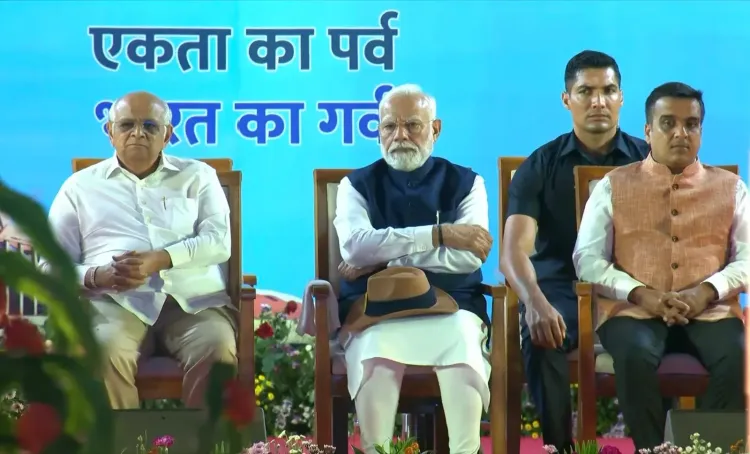
Gujarat CM Bhupendra Patel and Deputy CM Harsh Sanghavi were present at the ceremony.
The Prime Minister cited the last 12 years of progress in security, prosperity, and global prestige, and reaffirmed commitment to building a Viksit Bharat .
Rashtriya Ekta Diwas has been observed annually on 31 October since 2014 , with Ekta Nagar as the central venue since the Statue of Unity's inauguration in 2018 .
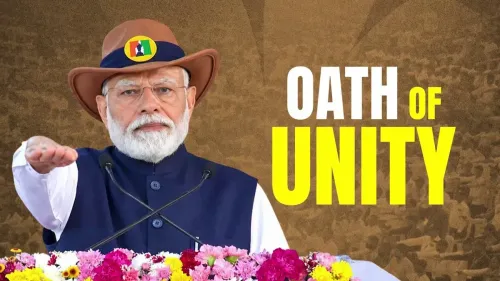
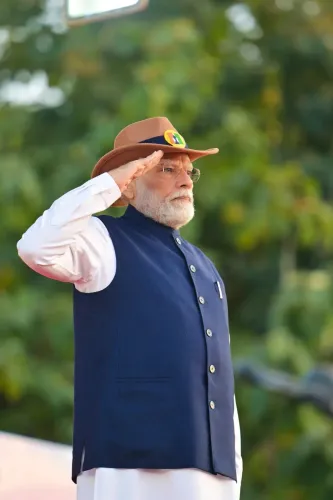
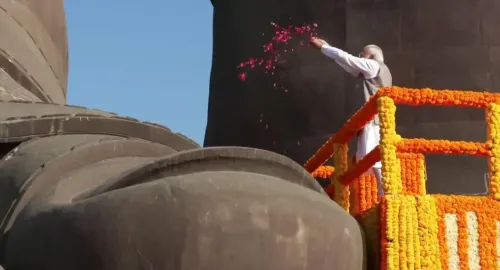
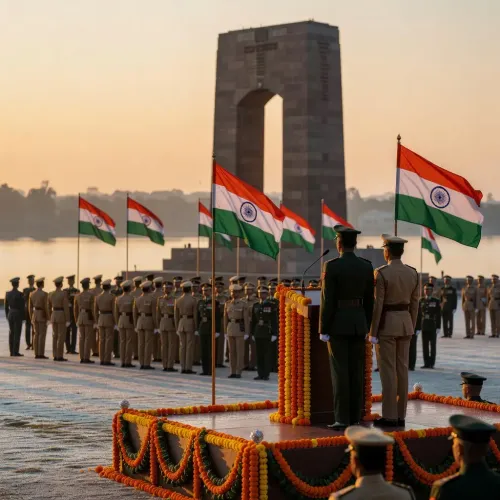
At the foot of the world's tallest statue, Prime Minister Narendra Modi stood before paramilitary battalions and cultural troupes from across India on Saturday, 31 October 2026, to mark the 151st birth anniversary of Sardar Vallabhbhai Patel — the Iron Man who stitched over 500 princely states into a single republic. The Chief Minister's Office of Gujarat announced that the Prime Minister participated in the Rashtriya Ekta Diwas celebrations at Ekta Nagar, inspected the National Unity Parade, and addressed the nation.
A parade in Patel's shadow
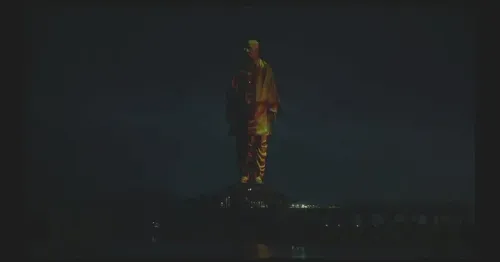
The event unfolded against the backdrop of the Statue of Unity — the 182-metre steel-clad monument inaugurated by Modi himself on 31 October 2018, Patel's 143rd birth anniversary. Various units of central armed police forces marched in formation as cultural troupes from multiple states performed dances and presented tableaux, turning the riverfront site into a concentrated display of federal plurality. Gujarat Chief Minister Bhupendra Patel and Deputy Chief Minister Harsh Sanghavi were present at the ceremony.
Modi's message: unity as the nation's propulsive force
Addressing the gathering, the Prime Minister paid tribute to Sardar Patel's 'divya chetna' — his 'divine consciousness' — and framed national unity not as sentiment but as strategic power. 'Unity gives us the formidable strength to move forward as one nation,' he said, noting that Independence Day, Republic Day, and Rashtriya Ekta Diwas together form the triad of national festivals celebrated with equal enthusiasm across the country.
Modi reflected on Sardar Patel's contribution to Indian history and what he described as a cultural renaissance, then surveyed the last 12 years — the period since 2014 — cataloguing rising security, prosperity, global prestige, and development. He closed with a renewed pledge to sustain what he called the 'Sashakt Bharat ki Sankalp Yatra' — the resolve-journey toward a strong India — and expressed firm confidence that a Viksit Bharat (Developed India) would be built through the participation and trust of every citizen.
Why 31 October carries this weight
Rashtriya Ekta Diwas was declared by the Government of India in 2014, the year the current administration took office, specifically to honour Patel's role in national integration. Since the Statue of Unity's inauguration in 2018, Ekta Nagar has served as the annual focal point, blending a hard-power military parade with the soft-power of multi-state cultural performances — a format that deliberately echoes Patel's own method: unity through inclusion, backed by resolve.
Sardar Patel's legacy is foundational: as India's first Deputy Prime Minister and Home Minister, he negotiated and, where necessary, compelled the accession of more than 500 princely states between 1947 and 1950, a feat historians routinely describe as one of the most consequential acts of state-building in the 20th century. Each successive Rashtriya Ekta Diwas ceremony at Ekta Nagar consciously links that historical achievement to contemporary governance themes.
On a day that belongs to the Iron Man of India, the message from Ekta Nagar was the same one Patel spent his life proving: a nation that holds together can hold its own against anything.
Point of View
Creating a seamless narrative arc from Patel's 1947 state-building to contemporary governance. Modi's reference to '12 years' of progress is a pointed electoral-cycle framing, positioning the Viksit Bharat agenda as the ideological heir to Patel's integration project. The consistent choice of Ekta Nagar as venue, rather than Delhi, also reinforces Gujarat's centrality to the ruling party's political identity. Whether the annual ceremony will eventually anchor a larger policy announcement — on security infrastructure or tourism around the site — remains the event's most watched variable.
NationPress
31 Oct 2026
Frequently Asked Questions
What is Rashtriya Ekta Diwas and why is it celebrated on 31 October?
Rashtriya Ekta Diwas, or National Unity Day, is observed on 31 October every year to mark the birth anniversary of Sardar Vallabhbhai Patel , India's first Deputy Prime Minister. The Government of India declared this observance in 2014 to honour Patel's role in unifying more than 500 princely states into independent India.
Where is Ekta Nagar and what is the Statue of Unity?
Ekta Nagar is a township in Gujarat built around the Statue of Unity , the world's tallest statue at 182 metres , depicting Sardar Vallabhbhai Patel. It was inaugurated by Prime Minister Modi on 31 October 2018 and has since served as the central venue for Rashtriya Ekta Diwas celebrations.
What did PM Modi say at Rashtriya Ekta Diwas 2026?
At the 2026 celebration, PM Modi said that 'unity gives us the formidable strength to move forward as one nation,' paid tribute to Sardar Patel's contribution to Indian history and cultural renaissance, reviewed the last 12 years of national progress, and reaffirmed commitment to building a Viksit Bharat through citizens' collective participation and trust.
Who attended the Rashtriya Ekta Diwas 2026 event in Gujarat?
Prime Minister Narendra Modi led the main ceremony at Ekta Nagar. Gujarat Chief Minister Bhupendra Patel and Deputy Chief Minister Harsh Sanghavi were also present. Various units of central armed police forces participated in the National Unity Parade alongside cultural troupes from multiple states.
What is Viksit Bharat and how did Modi link it to Sardar Patel?
Viksit Bharat — 'Developed India' — is the central government's long-term vision for India's development by 2047 , the centenary of independence. At Rashtriya Ekta Diwas 2026, PM Modi framed this goal as the modern continuation of Sardar Patel's mission, arguing that the same unity Patel forged in 1947 remains the force driving India's contemporary rise in security, prosperity, and global standing.