PM Modi Reviews Rs. 30,000 Cr Projects Across 9 States at PRAGATI
Synopsis
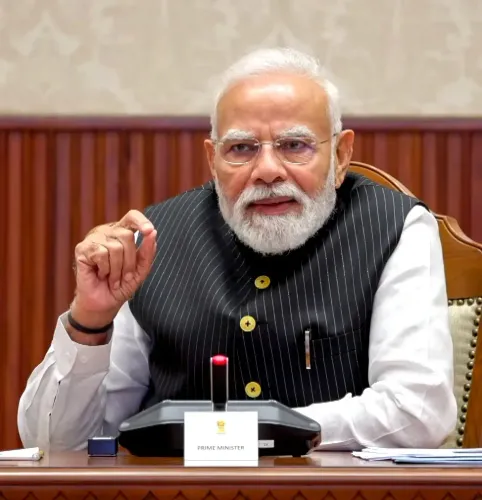
Prime Minister Narendra Modi chaired a PRAGATI session on August 25, 2026, reviewing Rs. 30,000 crore worth of railway, road, and power projects across nine states, with a stated focus on connectivity, growth, public services, and reducing delays.
Key Takeaways
30,000 crore worth of infrastructure projects were reviewed at the August 25, 2026 PRAGATI session.
Projects span nine states across the railways, roads, and power sectors.
PRAGATI (Pro-Active Governance and Timely Implementation) is a PMO -led digital review platform launched in March 2015 .
PM Modi identified four focus areas: better connectivity, higher growth, improved public services, and reduced project delays.
The platform gives the PMO direct oversight over state and central infrastructure bottlenecks through monthly video-conference sessions.
The specific project list from this session is expected to be released for public reference.
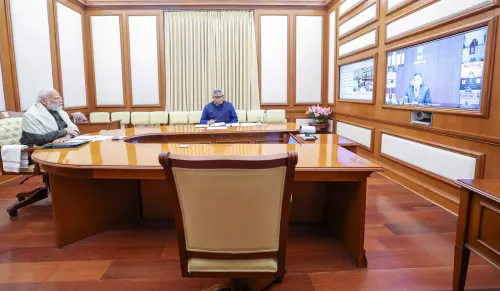
Thirty thousand crore rupees. Nine states. Three sectors. Prime Minister Narendra Modi chaired a PRAGATI session on Tuesday, August 25, 2026, putting that scale of infrastructure investment under direct PMO scrutiny — railways, roads, and power all on the table at once.
What PRAGATI is — and why it still matters in 2026
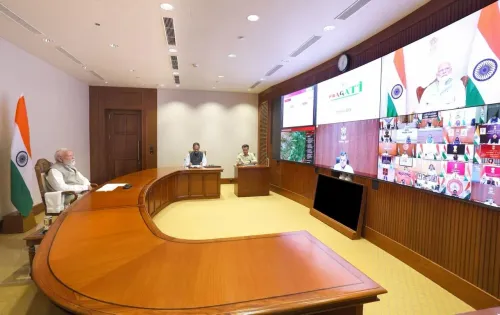
Launched in March 2015, PRAGATI — short for Pro-Active Governance and Timely Implementation — was designed precisely for moments like this: a single video-conference platform where the Prime Minister sits across from state chief secretaries and central ministry officials to cut through the coordination fog that buries infrastructure projects for years. The mechanism gives the PMO direct visibility into on-ground bottlenecks, from land acquisition snags to inter-departmental clearance delays, and forces time-bound answers in a single sitting.
Over more than a decade of monthly sessions, cumulative project values reviewed through PRAGATI have run into hundreds of thousands of crores. The platform has become one of the government's primary instruments for turning sanctioned projects into completed ones — and for making that conversion visible.
Railways, roads, power: the three-sector sweep
Tuesday's session covered projects spanning nine states, with the connectivity-and-growth mandate front and centre. PM Modi flagged four explicit focus areas: better connectivity, higher growth, improved public services, and — the perennial infrastructure nemesis — lesser delays. That last point is the whole logic of PRAGATI: delay is not just an administrative failure, it is a cost borne by citizens waiting for a railway line, a highway stretch, or reliable power supply.
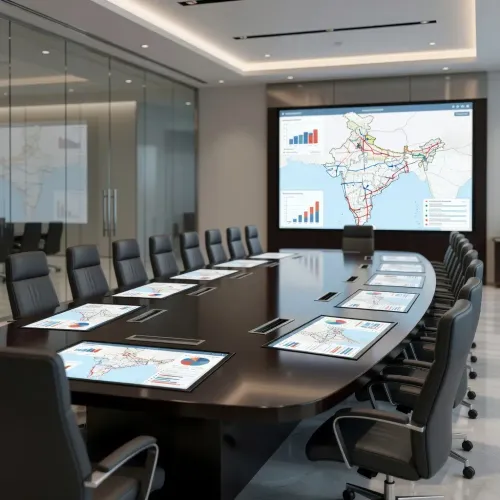
The three sectors chosen reflect the government's core infrastructure thesis — that railways move goods and people, roads unlock hinterland economies, and stable power underpins everything else. Reviewing all three in a single Rs. 30,000 crore session signals a push to close gaps across the full infrastructure stack simultaneously.
The PMO's direct-oversight model
What makes PRAGATI structurally distinct from routine inter-ministerial meetings is the chair. When the Prime Minister himself reviews a stalled project, the political and bureaucratic calculus for state governments and central ministries shifts immediately. Accountability becomes personal, timelines become commitments, and the session record becomes a paper trail that future reviews will test. That is the mechanism's design — and it is why the government has sustained it across more than a decade of monthly cycles.
The specific project list from this session is expected to be released, and state-level implementation updates will be the real measure of whether Tuesday's review translates into on-ground movement.
Point of View
000 crore multi-sector sweep across nine states in a single session also suggests the government is accelerating project closure ahead of what may be a politically sensitive calendar. The real test, as always, will be how many of Tuesday's reviewed projects move from 'monitored' to 'completed' before the next session.
NationPress
10 Oct 2026
Frequently Asked Questions
What is PRAGATI and who chairs it?
PRAGATI (Pro-Active Governance and Timely Implementation) is a digital review platform launched by the PMO in March 2015 . It is chaired by the Prime Minister and held monthly to fast-track stalled central and state infrastructure projects through direct executive oversight.
How much was reviewed at the August 2026 PRAGATI session?
Rs. 30,000 crore worth of projects across nine states , covering the railways, roads, and power sectors, were reviewed at the August 25, 2026 PRAGATI session chaired by PM Modi .
Which sectors does PRAGATI typically cover?
PRAGATI covers a broad range of infrastructure sectors. The August 2026 session focused on railways, roads, and power — three sectors the government identifies as foundational to connectivity and economic growth.
What are the focus areas PM Modi highlighted at the PRAGATI session?
PM Modi highlighted four focus areas: better connectivity, higher growth, better public services, and lesser delays in project implementation.
How often are PRAGATI sessions held?
PRAGATI sessions are held monthly. Since the platform's launch in 2015 , cumulative project values reviewed have run into hundreds of thousands of crores across multiple sectors and states.