PM Modi Reviews Rs 30,000 Cr Projects at PRAGATI Session
Synopsis
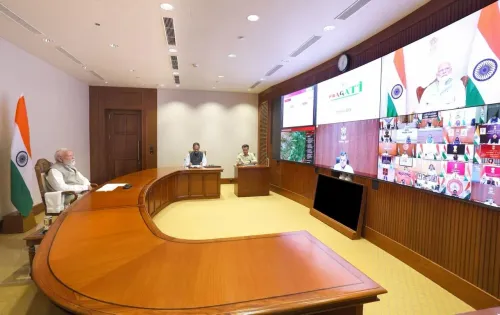
Prime Minister Narendra Modi on 28 May 2026 announced that the latest PRAGATI session reviewed projects worth over Rs 30,000 crore spanning railways, power, roads, ports, and Swachh Bharat Mission 2.0, continuing the government's monthly top-level infrastructure monitoring mechanism active since 2015.
Key Takeaways
Projects worth over Rs 30,000 crore were reviewed at the latest PRAGATI session chaired by Prime Minister Narendra Modi .
Sectors covered include railways , power , road connectivity , and ports .
Swachh Bharat Mission 2.0 and other social-sector schemes were also on the agenda.
PRAGATI has been operational since 25 March 2015 as a monthly video-conferencing project-review platform of the PMO.
Swachh Bharat Mission 2.0 was approved in 2021 with an outlay of Rs 62,009 crore running through 2026 .
The session reflects the government's multi-sectoral approach to project monitoring, integrating infrastructure and social-sector schemes under one review framework.
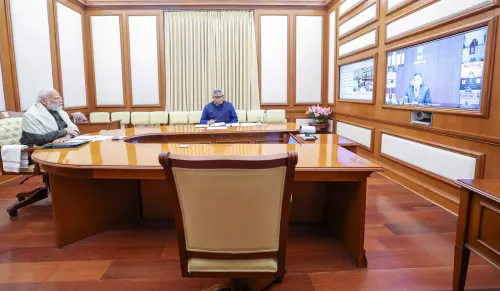
Prime Minister Narendra Modi on Thursday, 28 May 2026 disclosed that the latest PRAGATI review session had examined projects worth over Rs 30,000 crore, spanning railways, power, road connectivity, ports, and social-sector schemes including Swachh Bharat Mission 2.0.
Context
PRAGATI — an acronym for Pro-Active Governance And Timely Implementation — is a video-conferencing platform launched by the Prime Minister's Office on 25 March 2015. It enables the Prime Minister to directly review the implementation status of major central and state projects with senior officials in real time. The platform has been used for monthly sessions since its inception, making it one of the longest-running direct project-monitoring mechanisms in Indian governance.
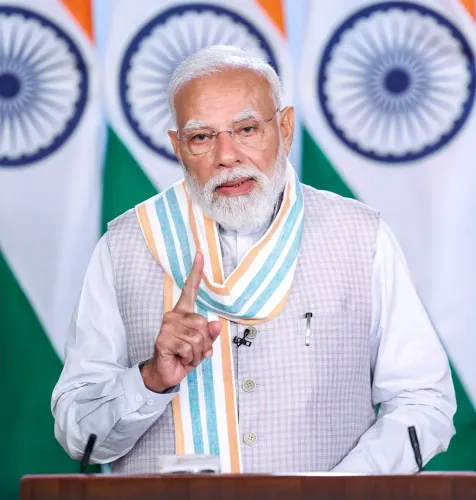
In his post, Modi stated: 'During yesterday's PRAGATI session, projects worth over Rs 30,000 crore were reviewed. The works covered sectors like railways, power and road connectivity. Aspects relating to ports, Swachh Bharat Mission 2.0 and other social sector schemes were also discussed.'
Policy Backdrop
The PRAGATI platform was conceived to cut through inter-ministerial and centre-state coordination bottlenecks that have historically delayed large infrastructure projects. Since 2015, successive sessions have collectively reviewed hundreds of projects worth several lakh crore rupees across sectors. Railways and road connectivity have been recurring agenda items, reflecting the government's infrastructure-first economic strategy.
Swachh Bharat Mission 2.0 was approved by the Union Cabinet in 2021 with a total outlay of Rs 62,009 crore for the period 2021–2026. The second phase focuses on solid waste management, wastewater treatment, and long-term sustainability in both urban and rural areas. Its inclusion in a PRAGATI session signals continued top-level monitoring as the scheme approaches its terminal year.
The appearance of ports on the agenda aligns with the broader Sagarmala Programme and the government's push to modernise maritime infrastructure as part of the PM Gati Shakti national master plan for multi-modal connectivity.
Stakeholders and Impact
The primary beneficiaries of PRAGATI-reviewed projects are the central ministries of Railways, Road Transport and Highways, Power, and Ports, Shipping and Waterways, alongside their executing agencies and state governments. Urban local bodies and rural panchayats are the ground-level implementers for Swachh Bharat Mission 2.0, and any acceleration in fund release or issue resolution from the session could directly affect sanitation infrastructure timelines.
Infrastructure agencies and contractors working on the reviewed projects stand to benefit from faster clearances and resolution of inter-departmental disputes that the PRAGATI mechanism is designed to address. Citizens in regions where stalled projects are located — particularly in railway expansion zones and road-connectivity corridors — are the ultimate end-beneficiaries.
What's Next
Follow-up action from PRAGATI sessions typically includes directed timelines for project completion, fund-release approvals, and inter-ministerial coordination mandates. Ministries involved are expected to report compliance at the next scheduled session. Parliamentary committee reports and ministry press releases in the coming weeks may provide granular details on which specific projects and corridors were discussed.
With Swachh Bharat Mission 2.0 nearing its 2026 deadline, the session's focus on the scheme suggests the government is conducting a final-stretch review to ensure targets on waste management and wastewater treatment are met before the programme concludes. The next PRAGATI session will be closely watched for any escalation of project timelines or new infrastructure announcements.
Point of View
Roads, ports, power) alongside Swachh Bharat Mission 2.0 signals a deliberate effort to present governance as integrated rather than siloed. With Swachh Bharat 2.0 approaching its 2026 deadline, placing it on the PRAGATI agenda suggests the administration is using political visibility to drive last-mile delivery. The Rs 30,000 crore figure, while large, is consistent with the scale of prior PRAGATI sessions, indicating the platform remains a routine but high-value governance instrument rather than a crisis-response measure.
NationPress
11 Oct 2026
Frequently Asked Questions
What is PRAGATI and how does it work?
PRAGATI is a video-conferencing platform launched by the Prime Minister's Office on 25 March 2015 to enable the Prime Minister to directly review and resolve implementation bottlenecks in major central and state government projects. Senior officials from relevant ministries and state governments join the sessions to provide updates and receive directions.
How much was reviewed at the latest PRAGATI session?
Projects worth over Rs 30,000 crore were reviewed at the PRAGATI session held on 27 May 2026, as announced by Prime Minister Narendra Modi on 28 May 2026.
Which sectors were covered in the May 2026 PRAGATI session?
The session covered railways, power, road connectivity, ports, Swachh Bharat Mission 2.0, and other social-sector schemes.
What is Swachh Bharat Mission 2.0?
Swachh Bharat Mission 2.0 is the second phase of India's national sanitation programme, approved by the Union Cabinet in 2021 with an outlay of Rs 62,009 crore for 2021–2026. It focuses on solid waste management, wastewater treatment, and sustainability in urban and rural areas.
How often does the Prime Minister hold PRAGATI sessions?
PRAGATI sessions are held on a monthly basis, with the Prime Minister directly reviewing project progress alongside central and state officials via video conference.