PM Modi shares Sanskrit verse on statecraft and governance
Synopsis
Prime Minister Narendra Modi on 22 July 2026 shared a Sanskrit verse on statecraft calling for diligence in others' duties, swiftness in one's own work, and courage in state affairs — continuing his practice of connecting classical Indian texts with contemporary governance.
Key Takeaways
PM Narendra Modi posted a Sanskrit verse on governance on 22 July 2026 via X.
The verse calls for being 'engaged in mind for others' duties, swift in one's own tasks, contented in allies' work, and courageous in state affairs.' The post was accompanied by a video and carried no additional explanatory text from the Prime Minister.
Modi has shared classical Sanskrit verses on leadership and rajadharma periodically since taking office in 2014 .
The primary audience includes civil servants and political executives who follow the PM's communications for governance signals.
Observers will watch for the verse's reappearance in official addresses or administrative training contexts.
Prime Minister Narendra Modi on Wednesday, 22 July 2026, shared a classical Sanskrit verse on governance and statecraft via his official account on X, continuing his practice of drawing from India's textual traditions to reflect on administrative virtues.
Context
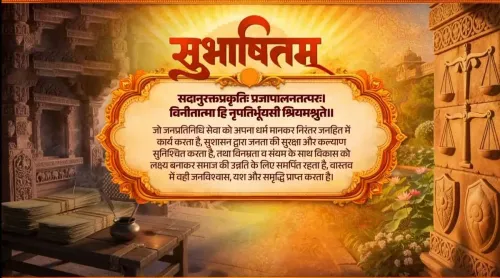
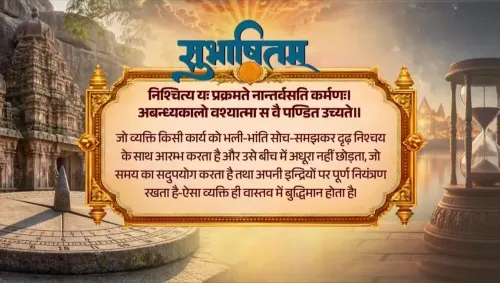
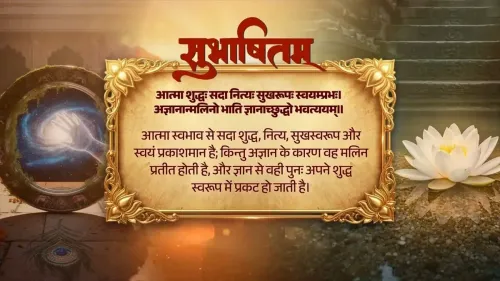
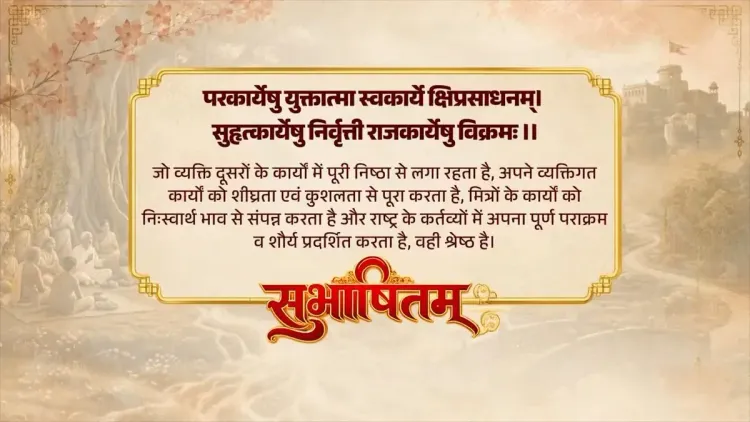
The verse posted by Modi reads: 'परकार्येषु युक्तात्मा स्वकार्ये क्षिप्रसाधनम्। सुहृत्कार्येषु निर्वृत्ती राजकार्येषु विक्रमः।।' — which translates broadly as: 'Be engaged in mind for others' duties, swift in accomplishing one's own tasks, find contentment in the work of allies, and show courage in the affairs of the state.' The verse encapsulates a classical ideal of a diligent, courageous, and other-oriented administrator.
The post was accompanied by a video, suggesting a curated, deliberate communication rather than an incidental share. No additional explanatory text was provided by the Prime Minister alongside the verse.
Policy Backdrop
Modi has, over the course of his tenure since 2014, periodically referenced Sanskrit verses and classical Indian texts on leadership, rajadharma (duties of the ruler), and statecraft in his public communications. These posts align with a broader political and cultural project of connecting contemporary governance with India's classical heritage.
Such verses have occasionally found echo in official addresses — including speeches at civil service training institutes, Mann Ki Baat radio programmes, and national occasions — where the Prime Minister has invoked India's textual traditions to frame modern administrative challenges. The verse's emphasis on swiftness in one's own duty, engagement with others' concerns, and courage in state affairs maps closely onto themes Modi has articulated in governance reform contexts.
Stakeholders and Impact
The primary audience for such posts extends beyond the general public to include civil servants, political executives, and those engaged in public administration — groups that follow the Prime Minister's social media closely for signals of administrative philosophy. Verses on rajadharma carry implicit normative weight when shared by the head of government.
For India's vast bureaucratic apparatus, a post of this nature from the Prime Minister's office can serve as a soft cultural signal — reinforcing values of diligence, inter-departmental cooperation, and state-focused courage. Scholars of classical Indian political thought have long noted that texts on statecraft, including the Arthashastra and various Niti literature, contain verses of this character, though the precise source of this verse has not been confirmed.
What's Next
Observers will watch whether this verse is cited in forthcoming official addresses, administrative training communications, or Mann Ki Baat episodes — a pattern seen with earlier Sanskrit posts by the Prime Minister. The verse's themes of state-focused courage and swift execution could also surface in the context of ongoing governance or policy reform discussions.
The post reinforces Modi's long-standing effort to position India's classical intellectual heritage as a living resource for contemporary governance — a theme likely to recur as the government approaches key administrative milestones.
Point of View
Particularly aimed at the bureaucracy and educated public. The verse's stress on courage in 'rajadharma' (state affairs) and swiftness in duty may also carry implicit messaging about administrative urgency at a time when delivery on policy promises is under scrutiny. Whether this remains a standalone cultural post or seeds a broader communication campaign will be the key thing to watch.
NationPress
20 Oct 2026
Frequently Asked Questions
What Sanskrit verse did PM Modi post on 22 July 2026?
PM Modi posted the verse 'परकार्येषु युक्तात्मा स्वकार्ये क्षिप्रसाधनम्। सुहृत्कार्येषु निर्वृत्ती राजकार्येषु विक्रमः।।' which translates as: be engaged in mind for others' duties, swift in your own tasks, contented in allies' work, and courageous in state affairs.
What is the meaning of the Sanskrit shloka PM Modi shared?
The verse outlines four virtues of a good administrator: mental engagement with others' concerns, swiftness in completing one's own duties, contentment when helping allies, and courage when dealing with affairs of the state.
Why does PM Modi post Sanskrit verses on social media?
Modi has, since 2014, used Sanskrit verses on leadership and statecraft to connect contemporary governance with India's classical traditions — a practice that also serves as cultural soft power messaging directed at civil servants and the broader public.
What is the source of the Sanskrit verse PM Modi posted?
The precise textual source of the verse has not been officially confirmed. It belongs to the genre of classical Niti (statecraft and ethics) literature that includes texts on rajadharma and administrative virtues.
What does rajadharma mean in Indian political tradition?
Rajadharma refers to the duties and ethical obligations of a ruler or state functionary in classical Indian political thought, encompassing justice, courage, diligence, and the welfare of subjects — themes central to texts like the Arthashastra and various Niti shastras.