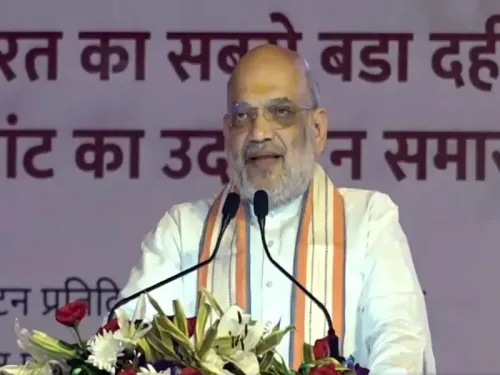
PM Modi to inaugurate Banas Dairy ASRS warehouse in Palanpur on Oct 30
Synopsis
PM Modi will inaugurate a ₹31.14 crore robotic warehouse at Banas Dairy's Palanpur plant on 30 October — a system that stores 11,000 pallets across nine levels and needs only five to ten workers. For a cooperative that returns 82% of revenues to over 4.5 lakh farmers, this automation push signals how India's rural dairy sector is moving quietly but decisively into Industry 4.0 territory.
Key Takeaways
PM Narendra Modi will inaugurate the ASRS warehouse at Banas Dairy's UHT plant in Palanpur, Gujarat on 30 October 2026 .
The facility cost ₹31.14 crore and can store up to 11,000 pallets across nine levels within 30,000 square feet .
Robotic 'mother-child' shuttles handle all goods movement; the warehouse needs only 5–10 employees to operate.
Banas Dairy's Palanpur UHT plant processes 5.5 lakh litres of milk daily and posted ₹1,050 crore in revenue in 2025-26 .
Banas Dairy recorded a turnover of more than ₹21,200 crore in 2024-25 , returning 82% of revenue to over 4.5 lakh farmers .
Products are exported to Singapore, the Maldives, the UAE , and Malaysia , alongside pan-India distribution.
Prime Minister Narendra Modi will inaugurate the Automated Storage and Retrieval System (ASRS) at Banas Dairy's ultra-high-temperature (UHT) plant in Palanpur, Gujarat, on 30 October 2026. The ₹31.14 crore facility marks the cooperative's first foray into full supply chain automation, extending its technology adoption beyond milk processing and packaging.
What the Automated Warehouse Can Do
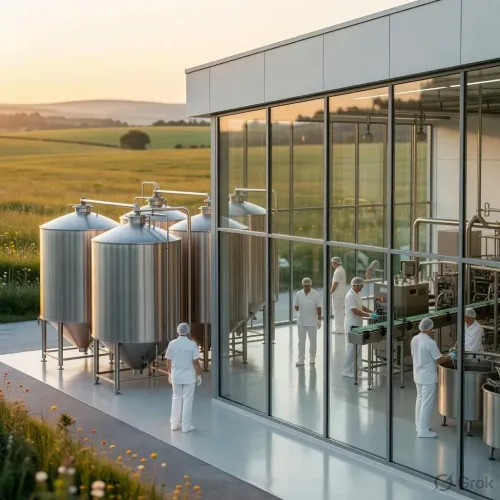
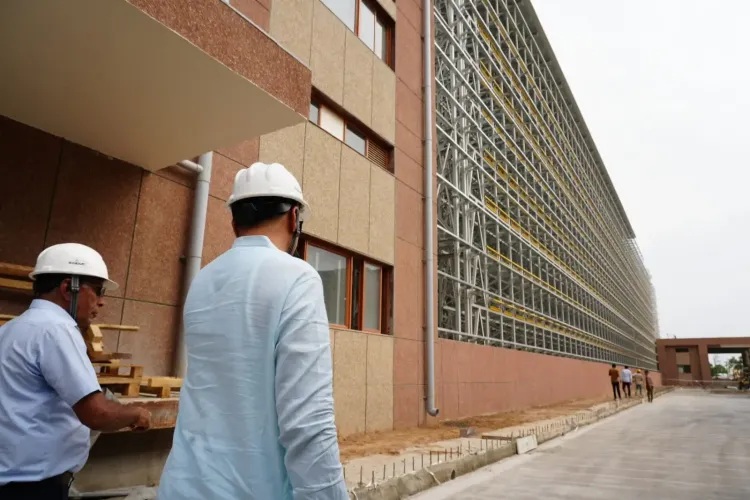
The ASRS warehouse spans 30,000 square feet and is designed to store up to 11,000 pallets across nine levels of high-density steel racks. Robotic shuttles handle all movement and retrieval of goods, meaning the entire facility can be operated by as few as five to ten employees — a fraction of the workforce required in a conventional warehouse.
The system uses a 'mother-child' shuttle arrangement: a larger mother shuttle carries a smaller child shuttle to the required rack lane, where the child shuttle places or retrieves individual pallets and boxes. Positions of all incoming pallets are recorded automatically in specialised software, and when a specific product or batch is needed, the system identifies its location and routes it directly to the dispatch area — eliminating manual searches across thousands of pallets.
Products and Plant Details
The warehouse will primarily serve Banas Dairy's UHT plant, which was established in Palanpur in 2015 and currently processes around 5.5 lakh litres of milk daily. The plant recorded annual revenue of ₹1,050 crore in 2025-26 and operates at approximately 90 per cent of its peak capacity.
Products stored in the new warehouse include Cow-Buffalo Gold milk, High Protein Lassi, Apple Tru, and Tea Special, among others. The UHT heat treatment process allows these products to remain shelf-stable for up to six months without refrigeration or preservatives. Banas Dairy exports its products to Singapore, the Maldives, the United Arab Emirates, and Malaysia, in addition to markets across India.
Why This Matters for Banas Dairy
Traditional warehouses rely on forklifts that require wide aisles and large floor areas, making high-density storage impractical and batch-tracking cumbersome. The ASRS addresses both constraints through computerised inventory management and faster retrieval. The software also enables end-to-end traceability — tracking each batch from packing through to dispatch, including quality-inspection triggers.
This installation represents a significant expansion of Banas Dairy's automation journey, which until now had been concentrated in processing and packaging lines. Notably, the move comes as Indian dairy cooperatives face increasing pressure to reduce logistics costs and improve cold-chain efficiency.
Banas Dairy at a Glance
Established in 1969, Banas Dairy collects an average of 83 lakh litres of milk daily from more than 4.5 lakh livestock-rearing farmers through 1,505 village-level milk cooperative societies. The cooperative posted a turnover of more than ₹21,200 crore in 2024-25, with 82 per cent of total revenue returned directly to farmers as remuneration — an unusually high farmer-payout ratio in the dairy sector.
Prime Minister Modi's presence at the inauguration underscores the political and economic significance of cooperative dairy infrastructure in Gujarat, a state that is also home to Amul's parent body, the Gujarat Cooperative Milk Marketing Federation (GCMMF). The event is expected to draw attention to the cooperative model as a template for rural economic empowerment.
Point of View
Not just its processing lines. The more interesting number is not the ₹31.14 crore capex but the 82% farmer-payout ratio — a figure that most private dairy players cannot match and that gives the cooperative a political legitimacy no subsidy can replicate. Modi's personal presence at the inauguration is consistent with BJP's long-standing effort to claim cooperative dairy as a national achievement, even as questions persist about whether automation at this scale translates into better farmgate prices or merely leaner overheads for the cooperative itself.
NationPress
27 Oct 2026
Frequently Asked Questions
What is the Banas Dairy ASRS warehouse being inaugurated by PM Modi?
It is a ₹31.14 crore Automated Storage and Retrieval System installed at Banas Dairy's UHT plant in Palanpur, Gujarat, capable of storing up to 11,000 pallets across nine levels using robotic shuttles. PM Modi is set to inaugurate it on 30 October 2026.
How does the 'mother-child' shuttle system at Banas Dairy's warehouse work?
A larger 'mother' shuttle carries a smaller 'child' shuttle to the correct rack lane; the child shuttle then moves between storage positions to place or retrieve individual pallets and boxes. The entire process is managed by specialised software that records pallet locations and routes goods automatically to the dispatch area.
What products are stored in the new automated warehouse?
The warehouse primarily stores products from Banas Dairy's UHT plant, including Cow-Buffalo Gold milk, High Protein Lassi, Apple Tru, and Tea Special. UHT-treated products can remain shelf-stable for up to six months without refrigeration or preservatives.
How large is Banas Dairy and what is its impact on farmers?
Banas Dairy collects 83 lakh litres of milk daily from over 4.5 lakh farmers through 1,505 village-level milk cooperative societies. It posted a turnover of more than ₹21,200 crore in 2024-25, returning 82% of total revenue directly to farmers as remuneration.
Where does Banas Dairy export its products?
Banas Dairy exports its products to Singapore, the Maldives, the United Arab Emirates, and Malaysia, in addition to selling across India. Its Palanpur UHT plant recorded annual revenue of ₹1,050 crore in 2025-26.