Mahua Moitra Quotes Bengali Verse in Jab at BJP's Samik Bhattacharya
Synopsis
TMC MP Mahua Moitra directed a playful Bengali folk verse at BJP leader Samik Bhattacharya on X on 10 July 2026, using imagery of shimul cotton, cold baths, and bread with jaggery to deliver a culturally coded political jab in the ongoing TMC-BJP social-media rivalry in West Bengal.
Key Takeaways
TMC MP Mahua Moitra posted a Bengali verse on X on 10 July 2026 , tagging BJP's Samik Bhattacharya .
The verse lists life's simple pleasures — carding shimul cotton, bathing in cold water — before declaring 'paanruti aar jhola gur' (bread and liquid jaggery) the best of all.
The post is addressed as 'Dada go' , a teasing Bengali term, signalling a pointed but culturally coded jab at the BJP leader.
TMC and BJP leaders in West Bengal routinely use Bengali literary and folk idioms on social media as part of their political communication strategy.
Moitra represents Krishnanagar in Nadia district and is known for blending cultural references with political commentary on social platforms.
TMC MP Mahua Moitra took to X on Friday, 10 July 2026, to tag West Bengal BJP leader Samik Bhattacharya in a playful yet pointed Bengali verse, deploying the region's literary and folk tradition as a vehicle for political commentary.
Context
Moitra's post is written entirely in Bengali and addresses Bhattacharya as 'Dada go' — an affectionate but mildly teasing term for an elder brother — before launching into a lyrical inventory of life's small pleasures. The verse, loosely translated, reads: 'Brother! I have thought far and wide — of all the good things in this world, carding shimul cotton is good, bathing in cold water is good, but best of all — bread and jaggery syrup.' The final punchline, 'paanruti aar jhola gur' (bread and liquid jaggery), is a humble, distinctly Bengali comfort food, used here as a rhetorical contrast to grander claims.
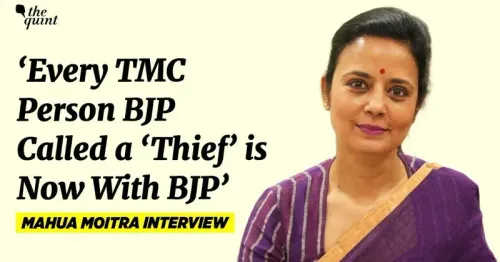
The post carries an image and is directed squarely at @SamikBJP, Bhattacharya's handle on X, suggesting it is a reply or rejoinder to something Bhattacharya had said or posted, though the specific trigger has not been independently confirmed.
Policy Backdrop
TMC and BJP have long waged a parallel social-media war in West Bengal that runs alongside their street-level rivalry. Both sides routinely invoke Bengali poetry, proverbs, and folk idioms — a tradition rooted in the state's deep literary culture — to score political points with regional audiences. Moitra, who represents Krishnanagar in Nadia district, is among the more prolific users of this style, frequently blending cultural allusion with sharp political barbs on social platforms.
Samik Bhattacharya is a senior BJP figure in West Bengal and a regular interlocutor for opposition parties on social media. Exchanges between Moitra and BJP leaders have historically drawn significant engagement from Bengali-speaking users across the political spectrum.
Stakeholders and Impact
The post's primary audience is West Bengal's Bengali-speaking electorate, for whom the cultural register — shimul cotton, cold-water baths, bread and jaggery — carries immediate, nostalgic resonance. By grounding her jibe in everyday folk imagery rather than policy language, Moitra signals a deliberate choice to communicate in the idiom of the street rather than the legislature.
Such exchanges, while seemingly light-hearted, serve a strategic function: they reinforce party identity and keep leaders visible between formal electoral cycles. With West Bengal perpetually in a state of low-level political mobilisation, even a cultural verse can function as a soft reminder of party presence and personality.
What's Next
As West Bengal moves toward its next round of assembly bypolls or local body elections, observers will watch whether this style of culturally coded social-media sparring intensifies. Moitra's post is a reminder that in Bengal, political communication rarely separates the literary from the electoral — and that a well-placed verse can carry as much weight as a press conference.
Point of View
Where literary credibility carries real electoral weight. The public tagging of Bhattacharya ensures the exchange reaches both parties' bases simultaneously, functioning as soft mobilisation in a state where the political temperature rarely drops. Whether Bhattacharya responds in kind will determine whether this becomes a news cycle or simply a moment of cultural point-scoring.
NationPress
8 Oct 2026
Frequently Asked Questions
What did Mahua Moitra post on X on 10 July 2026?
Mahua Moitra posted a Bengali folk verse on X on 10 July 2026, tagging BJP leader Samik Bhattacharya. The verse lists simple pleasures before declaring bread and liquid jaggery the best of all, widely read as a playful political jab.
Who is Samik Bhattacharya and why did Moitra tag him?
Samik Bhattacharya is a senior BJP leader in West Bengal. Moitra tagged him using his X handle @SamikBJP, suggesting the verse was a direct rejoinder to something Bhattacharya had said, though the specific trigger has not been confirmed.
What does 'paanruti aar jhola gur' mean?
'Paanruti aar jhola gur' is Bengali for bread and liquid jaggery syrup — a simple, traditional comfort food in West Bengal. Moitra used it as the punchline of her verse, contrasting grand claims with humble, everyday reality.
Why do TMC and BJP leaders use Bengali poetry in political fights?
West Bengal has a deep literary culture, and invoking Bengali poetry or folk idioms signals cultural authenticity to regional voters. Both TMC and BJP use this style on social media to connect with Bengali-speaking audiences and score political points beyond formal policy debates.
Which constituency does Mahua Moitra represent?
Mahua Moitra is the Lok Sabha MP from Krishnanagar in Nadia district, West Bengal, representing the All India Trinamool Congress.