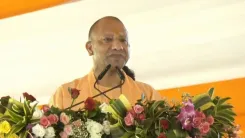
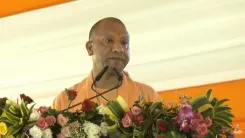
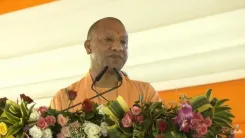
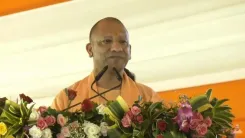
MP Cabinet Clears Rs 2,300 Cr Infrastructure Push Under CM Mohan Yadav
Synopsis
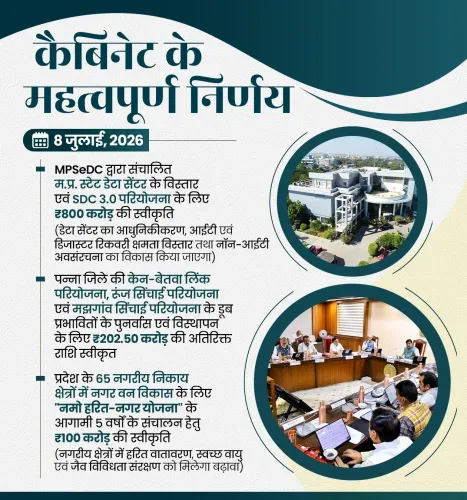
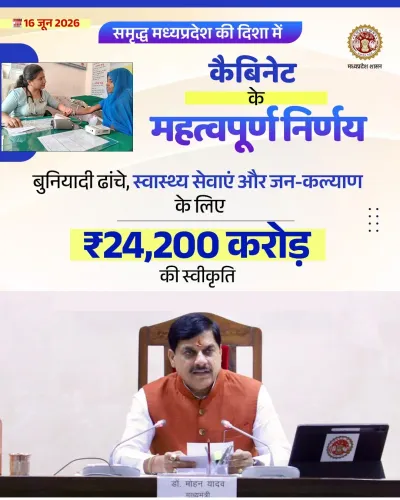
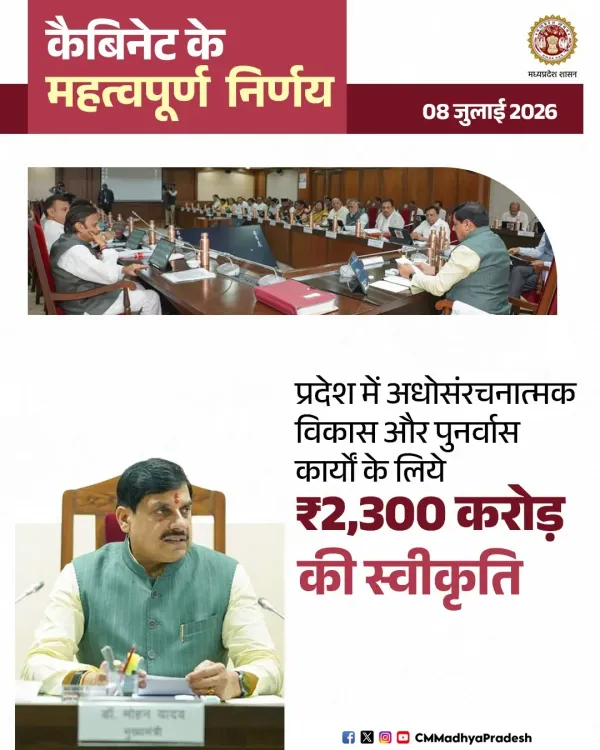
The Madhya Pradesh cabinet, chaired by Chief Minister Dr. Mohan Yadav, approved Rs 2,300 crore worth of infrastructure and rehabilitation development works on 8 July 2026, framing the investment as a cornerstone of the state's growth strategy.
Key Takeaways
The Madhya Pradesh Cabinet approved Rs 2,300 crore in infrastructure and rehabilitation works on 8 July 2026 .
The meeting was chaired by Chief Minister Dr.
Mohan Yadav , who has led the state since December 2023 .
The approved package covers both physical infrastructure construction and rehabilitation-related development works.
The government described the initiative as giving 'new momentum' to the state's development under the theme 'Strong infrastructure, prosperous Madhya Pradesh.' A detailed project-by-project breakdown had not been publicly released at the time of the cabinet announcement.
Rollout will depend on tendering processes and contractor selection in the weeks following the approval.
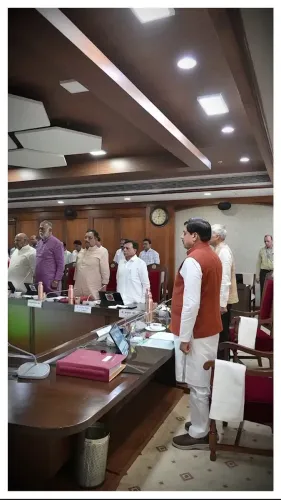
The Chief Minister's Office of Madhya Pradesh announced on Wednesday, 8 July 2026 that the state cabinet, chaired by Chief Minister Dr. Mohan Yadav, approved development works worth Rs 2,300 crore aimed at strengthening infrastructure and rehabilitation across the state.
Context
The cabinet meeting, held under the chairmanship of Dr. Mohan Yadav, cleared a package of infrastructure and rehabilitation-related projects described by the government as central to giving 'new momentum to the state's development.' The official post summarised the decision with the phrase 'Majboot adhoasanrachna, samridh Madhya Pradesh' ('Strong infrastructure, prosperous Madhya Pradesh'), signalling the government's framing of physical investment as the foundation of economic progress.
The approved outlay of Rs 2,300 crore covers both infrastructure construction and rehabilitation works, though a detailed project-by-project breakdown was not released alongside the cabinet communique.
Policy Backdrop
Madhya Pradesh has, under successive BJP governments, maintained a pattern of large capital-expenditure approvals through periodic cabinet decisions, spanning roads, irrigation networks, and urban infrastructure. This approach aligns with the national emphasis on public capital spending as a growth driver, a priority consistently reflected in Union budgets since 2014.
Dr. Mohan Yadav has led the state government since December 2023, following the party's victory in the assembly elections. Infrastructure acceleration has been a recurring theme in his administration's public communications, with cabinet meetings serving as the primary vehicle for announcing large-ticket project approvals.
Stakeholders and Impact
The twin focus on infrastructure and rehabilitation means the approved package is expected to affect two distinct groups: residents who stand to benefit from improved roads, bridges, or urban utilities, and project-affected families who may receive rehabilitation support linked to ongoing development works.
State residents in districts where projects are eventually tendered will be the primary beneficiaries, while contractors, local bodies, and implementing agencies will be responsible for on-ground execution. The scale of the approval — Rs 2,300 crore — places it among the larger single-cabinet infrastructure clearances in recent state history.
What's Next
The cabinet approval is the first formal step in a longer administrative chain. Tendering processes, contractor selection, and work-order issuance will determine how quickly funds translate into ground-level activity. Progress on the approved projects is likely to surface in subsequent assembly sessions, budget documents, or departmental progress reports.
Observers will watch whether the state government releases a detailed project list and district-wise allocation, which would allow independent assessment of the spending's geographic spread and sectoral priorities.
Point of View
300 crore cabinet clearance fits a well-established BJP playbook in Madhya Pradesh: using periodic, high-visibility cabinet decisions to signal development intent and keep infrastructure spending in the public eye between budget cycles. For CM Mohan Yadav, now in his third year in office, large-ticket approvals serve a dual purpose — demonstrating administrative momentum and building a record ahead of future electoral cycles. The inclusion of rehabilitation works alongside construction suggests the government is conscious of managing displacement-related political risk. Whether the approval translates into timely execution will be the real test, given that MP has historically faced gaps between announced and disbursed capital expenditure.
NationPress
8 Jul 2026
Frequently Asked Questions
What did the Madhya Pradesh cabinet approve on 8 July 2026?
The Madhya Pradesh cabinet approved Rs 2,300 crore worth of infrastructure and rehabilitation development works at a meeting chaired by Chief Minister Dr. Mohan Yadav on 8 July 2026.
Who is the Chief Minister of Madhya Pradesh in 2026?
Dr. Mohan Yadav is the Chief Minister of Madhya Pradesh. He has held the position since December 2023 after the BJP's victory in the state assembly elections.
What projects are covered under the Rs 2,300 crore MP cabinet approval?
The approval covers infrastructure construction and rehabilitation-related development works. A detailed project list had not been released publicly at the time of the cabinet announcement.
How does this cabinet decision fit into Madhya Pradesh's development strategy?
Madhya Pradesh under BJP governments has consistently used large cabinet-approved capital expenditure on roads, irrigation, and urban infrastructure as a core development strategy, mirroring the national emphasis on public capital spending.
When will the approved Rs 2,300 crore projects begin on the ground?
Ground-level work will begin after tendering processes and contractor selection are completed. Progress is expected to be reported in subsequent assembly sessions or state budget documents.