MP Cabinet clears ₹1,295 crore semiconductor cluster near Bhopal

Synopsis
Madhya Pradesh has cleared ₹1,295 crore for a 200-acre semiconductor manufacturing cluster near Bhopal — a joint Centre-state bet on central India becoming a credible node in India's fast-expanding chip supply chain, at a moment when global semiconductor geography is being redrawn.
Key Takeaways
The Madhya Pradesh Cabinet approved ₹1,295 crore for an Electronic (Semi-Conductor) Manufacturing Cluster near Bhopal .
The cluster will span more than 200 acres and is being developed as a joint Centre-state project .
It will support semiconductor production, assembly, testing, and ancillary industries.
State MSME Minister Chetanya Kumar Kashyap confirmed the initiative aligns with India's broader semiconductor policy framework.
The cluster is expected to attract domestic and international investors and generate employment over the next five years .
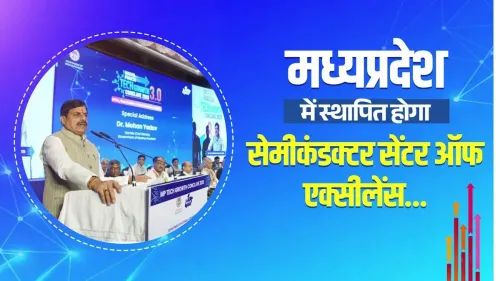
The Madhya Pradesh Cabinet on Tuesday approved a ₹1,295 crore investment to establish an Electronic (Semi-Conductor) Manufacturing Cluster near Bhopal, in a move that officials say marks a significant leap in the state's high-tech industrial ambitions. The project, developed jointly by the Centre and the Madhya Pradesh government, is designed to create a self-sustaining ecosystem for semiconductor production, assembly, testing, and allied innovation.
Scale and Scope of the Cluster
Spread across more than 200 acres, the proposed cluster is envisioned as a comprehensive hub for electronics manufacturing, research, and innovation. Infrastructure and facilities will be made available to companies engaged across the semiconductor value chain — from component fabrication and assembly to quality testing and ancillary support industries.
State MSME Minister Chetanya Kumar Kashyap noted that the initiative forms part of a broader policy framework aimed at strengthening India's standing in the global semiconductor and electronics market. The ₹1,295 crore outlay represents planned expenditure over the next few years, beginning with an initial investment phase.
Why Madhya Pradesh Is Making This Bet
India's semiconductor ambitions have accelerated sharply since the Centre launched its ₹76,000 crore semiconductor incentive programme in 2021. States are now competing to anchor allied manufacturing clusters that can support chip assembly, testing, and packaging — segments that do not require the ultra-high capital intensity of wafer fabrication but are critical to the supply chain. This comes amid a global push to diversify semiconductor production away from Taiwan and China, creating a rare window for emerging manufacturing destinations.
Notably, Bhopal's selection signals the state government's intent to position central India — traditionally less prominent in electronics manufacturing — as a viable alternative to established hubs in Tamil Nadu, Karnataka, and Telangana.
Investment and Employment Outlook
Authorities expect the cluster to attract both domestic and international investors, generate employment opportunities, and reduce India's dependence on electronics imports. Officials believe the project will contribute to the country's broader goal of achieving self-reliance in advanced technology manufacturing under the Atmanirbhar Bharat framework.
Over the next five years, the cluster is anticipated to evolve into a dynamic production and innovation centre, driving technological advancement and industrial competitiveness in Madhya Pradesh.
What Comes Next
With Cabinet approval now secured, the focus shifts to land acquisition, infrastructure rollout, and attracting anchor tenants for the cluster. Industry bodies and electronics manufacturers are expected to be engaged in the coming months. If execution timelines hold, Bhopal could emerge as a meaningful node in India's semiconductor supply chain well before the decade's end.
Point of View
Lacking the deep supplier ecosystems of Tamil Nadu or Karnataka. The ₹1,295 crore outlay is meaningful but modest compared to the capital intensity of full semiconductor manufacturing — this cluster is realistically targeting assembly, testing, and packaging, not wafer fabrication. The question is whether Madhya Pradesh can move fast enough on land, power, and skilled labour to capitalise on the current global window of semiconductor diversification before competing states consolidate their lead.
NationPress
21 Sept 2026
Frequently Asked Questions
What is the Madhya Pradesh semiconductor manufacturing cluster near Bhopal?
It is a ₹1,295 crore Electronic (Semi-Conductor) Manufacturing Cluster approved by the Madhya Pradesh Cabinet, to be developed jointly by the Centre and state government near Bhopal. Spread across 200-plus acres, it will provide infrastructure for semiconductor production, assembly, testing, and allied industries.
How much has the MP government approved for the semiconductor cluster?
The Madhya Pradesh Cabinet has approved ₹1,295 crore for the project, representing planned expenditure over the next few years beginning with an initial investment phase.
Why is Madhya Pradesh investing in a semiconductor cluster?
The project aligns with India's national goal of self-reliance in electronics and reducing import dependence. It is part of a broader policy framework to strengthen India's position in the global semiconductor and electronics market, as stated by MSME Minister Chetanya Kumar Kashyap.
What will the Bhopal semiconductor cluster include?
The cluster will span more than 200 acres and offer infrastructure for companies engaged in semiconductor production, assembly, and testing, while also supporting ancillary industries, research, and innovation activities.
When is the semiconductor cluster expected to be operational?
Authorities have not announced a specific launch date, but the cluster is expected to evolve into a fully functional hub over the next five years, with the initial investment phase beginning shortly after Cabinet approval.