MP CM Mohan Yadav Expands Medical Seats for Students
Synopsis
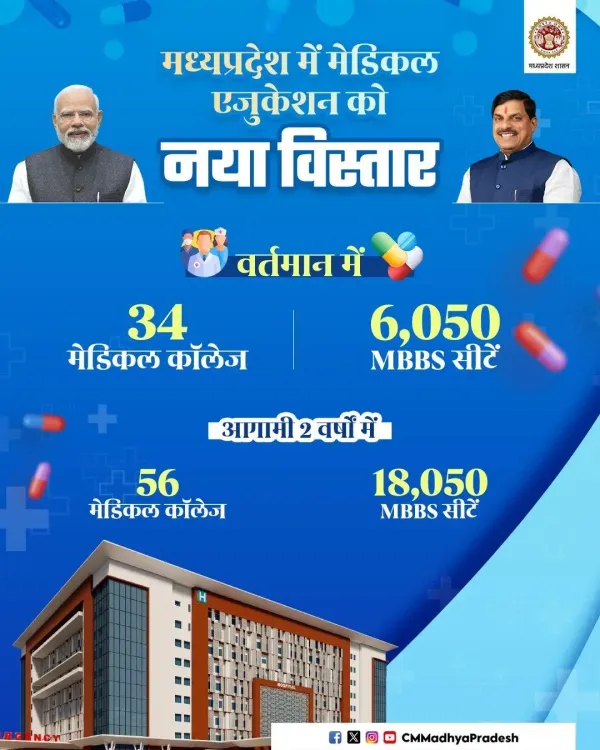
Madhya Pradesh, under CM Dr. Mohan Yadav, is expanding MBBS seats in government medical colleges to widen opportunities for students — part of a decade-long national push that has more than doubled India's annual medical intake to over one lakh seats.
Key Takeaways
The Chief Minister's Office of Madhya Pradesh announced an ongoing expansion of medical seats under CM Dr.
Mohan Yadav on 20 November 2026 .
The move aims to create new career pathways for the state's medical aspirants, particularly those from smaller towns and rural districts.
Madhya Pradesh participated in central government schemes that approved multiple new medical colleges between 2014 and 2022 .
India's national MBBS intake has grown from roughly 50,000 to over 1 lakh seats over the past decade, with Madhya Pradesh contributing to that growth.
The state's Health Department oversees seat allocations in line with National Medical Commission regulations.
Exact figures for newly added seats and freshly sanctioned colleges are expected in forthcoming state budget and Health Department notifications.
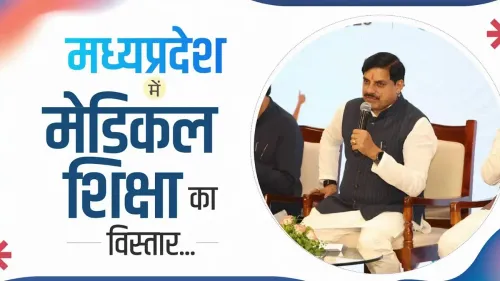
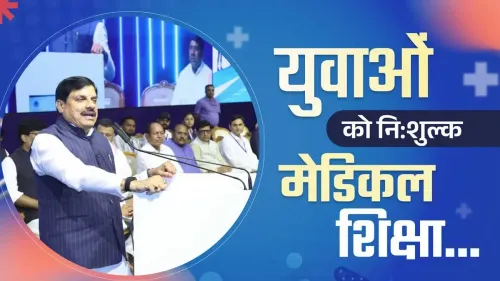
Madhya Pradesh is quietly rewriting its medical education story — and the numbers are beginning to show it. The Chief Minister's Office of Madhya Pradesh announced on Friday, 20 November 2026 that the state is opening new doors for medical aspirants through a steady expansion of MBBS seats, crediting the initiative to Chief Minister Dr. Mohan Yadav.
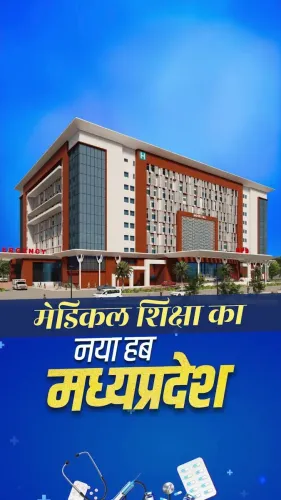
The post, shared on X, declared that 'chikitsa shiksha ke kshetra mein naye aayam gadh raha Madhya Pradesh' — 'Madhya Pradesh is carving new dimensions in the field of medical education' — framing the seat expansion as a widening of opportunity for the state's students.
A State Catching Up on a National Push
Madhya Pradesh's drive sits squarely within a larger national momentum. Over the past decade, India has more than doubled its annual MBBS intake — from roughly 50,000 seats to over 1 lakh seats — driven by central schemes that funded new medical colleges attached to district hospitals. Madhya Pradesh was an active participant in that central scheme, with multiple colleges approved between 2014 and 2022.
The logic is straightforward: more seats in government colleges mean more first-generation medical aspirants — especially from smaller towns and rural districts — who can afford the path to becoming a doctor. Private medical college fees remain prohibitive for most families; every new government seat is a real alternative.
Dr. Mohan Yadav's Education-Health Agenda
Dr. Mohan Yadav, who took charge as Chief Minister in December 2023, has positioned both health infrastructure and higher education as pillars of his administration. The state's Health Department oversees medical college approvals and seat allocations, working alongside the National Medical Commission which sets the regulatory framework for intake capacities nationally.
Expanding medical seats also addresses a persistent structural problem: Madhya Pradesh, like many large Indian states, faces a significant urban-rural gap in doctor availability. Training more doctors — particularly those with roots in the state — raises the probability that healthcare eventually reaches districts that have historically been underserved.
The students who benefit most are those who cleared competitive entrance exams but were previously squeezed out by limited government-college capacity. Each additional seat is, in practical terms, a career unlocked.
With state budget allocations and Health Department notifications expected to detail the exact scale of new seats and any freshly sanctioned colleges, the full picture of this expansion is still coming into focus — but the direction, at least, is unmistakable.
Point of View
Tangible benefit to a large aspirational constituency — competitive-exam students and their families — ahead of continued governance scrutiny. For CM Dr. Mohan Yadav, anchoring his brand to education and health infrastructure signals a development-first posture distinct from purely welfare-driven messaging. At the national level, this aligns with the BJP's broader 'capacity building' narrative in healthcare, where state-level execution of central schemes becomes a local electoral asset. The real test will be whether seat numbers translate into practicing doctors in rural Madhya Pradesh, or simply fuel the outflow of trained medics to urban centres.
NationPress
20 Nov 2026
Frequently Asked Questions
Is Madhya Pradesh increasing MBBS seats in government medical colleges?
Yes. The Chief Minister's Office of Madhya Pradesh confirmed in November 2026 that the state is expanding medical seats under CM Dr. Mohan Yadav, building on a central government scheme that approved new colleges attached to district hospitals between 2014 and 2022.
Who is Dr. Mohan Yadav and what is his role in MP's medical education push?
Dr. Mohan Yadav is the Chief Minister of Madhya Pradesh since December 2023. He is credited with driving the current expansion of medical education infrastructure and seat capacity in the state.
How many MBBS seats are there in India currently?
India's annual MBBS intake has grown to over 1 lakh seats nationally over the past decade, up from roughly 50,000, following National Medical Commission reforms and central government investment in new colleges.
Which department handles medical college approvals in Madhya Pradesh?
The Health Department of Madhya Pradesh oversees medical education infrastructure, seat allocations, and new college proposals, working within the regulatory framework set by the National Medical Commission.
How does expanding medical seats help rural healthcare in Madhya Pradesh?
More government college seats lower financial barriers for students from smaller towns and rural districts. Training more doctors from within the state raises the likelihood that healthcare reaches underserved areas that have historically faced doctor shortages.