MP CM Office Raises Equality in Marriage and Family Rights
Synopsis
The Chief Minister's Office of Madhya Pradesh signalled engagement with the question of equality in marriage and family rights on 24 July 2026, invoking a constitutional principle at the heart of ongoing national debates over the Special Marriage Act and Uniform Civil Code reforms.
Key Takeaways
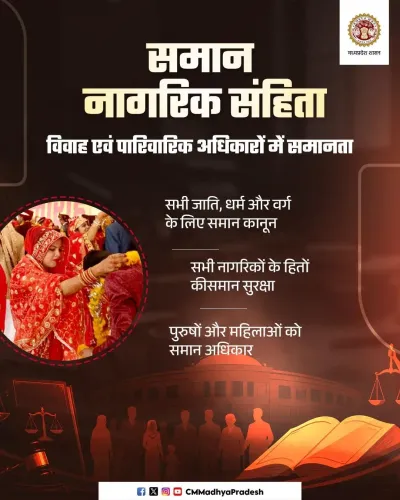
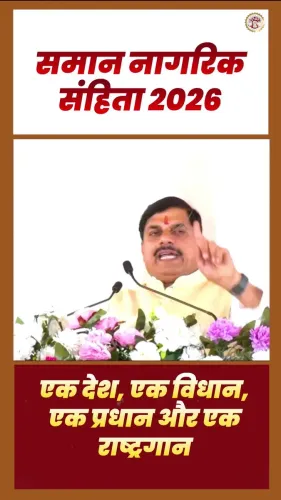
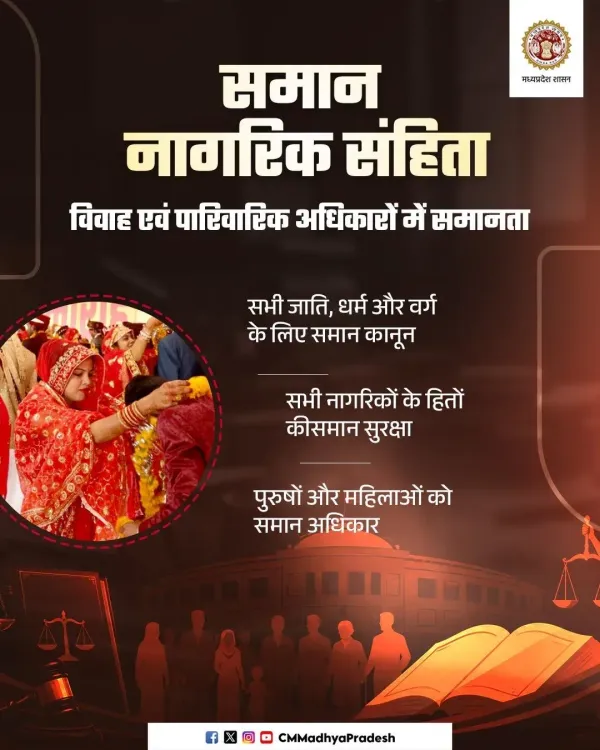
The Chief Minister's Office of Madhya Pradesh posted on 24 July 2026 on X, raising the theme of 'equality in marriage and family rights.' The post is in Hindi and accompanied by one image; no specific bill or scheme was announced.
The Supreme Court of India in 2023 deferred same-sex marriage recognition to Parliament, leaving the legislative question open.
The Special Marriage Act, 1954 remains the central statute governing civil marriages and is the focus of ongoing reform debates.
Madhya Pradesh has previously engaged with Uniform Civil Code proposals that also touch on equal family rights.
Rights groups and legal observers will watch for any follow-up legislative or executive action from the state government.
The Chief Minister's Office of Madhya Pradesh posted on X (formerly Twitter) on Friday, 24 July 2026, raising the issue of equality in marriage and family rights, signalling the state government's engagement with one of India's most contested areas of personal law reform.
Context
The post, written in Hindi, reads: 'Vivah evam parivarik adhikaron mein samanta' — 'Equality in marriage and family rights.' The brevity of the message, accompanied by a single image, leaves the precise policy intent open, but the framing squarely invokes constitutional equality principles as they apply to matrimonial and domestic relationships.
The phrase draws from a long-running national debate over whether existing marriage statutes adequately protect all citizens regardless of personal background, religion, or identity. In India, marriage law is governed by a patchwork of personal laws and the secular Special Marriage Act, 1954, each carrying different rights and obligations.
Policy Backdrop
The issue of equality in marital rights has been at the centre of Indian constitutional litigation for several years. In 2023, the Supreme Court of India declined to read down the Special Marriage Act, 1954 to extend civil marriage recognition to same-sex couples, explicitly deferring that legislative question to Parliament.
That ruling followed the landmark 2018 Navtej Singh Johar judgment, which decriminalised consensual same-sex relations under Section 377 of the Indian Penal Code and expanded the constitutional understanding of dignity and equality in personal relationships. Courts have since consistently held that substantive reform to marriage statutes must come from the legislature, not the judiciary.
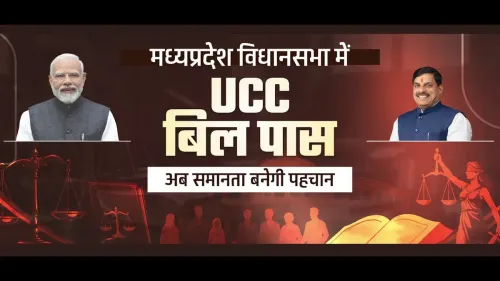
Separately, several states — including Madhya Pradesh — have pursued Uniform Civil Code proposals aimed at standardising family law across religious communities, a reform that also implicates questions of equal rights within marriage and inheritance.
Stakeholders and Impact
Any legislative or executive action on marriage equality would directly affect a wide range of citizens: women seeking equal inheritance and matrimonial property rights, members of the LGBTQ community who have awaited Parliamentary action since the 2023 Supreme Court ruling, and inter-faith or inter-caste couples who rely on the Special Marriage Act for civil registration.
Madhya Pradesh, as a large state with significant rural and tribal populations, also has a distinct stake in how family law reform intersects with customary practices and local governance structures. Any state-level initiative would operate within the boundaries set by central legislation and Supreme Court precedent.
What's Next
The Chief Minister's Office has not, in this post, announced a specific bill, scheme, or executive order. Observers and rights groups will watch for whether the signal translates into a legislative proposal — either through the Madhya Pradesh state assembly or through representations to the Union government ahead of the next parliamentary session.
The broader national question of whether Parliament will amend the Special Marriage Act, 1954 to address equality in marriage rights remains unresolved, making any state-level engagement with the issue politically and legally significant.
Point of View
A family-law amendment, or a broader LGBTQ rights stance, the framing of 'equality' is constitutionally loaded and will be read differently by different constituencies. In the current political climate, such posts often serve as trial balloons, testing public and coalition response before a concrete legislative move.
NationPress
24 Jul 2026
Frequently Asked Questions
What did the Madhya Pradesh CM Office post about marriage equality?
On 24 July 2026, the Chief Minister's Office of Madhya Pradesh posted on X invoking 'equality in marriage and family rights' in Hindi, accompanied by an image, without specifying a particular bill or policy action.
What is the current law on marriage equality in India?
India's civil marriages are governed by the Special Marriage Act, 1954. The Supreme Court in 2023 declined to extend its provisions to same-sex couples and directed Parliament to legislate on the matter.
Did the Supreme Court legalise same-sex marriage in India?
No. In 2023 the Supreme Court of India ruled that same-sex couples do not have a fundamental right to marry under existing statutes and left the decision to amend marriage laws to Parliament.
What is the Uniform Civil Code and how does it relate to marriage rights in Madhya Pradesh?
The Uniform Civil Code is a proposed set of common personal laws covering marriage, divorce, and inheritance for all citizens regardless of religion. Madhya Pradesh has been among the states that have explored UCC proposals, which directly intersect with questions of equal family rights.
What happens next after the MP CM Office's post on marriage and family rights?
No specific legislation has been announced. Observers will watch for private members' bills or government legislation in the Madhya Pradesh assembly or at the Union level that could follow from this signal.