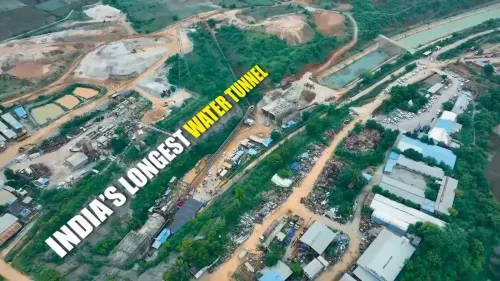
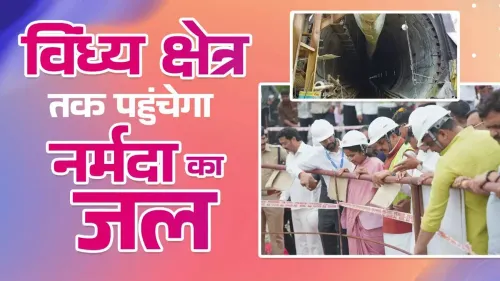
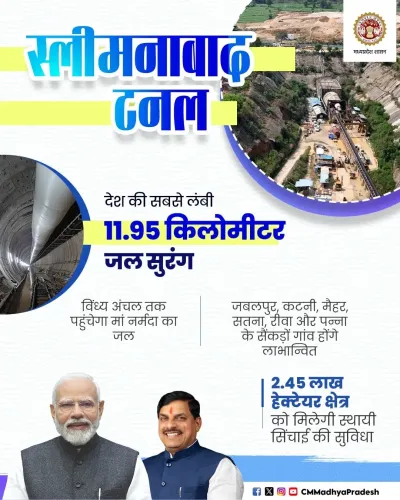
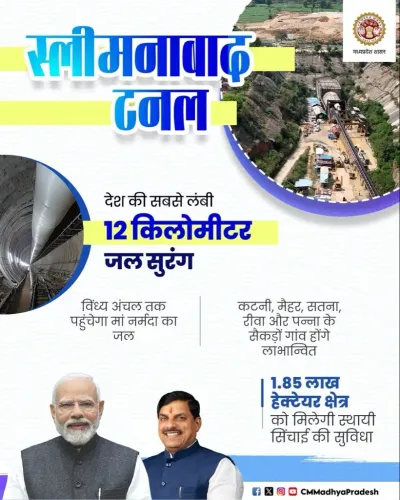
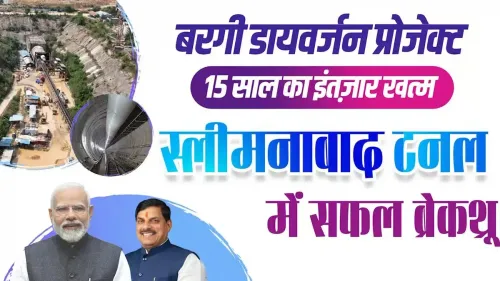
MP CM Office: Sleemanabad Tunnel to Bring Narmada Water to Son Basin
Synopsis
The Chief Minister's Office of Madhya Pradesh has highlighted the Sleemanabad Underground Tunnel, an inter-basin project designed to carry Narmada river water into the Son river basin, promising irrigated agriculture and agricultural growth for millions of farmers in eastern MP.
Key Takeaways
The Sleemanabad Underground Tunnel is designed to transfer Narmada river water eastward into the Son river basin in Madhya Pradesh.
The project targets irrigation access for millions of farmers in eastern MP districts historically underserved by surface water.
Mohan Yadav was tagged in the announcement, underlining the project's political priority for the state government.
Madhya Pradesh has pursued Narmada-based irrigation infrastructure since the early 2000s ; this tunnel extends that strategy to a new basin.
The project fits within India's national river-linking framework aimed at redistributing water from surplus to deficit basins.
Construction milestones and operational water release timelines remain the key metrics to watch for actual farmer benefit.
Water is about to cross a watershed — literally. The Chief Minister's Office of Madhya Pradesh announced on Tuesday, 28 July 2026 that the Sleemanabad Underground Tunnel will redirect Narmada river water eastward into the Son river basin, unlocking irrigation access for millions of farmers across the state's eastern districts.
What the Sleemanabad Tunnel actually does
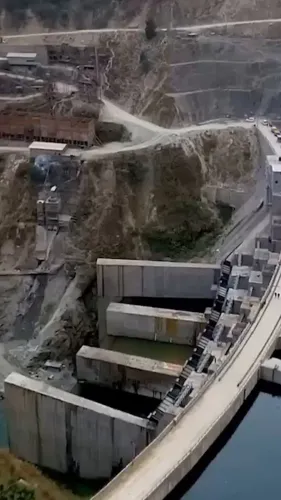
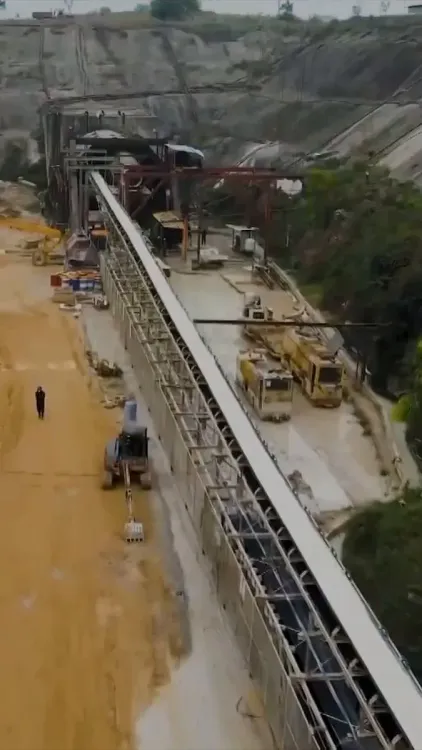
The tunnel is an inter-basin water transfer project — engineering that moves water from one river system to another across a natural divide. The Narmada, which flows westward through central India, is one of the country's most water-rich rivers. The Son basin, by contrast, sits in Madhya Pradesh's eastern belt, where erratic rainfall and limited surface water have historically constrained agricultural output. The tunnel bridges that gap underground.
The CMO's post framed the project as 'jal se samridhi tak, vikas ki nayi dhara' — 'from water to prosperity, a new current of development' — and tagged Chief Minister Dr. Mohan Yadav, signalling the project's political weight for the state government.
Son basin farmers and the promise of stable irrigation
Madhya Pradesh's agriculture sector employs a large share of the state's population, and eastern districts have long faced the double burden of rain dependence and limited canal reach. Stable, canal-fed irrigation — the kind a tunnel-fed system can provide — typically allows farmers to shift from single to double cropping, reducing vulnerability to monsoon failure. The Government of Madhya Pradesh has positioned this project as a structural fix, not a seasonal relief measure.
Inter-basin transfers of this kind also fit within India's broader national river-linking framework, a concept the central government has pursued since the early 2000s to redistribute water from surplus to deficit basins. Madhya Pradesh, home to the Narmada's upper catchment, has been a natural candidate for such schemes.
Narmada's long history as MP's irrigation backbone
The state has drawn on Narmada valley irrigation infrastructure for over two decades. The Sleemanabad tunnel extends that logic eastward — taking water that would otherwise flow into the Arabian Sea and routing it toward farms that need it most. Construction milestones, water release timelines, and district-level crop production data once the tunnel becomes operational will be the real measure of whether the promise translates to yield.
The announcement is a signal that Madhya Pradesh is betting big on water infrastructure as the engine of its next agricultural growth phase. Whether the Son basin's farmers see the benefit will depend on what comes out of the tunnel — and when.
Point of View
A region historically underserved by irrigation networks. Inter-basin transfers are politically potent because they produce visible, long-term benefits — but they also carry execution risk, and the gap between announcement and operational water delivery has tripped similar projects in the past. For the BJP-led state government, the project doubles as a development narrative ahead of future electoral cycles in agrarian constituencies. The real test will be whether construction timelines hold and whether the promised irrigation reach actually reduces farmer distress in Son basin districts.
NationPress
28 Jul 2026
Frequently Asked Questions
What is the Sleemanabad Underground Tunnel in Madhya Pradesh?
The Sleemanabad Underground Tunnel is an inter-basin water transfer project in Madhya Pradesh that channels water from the Narmada river eastward into the Son river basin to support irrigation for farmers in eastern districts of the state.
Which river does the Sleemanabad Tunnel transfer water from and to?
The tunnel transfers water from the Narmada river, which flows westward through central India, to the Son river basin in eastern Madhya Pradesh, where water availability for farming has historically been limited.
Who announced the Sleemanabad Tunnel project?
The Chief Minister's Office of Madhya Pradesh announced the project on 28 July 2026, tagging Chief Minister Dr. Mohan Yadav and highlighting its role in agricultural development.
How will the Sleemanabad Tunnel benefit farmers in Madhya Pradesh?
By supplying Narmada water to the Son basin, the tunnel is intended to provide stable, year-round irrigation to farmers in eastern Madhya Pradesh, potentially enabling double cropping and reducing dependence on monsoon rainfall.
Is the Sleemanabad Tunnel part of India's river-linking plan?
The project aligns with India's broader national river-linking framework, which has sought since the early 2000s to redirect water from surplus river basins to deficit ones to support agriculture across the country.