MP CMO Highlights State's Rise as Wildlife Conservation Hub
Synopsis
The Chief Minister's Office of Madhya Pradesh on 2 July 2026 declared the state a rising national wildlife conservation hub, citing simultaneous progress in cheetah reintroduction at Kuno, wild buffalo rehabilitation, gharial breeding at the Chambal Sanctuary, and vulture conservation — all underpinned by central and state policy frameworks.
Key Takeaways
The Chief Minister's Office of Madhya Pradesh on 2 July 2026 positioned the state as India's leading wildlife conservation hub.
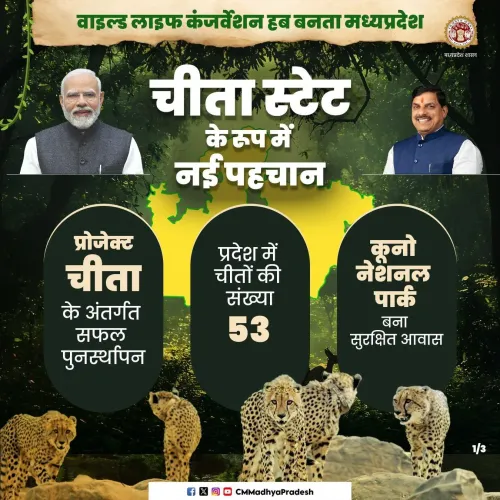
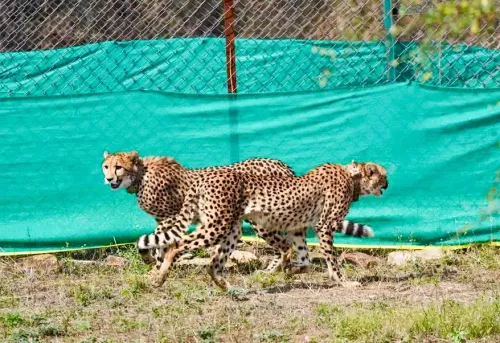
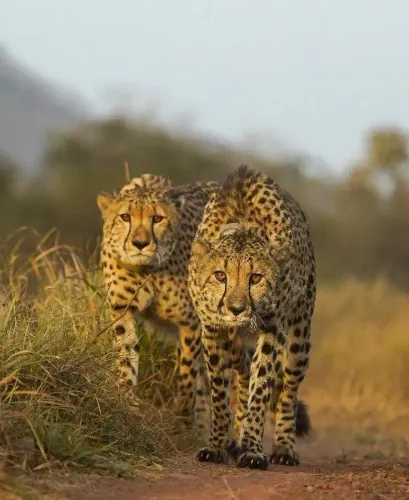
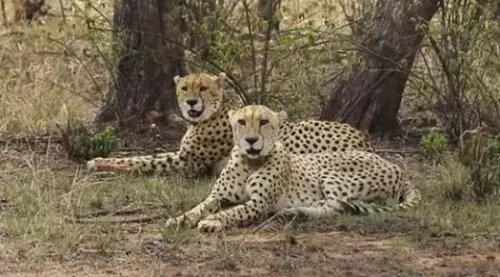
Project Cheetah , launched in September 2022 with eight Namibian cheetahs at Kuno National Park , remains the state's flagship reintroduction effort.
Gharial conservation is centred on the National Chambal Sanctuary , supported by the centrally sponsored Integrated Development of Wildlife Habitats scheme.
Vulture conservation in the state is anchored to the national Vulture Action Plan 2006 and its 2020 update , including dedicated breeding centres.
State wildlife census and the next All India Tiger Estimation report, expected in late 2026 , will provide verified population data.
Forest communities and wildlife tourism operators are among the key stakeholders positioned to benefit from the state's multi-species conservation drive.
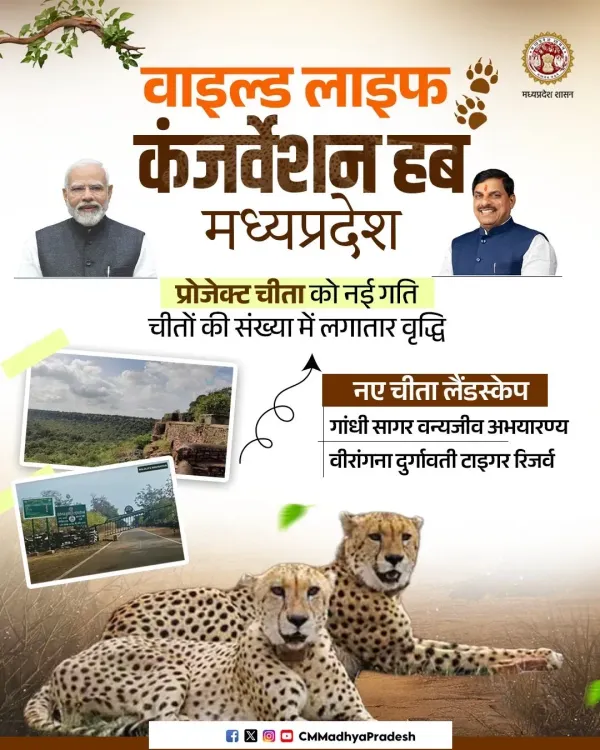
The Chief Minister's Office of Madhya Pradesh on Thursday, 2 July 2026 highlighted the state's growing stature as a national wildlife conservation hub, citing achievements spanning cheetah population growth, wild buffalo rehabilitation, gharial protection, and vulture conservation.
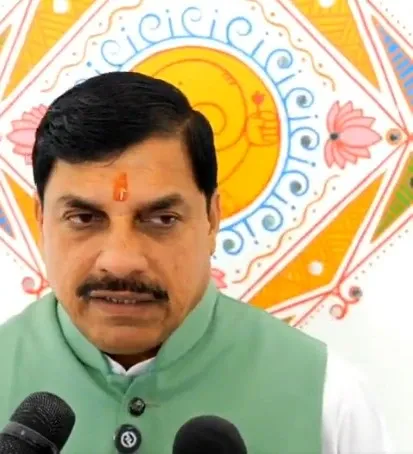
The post, shared from the official CMO handle and tagging Chief Minister Dr. Mohan Yadav and the state forest ministry, declared: 'Jaiw vividhata ke sanrakshan ka mazboot kendra banta Madhya Pradesh' — ('Madhya Pradesh is becoming a strong centre for biodiversity conservation'). It described the state as carving out a firm identity as a Wildlife Conservation Hub for the country.
Context
Madhya Pradesh is home to some of India's most biodiverse landscapes, including multiple tiger reserves and nationally significant protected areas. The state's latest communication points to simultaneous progress across four distinct species-recovery fronts: cheetahs, wild buffaloes, gharials, and vultures — a breadth that underscores the scale of its conservation ambitions.
The CMO's post comes as the state's forest department is expected to contribute data to the next All India Tiger Estimation and state wildlife census reports, anticipated in late 2026.
Policy Backdrop
Project Cheetah, India's flagship cheetah reintroduction programme, was formally launched in September 2022 with the release of eight Namibian cheetahs at Kuno National Park in Madhya Pradesh — the primary and, to date, principal site for the programme. Kuno has since remained central to the effort to establish a self-sustaining cheetah population on the subcontinent.
On the gharial front, the National Chambal Sanctuary — a riverine protected area with a significant Madhya Pradesh stretch — has long been the backbone of national gharial breeding and recovery efforts, supported through the centrally sponsored Integrated Development of Wildlife Habitats scheme. Vulture conservation in the state draws from the national Vulture Action Plan 2006 and its 2020 update, under which Madhya Pradesh established dedicated breeding centres and safe-zone corridors.
These programmes collectively align with India's commitments under the National Biodiversity Action Plan and the Convention on Biological Diversity, reflecting a national shift from passive protection to active population augmentation.
Stakeholders and Impact
The beneficiaries of Madhya Pradesh's conservation push extend well beyond the species themselves. Forest-fringe communities stand to gain through eco-tourism revenue and employment, as a richer wildlife portfolio draws visitors to reserves across the state. Wildlife tourism operators, particularly around Kuno National Park and the Chambal corridor, are positioned to benefit directly from any verified increase in flagship-species populations.
The state forest department, which administers these programmes on the ground, has been the operational backbone of each initiative. Broader success could also strengthen the case for increased central funding under wildlife habitat development schemes in coming budget cycles.
What's Next
The release of the next All India Tiger Estimation report and state wildlife census data in late 2026 will provide independently verified numbers against which the CMO's claims can be assessed. Any formal expansion of cheetah ranging areas beyond Kuno to secondary sites will be a key indicator of whether the reintroduction programme has crossed a critical threshold.
Madhya Pradesh's positioning as a multi-species conservation leader — rather than a single-flagship state — could serve as a template for other biodiversity-rich states seeking to align state policy with India's international biodiversity commitments in the years ahead.
Point of View
Framing Madhya Pradesh not as a single-species state but as a multi-front conservation leader — a distinction that carries both policy and political weight ahead of expected wildlife census releases in late 2026. By invoking cheetahs, wild buffaloes, gharials, and vultures in a single communication, the state signals breadth of commitment rather than reliance on any one headline programme. This aligns with a broader national pattern in which BJP-governed states have increasingly used biodiversity achievements as governance credentials. The real test will come when independently verified population figures are published, at which point the claims made in posts like this will face public and scientific scrutiny.
NationPress
2 Jul 2026
Frequently Asked Questions
Why is Madhya Pradesh called a wildlife conservation hub?
Madhya Pradesh hosts several of India's most significant protected areas and is the primary site for multiple species-recovery programmes, including cheetah reintroduction at Kuno National Park, gharial conservation along the Chambal, and vulture breeding centres — making it one of the most active states for wildlife conservation in the country.
Where were cheetahs reintroduced in India?
Cheetahs were reintroduced at Kuno National Park in Madhya Pradesh under Project Cheetah , which was formally launched in September 2022 with the arrival of eight Namibian cheetahs .
What is the National Chambal Sanctuary known for?
The National Chambal Sanctuary is an inter-state riverine protected area that serves as the primary site for gharial (freshwater crocodilian) breeding and conservation in India, with a significant portion falling within Madhya Pradesh.
What is the Vulture Action Plan in India?
The national Vulture Action Plan , first issued in 2006 and updated in 2020 , provides the policy framework for vulture conservation in India, including the establishment of dedicated breeding centres and drug-free safe zones — both of which Madhya Pradesh has implemented.
When will the next India wildlife census results be released?
The next All India Tiger Estimation report and associated state wildlife census data are expected to be released in late 2026 , and will provide independently verified population figures for key species.