MP CM Office Unveils New Development-Environment Model
Synopsis
The Chief Minister's Office of Madhya Pradesh has publicly signalled a new framework that integrates environmental conservation with economic development, positioning the state within India's broader net-zero and green growth agenda.
Key Takeaways
The Chief Minister's Office of Madhya Pradesh posted on 26 June 2026 about a 'new model of development alongside environmental conservation.' Madhya Pradesh holds one of India's largest forest covers and several major tiger reserves, giving the announcement significant ecological weight.
The post aligns with India's Panchamrit climate commitments made at COP26 in 2021 , including a net-zero target by 2070 .
Key stakeholders include forest-dependent communities, agricultural populations, and the renewable energy sector.
Specific policy details — targets, timelines, and funding — are expected in the next state budget or environment policy document.
Potential alignment with central schemes such as the National Green Hydrogen Mission and CAMPA funds will be closely watched.
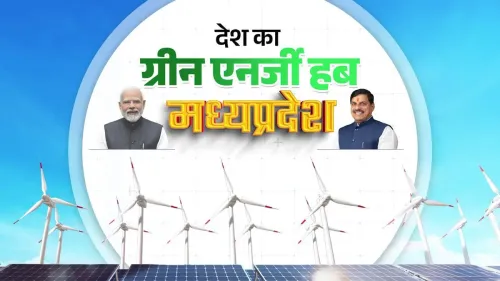
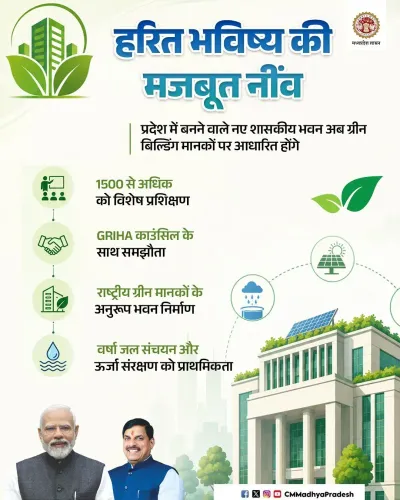
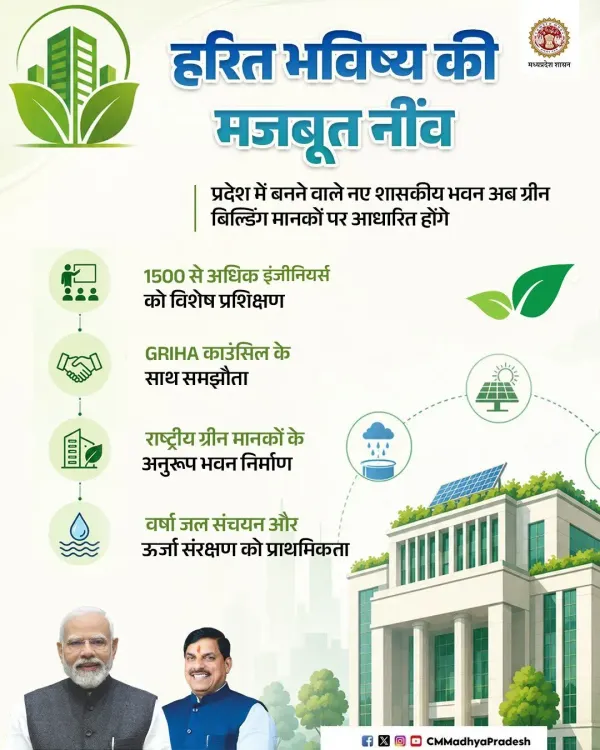
The Chief Minister's Office of Madhya Pradesh on Friday, 26 June 2026, shared a post on X signalling a new development framework for the state — one that explicitly integrates environmental protection with economic growth. The post, captioned 'पर्यावरण संरक्षण के साथ विकास का नया मॉडल' ('A new model of development alongside environmental conservation'), marks a public articulation of the state government's intent to pursue a dual-track agenda balancing ecological stewardship with infrastructure and livelihood expansion.
Context
The phrase 'new model of development' signals that Madhya Pradesh is positioning itself at the forefront of India's sub-national experimentation with green growth pathways. The state carries significant ecological weight — it holds one of the country's largest forest covers and is home to several prominent tiger reserves and biodiversity hotspots. Any policy framework emerging from Bhopal that ties development to conservation has direct implications for millions of forest-dependent communities across the state.
The post arrives at a moment when Indian states are under growing pressure to reconcile rapid infrastructure expansion with their obligations under national and international climate commitments. The brevity of the announcement suggests this may be the opening signal ahead of a fuller policy elaboration in an upcoming budget or environment document.
Policy Backdrop
India's climate architecture has deepened considerably over the past two decades. The National Action Plan on Climate Change, launched in 2008, required states to prepare their own climate action plans covering mitigation and adaptation. At COP26 in 2021, India committed to the Panchamrit strategy — a five-point climate pledge that includes scaling renewable energy capacity and achieving net-zero emissions by 2070. State governments are expected to operationalise these targets through their own policy instruments.
Madhya Pradesh has historically pursued schemes that link forest produce, eco-tourism, and watershed management with rural livelihoods. Observers will watch whether the 'new model' announced by the Chief Minister's Office aligns with central missions such as the National Green Hydrogen Mission or channels from the CAMPA (Compensatory Afforestation Fund Management and Planning Authority) fund — mechanisms designed precisely to finance state-level green initiatives.
Stakeholders and Impact
The communities most immediately affected by any environment-linked development model in Madhya Pradesh are its forest-dependent populations, who rely on minor forest produce and ecosystem services for daily livelihoods. Agricultural communities across the state's rain-fed districts also stand to gain or lose depending on how watershed and land-use policies are shaped within this framework.
The renewable energy sector is another key stakeholder. A development model that foregrounds environmental protection typically opens procurement and investment pathways for solar, wind, and biomass projects. Industry bodies and green investors will be watching for specific targets or incentive structures that translate the stated intent into actionable policy.
What's Next
The precise contours of the 'new model' referenced in the post are yet to be detailed in any publicly available policy document. The next Madhya Pradesh state budget and any forthcoming environment policy white paper will be the key venues to watch for specifics — including targets, timelines, and funding mechanisms. Alignment with the Paris Agreement framework and India's broader net-zero pathway will likely be a benchmark against which the model is assessed by civil society and the central government alike.
As Indian states compete to attract green investment while managing ecological obligations, the model that Madhya Pradesh formalises could serve as a template — or a cautionary case — for other large, forest-rich states navigating the same tension between growth and conservation.
Point of View
Signalling to both investors and voters that the state intends to lead on green growth rather than merely comply with central mandates. At a time when India's sub-national governments face mounting scrutiny over forest diversion and carbon commitments, such a public declaration carries political as well as policy significance. The announcement is notably light on specifics, which suggests it may be a scene-setter ahead of a more detailed budget or legislative unveiling. Whether the model delivers structural change or remains aspirational rhetoric will depend entirely on the fiscal and regulatory instruments that follow.
NationPress
24 Sept 2026
Frequently Asked Questions
What is the new development model announced by the Madhya Pradesh government?
The Chief Minister's Office of Madhya Pradesh announced a 'new model of development alongside environmental conservation' on 26 June 2026, signalling an integrated approach that balances economic growth with ecological protection. Specific details of the model are yet to be publicly elaborated.
How does Madhya Pradesh's environment policy connect to India's climate commitments?
India committed to the Panchamrit climate strategy at COP26 in 2021, including net-zero emissions by 2070. States like Madhya Pradesh are expected to align their development frameworks with these national targets, and the new model appears to be a step in that direction.
Which communities will be affected by Madhya Pradesh's green development model?
Forest-dependent communities, agricultural populations in rain-fed districts, and the renewable energy sector are the primary stakeholders. The model's impact on livelihoods will depend on how forest, land-use, and energy policies are structured.
What is CAMPA and how is it relevant to Madhya Pradesh?
CAMPA stands for Compensatory Afforestation Fund Management and Planning Authority, a central mechanism that channels funds to states for afforestation and forest restoration. Madhya Pradesh, with its large forest cover, is a significant beneficiary and any new environment-development model could influence how these funds are deployed.
When will the full details of Madhya Pradesh's environment-development model be known?
Details are expected to emerge in the next Madhya Pradesh state budget or a forthcoming environment policy document. Alignment with central missions such as the National Green Hydrogen Mission will also be a key indicator of the model's scope.