CM Mohan Yadav Cuts MP Cotton Mandi Fee to 0.5%
Synopsis
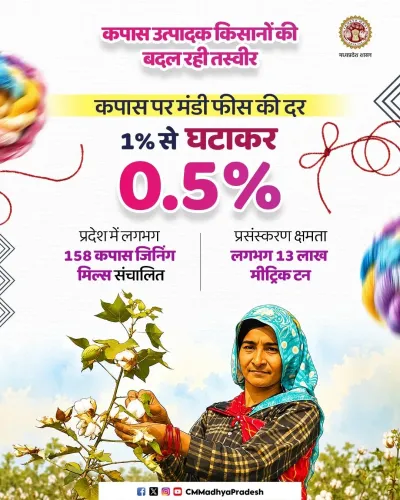
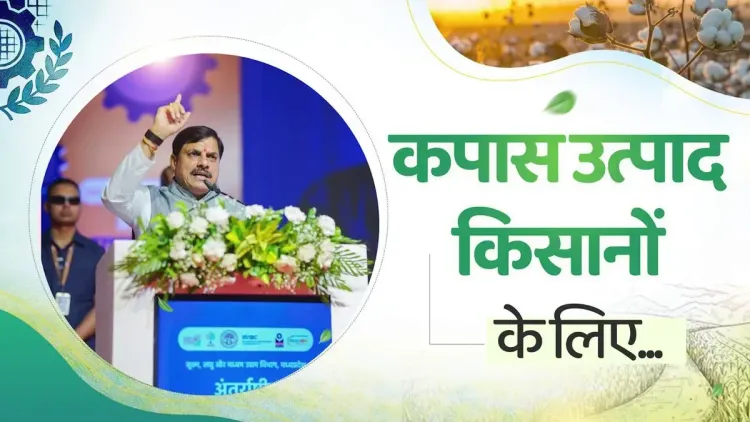
Madhya Pradesh Chief Minister Dr. Mohan Yadav has announced a cut in the cotton mandi fee from one per cent to half a per cent, aiming to improve net realisations for cotton farmers, reduce transaction costs for traders, and stimulate overall cotton trade volumes across the state's APMC mandis.
Key Takeaways
The Madhya Pradesh government has reduced the mandi fee on cotton from 1% to 0.5% .
Mohan Yadav announced the decision on 27 June 2026 .
The stated objectives are better prices for cotton farmers, greater convenience for traders, and increased cotton trade in the state.
APMC mandis in Madhya Pradesh regulate cotton sales and levy the mandi fee on each transaction.
The reduction lowers transaction costs for both farmers selling and traders buying cotton in state-regulated markets.
The move fits a broader pattern of state-level agricultural marketing fee adjustments to improve farm-gate price realisation.
The Chief Minister's Office of Madhya Pradesh announced on Saturday, 27 June 2026 that the state government has halved the mandi fee on cotton from one per cent to half a per cent, offering direct relief to cotton-growing farmers and aiming to boost trade volumes across the state's agricultural markets.
Context
Chief Minister Dr. Mohan Yadav stated that the reduction in the mandi levy on cotton was designed to deliver 'behtar mulya' (better prices) to farmers, greater convenience to traders, and an overall impetus to the cotton trade in Madhya Pradesh. The announcement was made through the official Chief Minister's Office handle on X, with the CM quoted directly: 'Cotton mandi fee has been reduced from one per cent to half a per cent so that farmers get better value, traders get convenience, and cotton trade in the state gets a boost.'
Madhya Pradesh is among India's significant cotton-producing states, alongside its established role in soybean and pulse cultivation. Cotton farmers in the state sell their produce through a network of Agricultural Produce Market Committee (APMC) mandis, where state-levied fees directly affect the net price a farmer receives at the point of sale.
Policy Backdrop
Mandi fees are levied by state-regulated APMC bodies on agricultural commodities and form a component of the transaction cost embedded in farm-gate prices. A reduction in this fee, even by half a percentage point, translates into a marginally higher realisation for the farmer on every quintal of cotton sold through the regulated market.
Indian states have periodically adjusted such levies on key crops to influence farmer net prices and local trade competitiveness. This move fits within a broader pattern of state-level fiscal interventions in agricultural marketing costs, undertaken alongside national efforts — such as the e-National Agriculture Market (e-NAM) scheme launched in 2016 — to modernise APMC operations and improve price discovery without dismantling the core regulatory framework.
For traders and commission agents operating in Madhya Pradesh mandis, a lower transaction cost can improve the attractiveness of the state as a procurement destination, potentially drawing more buying interest during the marketing season.
Stakeholders and Impact
Cotton farmers in Madhya Pradesh stand to benefit most directly. On a sale of cotton valued at Rs 1 lakh, the fee reduction translates to a saving of Rs 500 per transaction — a meaningful difference for smallholder farmers operating on thin margins. Across aggregate state-level arrivals, the cumulative relief to the farming community could be substantial.
Cotton traders and ginners sourcing from Madhya Pradesh mandis are the other primary beneficiaries. Lower mandi charges reduce their cost of acquisition, which can improve competitiveness and encourage higher participation in local markets. The government's stated intent is that this dual benefit — to both sellers and buyers — will stimulate overall cotton trade volumes within the state.
What's Next
The key indicator to watch will be cotton arrival volumes, price trends, and trader participation in Madhya Pradesh mandis during the 2026 marketing season after the revised fee structure takes effect. A visible uptick in mandi arrivals or a narrowing of the gap between market prices and minimum support price benchmarks would validate the government's rationale for the cut.
The move may also set a reference point for other cotton-growing states reviewing their own mandi levy structures, as competitive fee regimes increasingly influence where traders choose to procure. For the BJP government led by Dr. Mohan Yadav, the announcement reinforces a pattern of targeted agricultural welfare measures ahead of the ongoing kharif season.
Point of View
Low-cost fiscal intervention that signals the BJP state government's intent to be seen as farmer-friendly ahead of the kharif marketing season. While the per-transaction saving is modest, the aggregate relief across a major cotton-producing state can be politically and economically significant. The move also reflects a competitive dynamic among states to attract commodity trade flows by reducing market access costs. Whether it translates into measurable gains in mandi arrivals or farmer realisations will determine its long-term policy credibility.
NationPress
26 Sept 2026
Frequently Asked Questions
What is the new cotton mandi fee in Madhya Pradesh?
The cotton mandi fee in Madhya Pradesh has been reduced to 0.5 per cent , down from the earlier rate of 1 per cent , as announced by Chief Minister Dr. Mohan Yadav on 27 June 2026.
Who benefits from the cotton mandi fee cut in MP?
Both cotton farmers and cotton traders benefit. Farmers receive a higher net price on their produce, while traders face lower acquisition costs when buying cotton through Madhya Pradesh's APMC mandis.
What is a mandi fee and who collects it?
A mandi fee is a transaction levy charged by state-regulated Agricultural Produce Market Committees (APMCs) on the sale of agricultural commodities. In Madhya Pradesh, it is deducted as a percentage of the value of produce sold at the mandi.
How much money does a cotton farmer save with the new mandi fee?
On cotton worth Rs 1 lakh , the fee reduction from 1% to 0.5% saves a farmer Rs 500 per transaction. The cumulative saving across a full season's sales can be meaningful for smallholder farmers.
Why is Madhya Pradesh reducing the cotton mandi fee in 2026?
The Madhya Pradesh government stated the goal is to deliver better prices to cotton farmers, provide convenience to traders, and promote cotton trade volumes in the state during the ongoing kharif marketing season.