MP Police seize 11,669 kg cannabis worth ₹30 crore across 4 districts
Synopsis
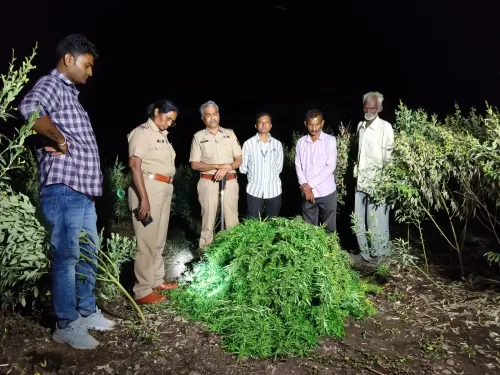
In one of Madhya Pradesh's largest recent drug hauls, police seized over 11,600 kg of cannabis plants worth ₹30 crore across four districts in just four days. The cannabis was found hidden among farm crops in remote areas — revealing a network that exploited terrain and connectivity gaps to evade detection.
Key Takeaways
Madhya Pradesh Police seized 11,669 kg of cannabis plants worth over ₹30.10 crore across four districts in four days ending 4 November 2026 .
Dhar district accounted for the largest share — 8,577.01 kg worth ₹27.47 crore — under Operation 'Prahar' led by SP Sachin Sharma .
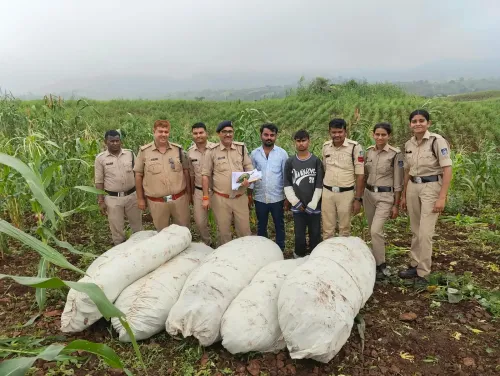
The single biggest recovery: nearly 6,700 kg valued at ₹25 crore from the Manawar police station area, with four arrests .
Plants were concealed among cotton and pigeon pea crops; police used drone surveillance and informant networks to reach remote locations.
All suspects have been booked under the NDPS Act ; police have vowed to intensify operations across the region.
Madhya Pradesh Police have seized and identified 11,669 kilograms of cannabis plants valued at more than ₹30.10 crore across Dhar, Khargone, Barwani, and Khandwa districts over a four-day sweep ending 4 November 2026. The drive is part of the state government's sustained push for a drug-free Madhya Pradesh.
Scale and Scope of the Operation
Police teams deployed drone surveillance, informant networks, and intensive ground searches to access remote riverbanks, forested hillsides, and areas with no mobile connectivity. In several locations, cannabis plants had been concealed among cotton and pigeon pea (tur) crops — a tactic that complicated detection, according to officials.
Dhar District Leads the Haul
The largest seizure came from Dhar, where Operation 'Prahar', led by Superintendent of Police Sachin Sharma, netted 8,577.01 kg of cannabis plants worth over ₹27.47 crore. The single biggest recovery was from the Manawar police station area: nearly 6,700 kg valued at ₹25 crore was detected and four persons were arrested. Additional seizures were reported from the Bag, Dharampuri, Gandhwani, Mandav, Badnawar, Dahi, and Kukshi police station jurisdictions, with multiple suspects arrested under the Narcotic Drugs and Psychotropic Substances (NDPS) Act.
District-by-District Breakdown
In Khargone, teams working under SP Ravindra Verma seized 2,367.85 kg worth ₹1.91 crore across five police station jurisdictions, including remote villages under the Helapadava outpost and areas of Maheshwar, Gogawan, Balakwada, and Bistan.
In Barwani, under Operation 'Green Strike', officers recovered 428.84 kg comprising 1,753 plants valued at nearly ₹42 lakh from Borpadwa and Kajalmata villages.
In Khandwa, police seized 295.70 kg worth ₹29.57 lakh from two locations under the Jawar police station area, arresting two persons.
Dismantling the Network, Not Just the Crop
Officials stressed that the campaign extends beyond physical seizures — the stated aim is to dismantle networks involved in illegal cultivation, production, and trafficking. This comes amid growing concern that remote tribal-belt districts along Madhya Pradesh's southern and western borders are increasingly being targeted by drug networks exploiting difficult terrain and low connectivity.
What Happens Next
The Madhya Pradesh Police have appealed to citizens to report any information about narcotic cultivation or trade in their localities, and officials indicated that operations will be intensified further. All arrested individuals face charges under the NDPS Act, which carries stringent penalties for large-scale drug offences.
Point of View
600 kg in four days across four contiguous districts — points to organised cultivation rather than isolated farm-level opportunism. The fact that plants were camouflaged within legal crops like cotton and tur suggests a degree of planning that individual cultivators rarely manage. What the operation has not yet publicly answered is whether these seizures have led up the supply chain to traffickers and financiers, or whether, as has historically been the case in many such drives, the arrests stop at the cultivation level. Madhya Pradesh's tribal-belt geography makes it structurally attractive for cannabis networks, and without sustained disruption of the financial layer, seizure-led campaigns tend to produce recurring hauls rather than lasting suppression.
NationPress
4 Nov 2026
Frequently Asked Questions
How much cannabis did Madhya Pradesh Police seize in this operation?
Madhya Pradesh Police seized and identified 11,669 kg of cannabis plants valued at over ₹30.10 crore across Dhar, Khargone, Barwani, and Khandwa districts over four days ending 4 November 2026.
Which district recorded the largest cannabis seizure in the MP operation?
Dhar district recorded the largest haul — 8,577.01 kg worth over ₹27.47 crore under Operation 'Prahar'. The single biggest recovery within Dhar was nearly 6,700 kg valued at ₹25 crore from the Manawar police station area.
How did police locate cannabis hidden in remote areas?
Teams used drone surveillance , informant networks, and intensive ground searches to reach remote riverbanks, forested hillsides, and areas without mobile connectivity. In several cases, plants were concealed among cotton and pigeon pea crops.
What charges face those arrested in the MP drug drive?
All arrested individuals face charges under the Narcotic Drugs and Psychotropic Substances (NDPS) Act , which prescribes stringent penalties — including long prison terms — for large-scale drug cultivation and trafficking offences.
What is the stated aim of the Madhya Pradesh anti-drug campaign?
Officials say the campaign goes beyond seizing contraband — its stated goal is to dismantle entire networks involved in illegal cultivation, production, and trafficking of narcotics. Police have also urged citizens to report any information about drug activity in their areas.