MP Wheat Procurement Target Hiked to 100 LMT; CM Yadav Promises Daytime Power
Synopsis
MP CM Mohan Yadav raised the state's wheat procurement target by 28% to 100 lakh metric tonnes with central approval, promised daytime power for irrigation, extended MSP slot bookings to May 9, and announced four-times land compensation — positioning farmers as the cornerstone of MP's 2047 development vision.
Key Takeaways
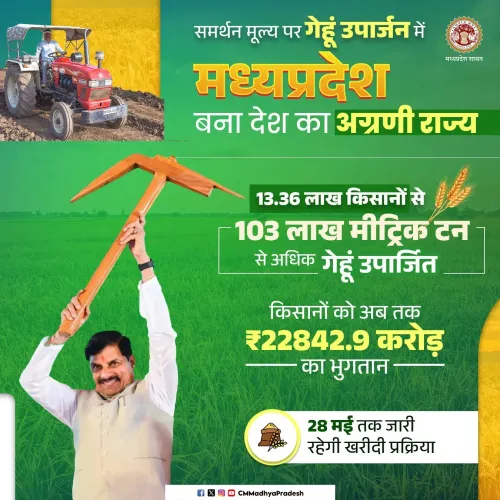
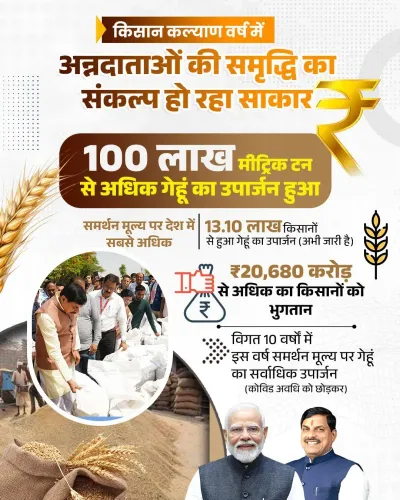
CM Mohan Yadav secured central approval to raise MP's wheat procurement target from 78 lakh metric tonnes to 100 lakh metric tonnes — a 28% increase — for the 2025 rabi season.
The MSP slot booking deadline for wheat sales has been extended from April 30 to May 9, 2025 , with procurement centres open six days a week including Saturdays .
Under the Krishak Mitra Yojana , solar pumps are being provided to farmers at a 90 per cent subsidy , alongside a guarantee of daytime electricity for irrigation .
1,752 new milk cooperatives have been established in MP, with over Rs 1,600 crore already paid to milk producers as part of CM Yadav's vision to make MP the Milk Capital of India .
Farmers will now receive up to four times the market value as land acquisition compensation under a newly announced policy.
Urad (black gram) will be procured at MSP with an additional Rs 600 per quintal bonus ; mustard farmers are already benefiting from the Bhavantar Bhugtan Yojana .
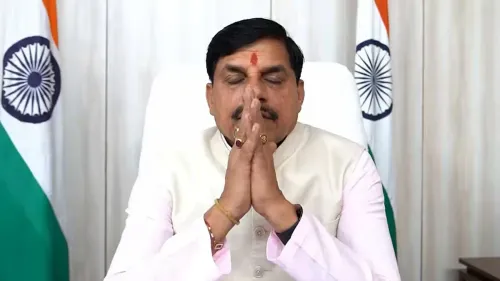
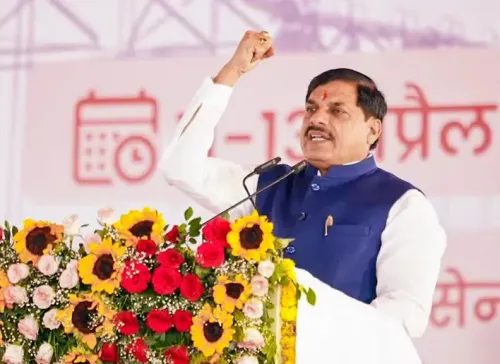
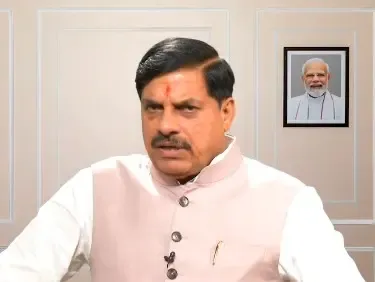
Bhopal, April 25 (NationPress) — Madhya Pradesh Chief Minister Mohan Yadav on Friday, April 24, announced a landmark expansion of the state's wheat procurement target — from 78 lakh metric tonnes to 100 lakh metric tonnes — after securing central government approval, while simultaneously guaranteeing adequate daytime electricity supply to farmers across the state. The announcement, made via a social media address to the farming community, also included an extension of the slot booking deadline for Minimum Support Price (MSP) wheat sales from April 30 to May 9.
Wheat Procurement Expanded: What Changed and Why It Matters
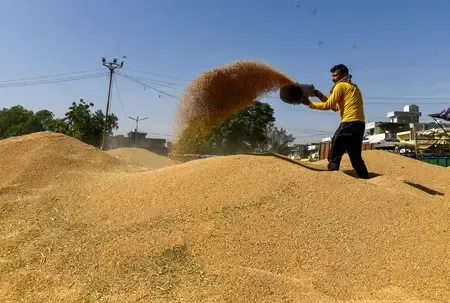
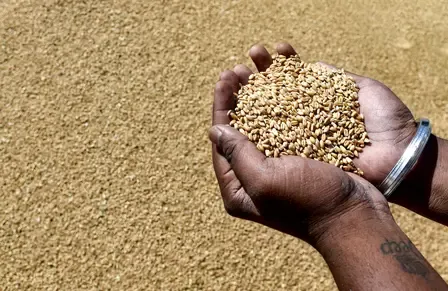
Madhya Pradesh has historically been one of India's top wheat-producing states, and this season's revised target of 100 lakh metric tonnes represents a 28 per cent jump over the earlier benchmark of 78 lakh metric tonnes. The central government's approval for this upward revision signals confidence in the state's agricultural output and procurement infrastructure.
CM Yadav confirmed that slot bookings for MSP wheat sales are now fully open for all farmers — both small and large-scale — with procurement centres operating six days a week, including Saturdays. The extension of the slot booking window to May 9 gives farmers additional time to register and sell their produce at the guaranteed price, reducing distress sales in open markets.
This comes amid broader national concerns about food security and inflationary pressure on essential commodities. A higher state procurement target directly contributes to the Central Pool managed by the Food Corporation of India (FCI), which in turn supports the Public Distribution System (PDS) feeding millions of beneficiaries across India.
Daytime Power for Irrigation: A Long-Pending Demand Addressed
One of the most persistent grievances of Madhya Pradesh farmers has been the erratic, largely nocturnal electricity supply for irrigation pumps — forcing farmers to work in unsafe conditions in the dark. CM Yadav directly addressed this, assuring guaranteed daytime power supply for agricultural use.
Complementing this, the Chief Minister highlighted the Krishak Mitra Yojana, under which solar pumps are being distributed to farmers at a 90 per cent subsidy, aimed at making the farming community energy-self-reliant and reducing dependence on grid electricity. This dual approach — grid power during the day and solar pump distribution — represents a structural shift rather than a temporary fix.
Notably, Madhya Pradesh's agricultural electricity woes have been a recurring political flashpoint. The promise of reliable daytime power, if delivered, could significantly reduce crop loss due to inadequate irrigation — particularly during the critical rabi harvesting and kharif sowing overlap period in April–May.
Key Policy Announcements for Farmers
CM Yadav unveiled a series of additional farmer-centric measures during his address. On land acquisition, farmers will now receive up to four times the market value of their land as compensation — a significant upward revision aimed at protecting agrarian livelihoods against industrial and infrastructure projects. Procurement of urad (black gram) at MSP with an additional bonus of Rs 600 per quintal has been announced to encourage crop diversification. Farmers are also reportedly benefiting from improved mustard prices under the Bhavantar Bhugtan Yojana, which compensates farmers for the difference between MSP and actual market prices. Additionally, 1,752 new milk cooperatives have been established, with payments exceeding Rs 1,600 crore already disbursed to milk producers. The CM reiterated his goal of making Madhya Pradesh the Milk Capital of India.
Bigger Picture: Political Economy of Farmer Welfare in MP
These announcements arrive at a politically significant moment. Madhya Pradesh is in a period where rural voter sentiment will be critical, and the BJP government under CM Yadav — now in its second year — is keen to demonstrate tangible delivery on agrarian promises made during the 2023 assembly elections.
Critics note that while targets and schemes are announced with regularity, ground-level implementation — particularly consistent daytime power supply and actual MSP procurement reaching small and marginal farmers — has historically lagged. The extension of slot bookings to May 9 itself suggests that uptake was slower than anticipated, raising questions about awareness and accessibility at the village level.
The four-times land compensation policy, while farmer-friendly on paper, will also be closely watched by industry bodies and infrastructure developers, as it could increase the cost and complexity of land acquisition for major projects in the state. CM Yadav framed all these measures within the broader vision of a Developed Madhya Pradesh by 2047 — aligned with Prime Minister Narendra Modi's Viksit Bharat framework.
What to Watch Next
The critical test will come in the weeks following May 9, when final procurement numbers are tallied against the revised 100 lakh metric tonne target. Whether the state's procurement infrastructure — mandis, storage facilities, payment pipelines — can absorb this expanded volume without delays will determine whether these announcements translate into real farmer income gains. Stakeholders will also monitor the rollout of the urad MSP bonus and the pace of solar pump distribution under the Krishak Mitra Yojana through the upcoming kharif season.
Point of View
If actually achieved, would be a genuine supply-side win for national food security. However, the extension of slot bookings to May 9 quietly signals that ground-level mobilisation has underperformed, exposing the persistent gap between policy ambition and last-mile delivery in India's agrarian states. The four-times land compensation promise is a double-edged sword: it protects farmers but could slow industrial investment in a state that desperately needs it. The real story is not the announcement — it is whether MP's creaking procurement infrastructure can handle 100 lakh metric tonnes without the payment delays and mandi bottlenecks that have plagued previous seasons.
NationPress
18 Oct 2026
Frequently Asked Questions
What is Madhya Pradesh's new wheat procurement target for 2025?
Madhya Pradesh has raised its wheat procurement target from 78 lakh metric tonnes to 100 lakh metric tonnes for the 2025 season, following central government approval secured by CM Mohan Yadav . This represents a 28 per cent increase over the previous target.
What is the new deadline for wheat MSP slot booking in MP?
The deadline for slot bookings to sell wheat at the Minimum Support Price (MSP) in Madhya Pradesh has been extended to May 9, 2025 , from the earlier deadline of April 30. Procurement centres are operating six days a week, including Saturdays .
What is the Krishak Mitra Yojana and how does it help MP farmers?
The Krishak Mitra Yojana is a Madhya Pradesh government scheme that distributes solar pumps to farmers at a 90 per cent subsidy , aimed at making them energy self-reliant for irrigation. It complements the government's promise of daytime grid electricity for agricultural use.
How much compensation will MP farmers get for land acquisition?
CM Mohan Yadav announced that farmers in Madhya Pradesh will receive compensation of up to four times the market value of their land in acquisition cases. This policy aims to safeguard farmer rights against displacement by industrial or infrastructure projects.
What bonus is being offered for urad procurement in MP?
Madhya Pradesh is procuring urad (black gram) at MSP with an additional bonus of Rs 600 per quintal to incentivise farmers to grow pulse crops. This measure is part of a broader push to diversify away from wheat and rice cultivation in the state.