CM Mohan Yadav Boosts Wheat Procurement to 100 LMT in First Address
Synopsis
In his first public address, MP CM Mohan Yadav raised the state's wheat procurement target by over 28% to 100 lakh metric tonnes, announced 4x land compensation for farmers, a Rs 600/quintal urad bonus, 90% solar pump subsidy, and revealed Rs 1,600 crore already paid to dairy farmers — signalling an aggressive rural-first governance agenda.
Key Takeaways
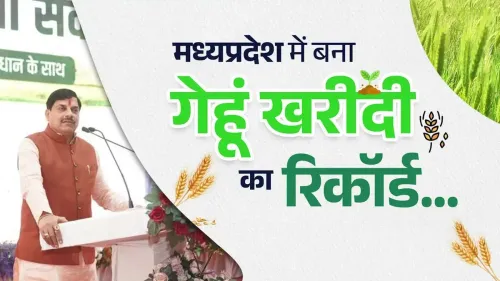
Wheat procurement target raised from 78 lakh MT to 100 lakh MT in Madhya Pradesh after Centre-state discussions, a 28.2% increase .
Slot booking for wheat MSP procurement extended to May 9, 2025 ; procurement to run six days a week including Saturdays.
Farmers to receive up to 4x the market value of their land under the revised land acquisition compensation policy.
Rs 600 per quintal bonus announced on urad procurement ; Bhavantar scheme extended to stabilise mustard prices.
Under Krishak Mitra scheme , solar pumps offered at 90% subsidy ; daytime power supply for irrigation being ensured statewide.
Over 1,700 new milk cooperative societies formed; Rs 1,600 crore paid to dairy farmers with daily milk procurement exceeding 10 lakh kg .
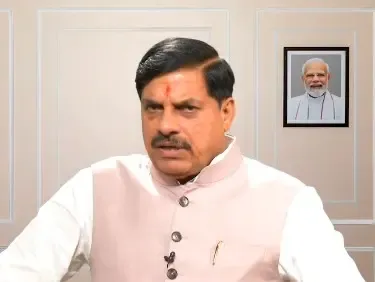
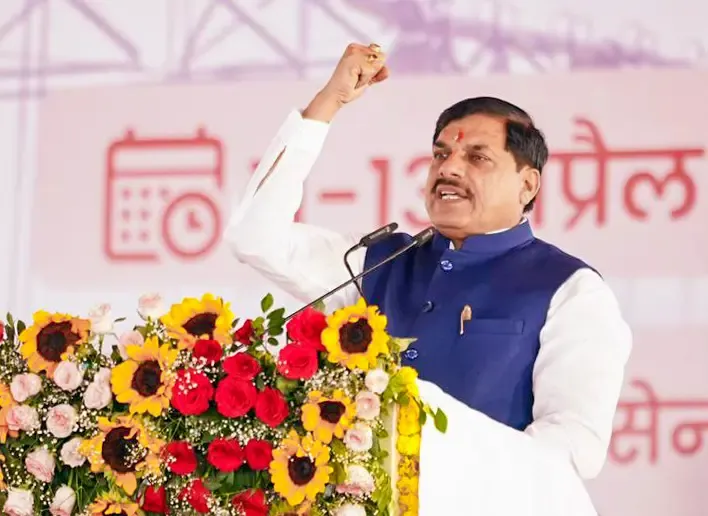
Bhopal, April 25 (NationPress): Madhya Pradesh Chief Minister Mohan Yadav delivered his first public address to the state on Friday night, April 24, unveiling a sweeping package of agricultural reforms that include a historic jump in the wheat procurement target from 78 lakh metric tonnes to 100 lakh metric tonnes, enhanced land acquisition compensation, and expanded rural infrastructure support — all framed within the national vision of 'Viksit Bharat 2047'. The address signals a clear political and policy priority: placing Madhya Pradesh's farming community at the core of the state's development roadmap.
Historic Wheat Procurement Target Raised After Centre Talks
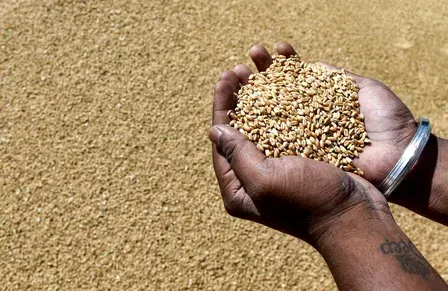
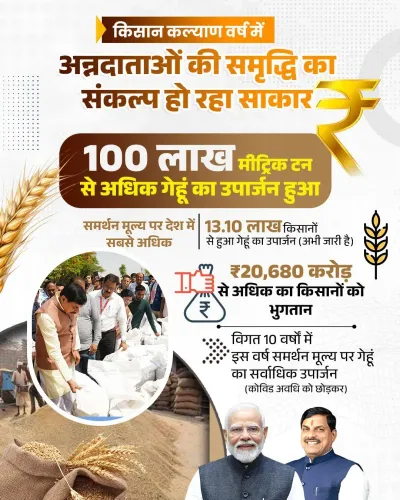
The most headline-grabbing announcement from CM Yadav's address was the significant upward revision of the wheat procurement target — a 28.2% increase negotiated directly with the Central government. This revision places Madhya Pradesh on course to become one of the largest wheat-procuring states in India, reinforcing its position as a key contributor to the national food security buffer.
Slot bookings for wheat procurement at the Minimum Support Price (MSP) have been opened for farmers across the state, with the registration deadline extended to May 9. Procurement operations will now run six days a week, with Saturdays no longer a holiday, easing peak-season logistical pressure on farmers and procurement agencies alike.
"This unprecedented increase is a tribute to the hard work of our farmers and a concrete step towards ensuring their income," Yadav said, positioning the move as both an economic intervention and a political statement ahead of what analysts expect to be a competitive rural outreach cycle.
Land Compensation, Bonus Prices, and Income Diversification
In a move with significant long-term implications for land acquisition disputes — a persistent flashpoint in rural Madhya Pradesh — CM Yadav announced that farmers will now receive up to four times the market value of their land in acquisition cases. This aligns with the spirit of the Right to Fair Compensation and Transparency in Land Acquisition Act, though its implementation at the state level has historically been uneven.
To diversify farm income beyond wheat, the government announced a Rs 600 per quintal bonus on urad procurement. Additionally, the extension of the Bhavantar Bhugtan Yojana — a price deficiency payment scheme — has helped stabilise mustard prices, reducing the volatility that typically erodes farmer margins in oilseed markets.
These layered interventions reflect a broader strategy to reduce mono-crop dependency, a structural vulnerability that has historically made MP farmers susceptible to price crashes and climate shocks.
Infrastructure Push: Solar Pumps, Electricity, and Fertiliser Access
On the infrastructure front, Yadav highlighted that the state is facilitating agricultural pump connections at nominal cost and ensuring daytime electricity supply for irrigation — a long-standing demand from farming communities who have historically received power only during late-night or pre-dawn hours, making field operations difficult and dangerous.
Under the Krishak Mitra scheme, the government is providing solar pumps with a 90% subsidy, promoting energy-independent irrigation and reducing dependence on erratic grid power. This initiative also aligns with India's broader renewable energy targets and could reduce the state's agricultural power subsidy burden over time.
On fertiliser availability, CM Yadav confirmed that Madhya Pradesh has secured adequate stocks of urea and other key fertilisers despite global supply chain disruptions — a reference to the ongoing volatility in international fertiliser markets linked to the Russia-Ukraine conflict and post-COVID logistics challenges. Technology-driven improvements in the distribution system, he said, are enabling more efficient access at the last mile.
Dairy Sector Surge: 1,700 New Cooperatives, Rs 1,600 Crore in Payments
Beyond crop farming, CM Yadav drew attention to a parallel rural income engine: the dairy sector. He announced that over 1,700 new milk cooperative societies have been established across the state, with daily milk procurement crossing 10 lakh kilograms (1 million kg).
Payments worth more than Rs 1,600 crore have already been disbursed to milk-producing farmers, signalling that the cooperative model is gaining traction as a supplementary income source for rural households. This expansion mirrors successful models from Gujarat's Amul cooperative network, which Madhya Pradesh has long sought to replicate at scale.
Political Context and What Comes Next
This address comes at a critical juncture. CM Mohan Yadav, who took charge in December 2023 following the BJP's landslide victory in the MP Assembly elections, has been under pressure to deliver tangible results for a rural electorate that handed the party a decisive mandate. The emphasis on farmer welfare in his very first major public address is a deliberate signal — both to the state's farming community and to the national BJP leadership — that rural prosperity will define his administration's identity.
Notably, Madhya Pradesh has consistently ranked among India's top wheat and soybean producing states. However, farmer distress, loan waivers, and MSP disputes have been recurring political fault lines. The 100 lakh MT procurement target, if achieved, would mark a record for the state and provide significant political capital ahead of future electoral cycles.
With procurement deadlines running through May 2025 and multiple scheme rollouts underway, the coming weeks will be a critical test of whether these policy announcements translate into ground-level delivery — the gap between intent and implementation that has historically defined the credibility of farm welfare promises in India's heartland states.
Point of View
MSP disputes, and fertiliser shortages have been perennial grievances, Yadav is front-loading his rural credentials before the political honeymoon ends. The 100 lakh MT wheat procurement target is ambitious, but the real test lies in procurement infrastructure, payment timelines, and whether the Bhavantar scheme's mustard price stabilisation holds beyond election season. India's heartland states have a long history of grand farm announcements that quietly unravel at the mandi level — Yadav's credibility will be built or broken there, not in Bhopal's press rooms.
NationPress
12 Oct 2026
Frequently Asked Questions
What did MP CM Mohan Yadav announce for farmers in his first address?
CM Mohan Yadav announced a raise in the wheat procurement target from 78 lakh MT to 100 lakh MT, a Rs 600/quintal bonus on urad, 4x land acquisition compensation, 90% subsidy on solar pumps under the Krishak Mitra scheme, and six-day-a-week procurement operations. These measures aim to boost farmer income and streamline agricultural infrastructure in Madhya Pradesh.
What is the new wheat procurement target for Madhya Pradesh in 2025?
Madhya Pradesh has revised its wheat procurement target upward to 100 lakh metric tonnes for 2025, up from the earlier target of 78 lakh metric tonnes. This revision was made following discussions between CM Mohan Yadav and the Central government.
What is the Krishak Mitra scheme in Madhya Pradesh?
The Krishak Mitra scheme is a Madhya Pradesh government initiative that provides solar-powered irrigation pumps to farmers at a 90% subsidy. It aims to promote sustainable and energy-independent farming by reducing dependence on erratic grid electricity.
How much compensation will farmers get for land acquisition in MP now?
Under the new policy announced by CM Mohan Yadav, farmers in Madhya Pradesh will receive up to four times the market value of their land in government acquisition cases. This is intended to ensure fair compensation and protect farmer interests during infrastructure and development projects.
What is the Bhavantar Bhugtan Yojana and how does it help MP farmers?
The Bhavantar Bhugtan Yojana is a price deficiency payment scheme in Madhya Pradesh that compensates farmers when market prices fall below the Minimum Support Price. Its recent extension has helped stabilise mustard prices, reducing income volatility for oilseed farmers in the state.