MSME Amendment Bill 2026 passed: TReDS mandate, 90-day mediation deadline
Synopsis
Parliament has cleared the MSME Amendment Bill 2026 — the most significant legislative overhaul of the sector since 2006. The law forces Central Public Sector Enterprises onto TReDS, caps mediation at 90 days, and mandates 50% payment release if appeals linger past six months. For millions of small business owners, it could finally put teeth into payment-delay enforcement.
Key Takeaways
Parliament passed the MSME Development (Amendment) Bill 2026 , with the Lok Sabha clearing it on 7 August 2026 after the Rajya Sabha approved it on Monday .
All Central Public Sector Enterprises must now settle MSME procurement invoices via the Trade Receivables Discounting System (TReDS) .
Mediation in MSME disputes must be completed within 90 days ; courts must release at least 50% of disputed amounts if appeals exceed six months .
Minor registration or reporting defaults are decriminalised, replaced by graded fines of ₹1,000 to ₹1,00,000 .
The Bill was moved by MSME Minister Jitan Ram Manjhi amid Opposition disruptions in the Lok Sabha.
Parliament has passed the Micro, Small and Medium Enterprises Development (Amendment) Bill 2026, a landmark legislation targeting chronic payment delays and cumbersome dispute resolution that have long hobbled India's MSME sector. The Lok Sabha cleared the Bill on Friday, 7 August 2026, days after the Rajya Sabha approved it on Monday, sending it for presidential assent.
Key Provisions of the Amendment
The legislation introduces a mandatory requirement for all Central Public Sector Enterprises (CPSEs) to settle procurement invoices through the Trade Receivables Discounting System (TReDS), a digital platform designed to accelerate cash flows for smaller suppliers. This provision directly addresses one of the most persistent complaints from MSME owners — that large government-linked buyers routinely delay payments, starving smaller firms of working capital.
On dispute resolution, the Bill sets a strict 90-day deadline for completing mediation between MSMEs and their buyers. Crucially, if an appeal against an awarded amount drags beyond six months, courts are now required to release at least 50 per cent of the disputed sum to the MSME — a provision aimed at preventing prolonged litigation from becoming a tool to deny smaller enterprises their dues.
Decriminalisation of Minor Defaults
In a significant shift in regulatory philosophy, the Bill replaces criminal liability for minor registration or reporting lapses with a graded system of administrative warnings and monetary fines. Penalties range from ₹1,000 at the lower end to ₹1,00,000 at the upper end, depending on the severity of the default. This decriminalisation is expected to reduce compliance anxiety among first-generation entrepreneurs and micro-enterprise owners who previously risked prosecution over paperwork errors.
How the Bill Was Moved
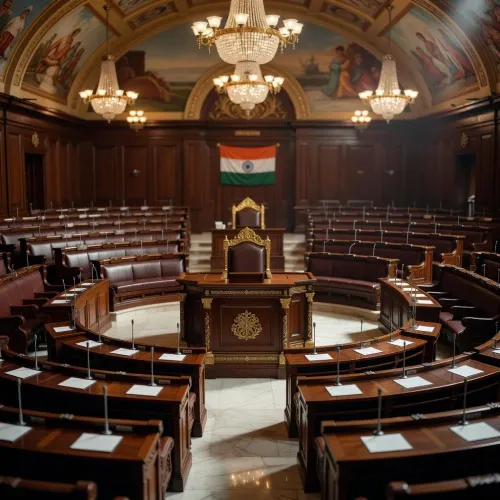
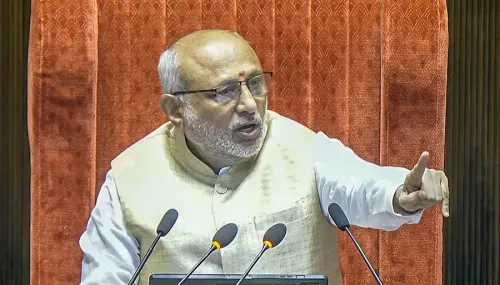
The Bill was introduced in the Lok Sabha by Minister of MSME Jitan Ram Manjhi. Its passage, however, was not without turbulence — the Opposition created significant disruption in the House during the proceedings. Presiding Officer Dilip Saikia expressed displeasure over the uproar, stating that bringing posters and banners into the chamber and obstructing proceedings was incompatible with the country's democratic traditions. He urged protesting members to return to their seats and engage in constructive dialogue, assuring them of full opportunity to raise concerns through proper channels.
Parliamentary Affairs Minister Kiren Rijiju also weighed in, expressing concern over the Opposition's conduct. The House was eventually adjourned for the day and directed to reconvene at 11 am on Monday.
Context and Significance
MSMEs account for a substantial share of India's employment and exports, yet payment delays from larger buyers — particularly government entities — have been a structural drag on the sector's growth. The TReDS mandate for CPSEs closes a long-standing loophole that allowed public sector buyers to operate outside the digital payment ecosystem that private sector MSMEs were increasingly pushed to adopt. This is the most substantive legislative intervention in MSME payment infrastructure since the original MSMED Act of 2006.
Notably, Lok Sabha Speaker Om Birla had earlier paid tribute to the freedom fighters of the Quit India Movement as the session opened on 9 August, marking the movement's 84th anniversary — lending a symbolic backdrop to a session that ultimately delivered a significant economic reform.
With the Bill now through both Houses, the focus shifts to implementation: how swiftly CPSEs integrate with TReDS, and whether the 90-day mediation deadline is enforced in practice will determine whether the legislation delivers its promise to millions of small business owners.
Point of View
Yet CPSE adoption remained patchy precisely because it was voluntary. Making it mandatory is the right call, but enforcement will hinge on whether the Ministry of MSME has the bandwidth to audit compliance across hundreds of public sector entities. The 90-day mediation cap is similarly well-intentioned, but India's mediation infrastructure outside major metros is thin; without a parallel push to expand accredited mediators, the deadline risks becoming aspirational on paper. Decriminalisation of minor defaults is unambiguously positive and long overdue — the threat of criminal prosecution for paperwork lapses was a genuine deterrent to formalisation. The real test of this legislation will come in the next 18 months of implementation, not in the parliamentary vote.
NationPress
21 Sept 2026
Frequently Asked Questions
What is the MSME Development (Amendment) Bill 2026?
It is a legislation passed by Parliament on 7 August 2026 that mandates TReDS-based invoice settlement by Central Public Sector Enterprises, caps MSME dispute mediation at 90 days, and replaces criminal penalties for minor defaults with graded fines. It is the most significant overhaul of MSME payment and dispute law since the original MSMED Act of 2006.
What is TReDS and why does the Bill make it mandatory?
The Trade Receivables Discounting System (TReDS) is a digital platform that allows MSMEs to discount their trade receivables and access faster payments. The Bill makes it mandatory for all Central Public Sector Enterprises to use TReDS for settling MSME procurement invoices, closing a loophole that allowed large government buyers to delay payments outside the digital ecosystem.
How does the 90-day mediation rule protect MSMEs?
Under the new law, any dispute between an MSME and a buyer must be resolved through mediation within 90 days. If an appeal against an awarded amount remains unresolved beyond six months, courts are required to release at least 50 per cent of the disputed sum to the MSME, preventing prolonged litigation from being used to withhold legitimate payments.
What changes does the Bill make to penalties for MSMEs?
The Bill decriminalises minor registration or reporting defaults, replacing the threat of criminal conviction with a graded system of administrative warnings and monetary fines ranging from ₹1,000 to ₹1,00,000. This is intended to reduce compliance anxiety among small and micro-enterprise owners.
Who introduced the MSME Amendment Bill in the Lok Sabha?
The Bill was moved in the Lok Sabha by MSME Minister Jitan Ram Manjhi. Its passage came amid Opposition disruptions, with Presiding Officer Dilip Saikia appealing for order before the House was adjourned for the day.