MSME Report 2026: ISED calls for de-risking framework, not just subsidies
Synopsis
India's small businesses don't just need promotion — they need protection. ISED's India MSME Report 2026 introduces an 'enterprise security' concept that reframes MSME survival as a national economic priority, akin to food security, and calls for coordinated action by governments, banks, and insurers to de-risk a sector chronically exposed to global shocks.
Key Takeaways
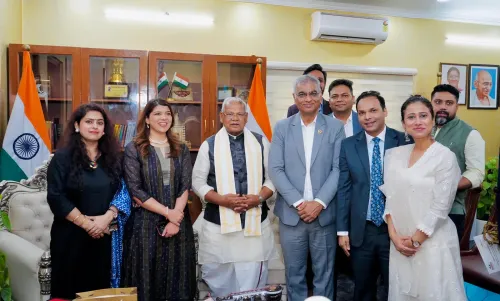
The India MSME Report 2026 was released in Kochi by ISED on 25 June 2025 , presented by Mercy Epao , Joint Secretary, Ministry of MSME.
ISED proposes an Enterprise Security and Resilience Framework to shift MSME policy from promotion to systematic de-risking.
The report introduces the concept of asymmetric lagging vulnerability — where crisis impacts on MSMEs emerge with a delay as costs rise and demand falls.
ISED Director Dr P.M.
Mathew called entrepreneurship 'a public good' deserving state protection through affordable credit, technology, and market access.
The OECD 's Max Balakoviskiy endorsed the framework as an innovative contribution to global MSME policy; former IRDAI member Thomas Devasia called for banking-insurance convergence for small enterprises.
The Institute of Small Enterprises and Development (ISED) has proposed a sweeping policy overhaul for India's micro, small and medium enterprises (MSMEs), arguing that the sector needs systematic protection from global economic shocks — not merely promotional schemes and subsidies. The proposal forms the centrepiece of the India MSME Report 2026, released in Kochi on 25 June 2025 by Mercy Epao, Joint Secretary in the Ministry of MSME.
The Core Argument: Enterprise Security as Economic Priority
At the heart of the report is the concept of enterprise security — a framework that positions the survival of MSMEs as a fundamental economic priority, comparable in principle to National Food Security. ISED contends that while all businesses face risks from economic downturns, geopolitical conflicts, and public health emergencies, small enterprises remain disproportionately exposed.
The report highlights what economists term asymmetric lagging vulnerability — a pattern where the full impact of a crisis on MSMEs surfaces only after a delay, as costs climb, demand weakens, and employment comes under pressure. Events such as the Covid-19 pandemic and ongoing tensions in West Asia are cited as evidence of this structural fragility.
Why Traditional Relief Measures Fall Short
According to ISED, emergency credit support schemes and other crisis-era interventions address only immediate challenges. The deeper structural weaknesses afflicting MSMEs — limited access to finance and technology, shrinking profit margins, and persistent market uncertainties — require a more durable policy response.
The institute notes that the current policy architecture, built largely around promotional subsidies, leaves small businesses exposed to cascading risks that a single-instrument approach cannot contain.
The Enterprise Security and Resilience Framework
To address these gaps, ISED has unveiled its Enterprise Security and Resilience Framework, which calls for coordinated action by governments, banks, insurance companies, and promotional agencies. The framework is designed to help entrepreneurs manage interconnected risks that threaten business viability before they become existential.
ISED Director Dr P.M. Mathew made the case for treating entrepreneurship as a public good. 'Entrepreneurship itself is a public good and deserves protection,' he said, arguing that governments must ensure access to affordable credit, technology, and market opportunities as critical public services.
Global and Sectoral Endorsements
Max Balakoviskiy of the Organisation for Economic Co-operation and Development (OECD) described the framework as an innovative contribution to global MSME policy discussions. Former Insurance Regulatory and Development Authority of India (IRDAI) member Thomas Devasia stressed the need for closer convergence between banking and insurance services to support small enterprises — a gap that critics argue has long undermined MSME resilience in India.
What the Policy Shift Would Mean
The report's central message is that India must move decisively from merely promoting MSMEs to systematically de-risking them. The sector contributes significantly to employment, innovation, and economic growth — making its resilience a national economic concern, not just a sectoral one.
Whether the Ministry of MSME translates the framework into actionable policy will be the critical test in the months ahead.
Point of View
Yet the sector's structural vulnerabilities — thin margins, credit gaps, technology deficits — remain largely unaddressed. ISED's enterprise security framing is conceptually significant because it redefines the state's obligation: from cheerleader to insurer of last resort. The harder question is whether this framework will move beyond a report into the Ministry's budget allocations and legislative agenda. Past MSME policy cycles have produced ambitious frameworks that stalled at implementation. The real test is whether 'de-risking' gets a line item — or remains a think-tank aspiration.
NationPress
23 Sept 2026
Frequently Asked Questions
What is the India MSME Report 2026?
The India MSME Report 2026 is a policy document released by the Institute of Small Enterprises and Development (ISED) in Kochi on 25 June 2025. It proposes a shift from subsidy-based MSME promotion to a comprehensive de-risking strategy centred on the concept of enterprise security.
What is the Enterprise Security and Resilience Framework proposed by ISED?
It is a coordinated policy framework calling on governments, banks, insurance companies, and promotional agencies to jointly manage cascading risks that threaten MSME viability. The framework treats small business survival as a fundamental economic priority, comparable to national food security.
What is 'asymmetric lagging vulnerability' in the context of MSMEs?
It is an economic concept cited in the report describing how the full impact of a crisis — such as a pandemic or geopolitical conflict — hits MSMEs only after a delay, as costs rise, demand weakens, and employment comes under pressure, making them harder to rescue once the damage becomes visible.
Why does ISED argue that traditional relief measures are insufficient for MSMEs?
According to ISED, emergency credit schemes address only immediate challenges but leave deeper structural weaknesses — limited finance access, technology gaps, and market uncertainty — unresolved. The institute argues these require a durable, systemic policy response rather than crisis-by-crisis interventions.
Who released the India MSME Report 2026 and who endorsed it?
The report was released by Mercy Epao, Joint Secretary in the Ministry of MSME. The framework was endorsed by OECD's Max Balakoviskiy as an innovative contribution to global MSME policy, and former IRDAI member Thomas Devasia called for greater banking-insurance convergence to support small enterprises.