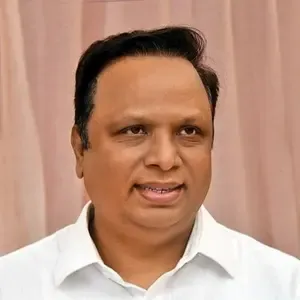
Mumbai cybersecurity is national economic priority, says Maha Minister Shelar

Synopsis
Maharashtra Minister Ashish Shelar reframed Mumbai's cybersecurity as a national economic imperative — not an IT niche — pointing to the city's unmatched concentration of financial regulators and exchanges. His call for a long-term India-Israel cyber cooperation ecosystem, beyond commercial deals, signals a policy ambition that goes further than routine bilateral IT MoUs.
Key Takeaways
Ashish Shelar , Maharashtra Minister for Electronics, IT and AI, on 10 August declared Mumbai's cybersecurity a national economic priority.
Mumbai hosts the headquarters of RBI , SEBI , NSE , and BSE — making its digital infrastructure critical to India's financial system.
Shelar called for India-Israel cooperation to move beyond commercial ties toward joint research, technology development and knowledge exchange in cybersecurity.
The Government of Maharashtra is committed to integrating AI , Quantum Computing , and Big Data analytics with security built in from the design stage.
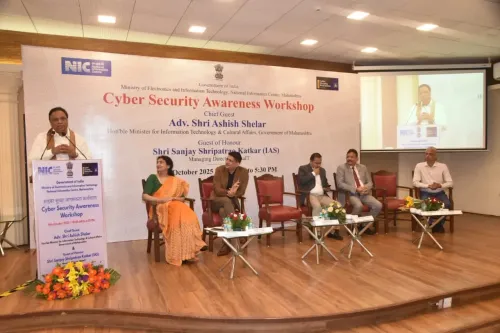
The event was co-organised by the Government of India , the Consulate General of Israel in Mumbai , the Economic and Trade Mission of Israel , and the BSE .
Maharashtra Minister of Electronics, Information Technology and Artificial Intelligence Ashish Shelar on Monday, 10 August declared that Mumbai's cybersecurity has moved well beyond an IT concern and is now a critical pillar of India's economic security. The statement came at a joint event organised in collaboration with the Government of India, the Consulate General of Israel in Mumbai, the Economic and Trade Mission of Israel in Mumbai, and the Bombay Stock Exchange (BSE).
Key Developments
'A secure Mumbai means a secure India and a secure Indian economy,' Shelar said, calling on policymakers, technologists, engineers, industry leaders and experts to work collectively on cybersecurity challenges. He underscored that Mumbai, as the seat of the Reserve Bank of India (RBI), the Securities and Exchange Board of India (SEBI), the National Stock Exchange (NSE), and the BSE, represents a concentration of financial infrastructure whose digital protection is non-negotiable.
Shelar argued that safeguarding physical infrastructure alone is insufficient. 'Protecting digital infrastructure is equally important. Mumbai's cyber resilience and security have become an integral part of national economic security,' he said.
India-Israel Cybersecurity Cooperation
A significant thread running through the event was the deepening of India-Israel ties in cybersecurity. Shelar noted that both nations share democratic values, intellectual heritage, and a tradition of innovation — foundations he said must underpin a 'robust bridge of cooperation.' He called for the two countries to move beyond purely commercial engagements toward a 'strong, long-term and mutually beneficial ecosystem of cooperation' encompassing knowledge exchange, joint research, technology development and innovation.
The event's format — bringing together government officials, consular representatives, industry professionals and innovators on a single platform — was itself cited by Shelar as a model for the kind of cross-sector collaboration he envisions.
Maharashtra's Digital Transformation Push
The minister reaffirmed the Government of Maharashtra's commitment to emerging technologies including Artificial Intelligence, Quantum Computing, and Big Data analytics, stressing that digital security must be treated as an equal priority alongside digital transformation. He called for security to be embedded at the design stage of new software, digital services, and technological solutions — rather than retrofitted after deployment.
Shelar also highlighted India's human capital advantage, describing the country's cybersecurity professionals, engineers and young technologists as 'silent guardians of modern society' who protect data, citizens' finances, and sovereign information.
What This Means for India's Financial Ecosystem
The framing of Mumbai's cyber resilience as a matter of national economic security carries policy weight. Any disruption to the digital infrastructure underpinning RBI, SEBI, NSE, or BSE could cascade across settlement systems, regulatory functions, and market confidence — risks that have grown as financial services migrate to cloud and API-driven architectures. This comes amid a broader global surge in state-sponsored and financially motivated cyberattacks targeting financial centres.
Shelar concluded by urging all stakeholders to accelerate economic growth through a secure digital environment, building what he called 'a prosperous and secure future for generations to come.' Concrete policy follow-ups — including any formal India-Israel cybersecurity agreements or Maharashtra-level legislative action — are expected to be outlined in subsequent engagements.
Point of View
Maharashtra is effectively lobbying for Centre-level resources and policy attention for city-specific digital infrastructure. The India-Israel angle is worth watching — Israel's cyber exports are a state-driven enterprise, and any formal cooperation framework would likely involve intelligence-adjacent technology transfer, raising questions about procurement transparency and parliamentary oversight that the event did not address. The 'design-stage security' call is the right principle, but Maharashtra has yet to legislate or mandate it for state-procured software — making it aspiration rather than policy for now.
NationPress
25 Sept 2026
Frequently Asked Questions
What did Maharashtra Minister Ashish Shelar say about Mumbai's cybersecurity?
Shelar said Mumbai's cybersecurity is no longer just an IT concern but a critical national economic priority, given that the city hosts the headquarters of RBI, SEBI, NSE, and BSE. He made the statement at a joint event on 10 August involving the Government of India, Israeli consular missions, and the Bombay Stock Exchange.
Why is Mumbai's digital infrastructure considered critical to India's economy?
Mumbai concentrates India's most systemically important financial institutions — the RBI, SEBI, NSE, and BSE — in a single city. A cyberattack on any of these could cascade across settlement systems, regulatory functions, and market confidence, with nationwide economic consequences.
What kind of India-Israel cybersecurity cooperation did Shelar call for?
Shelar urged both countries to move beyond purely commercial engagements and build a long-term, mutually beneficial ecosystem covering knowledge exchange, joint research, technology development, and innovation in cybersecurity.
What emerging technologies is the Maharashtra government focusing on?
The Government of Maharashtra is promoting Artificial Intelligence, Quantum Computing, and Big Data analytics, with Shelar stressing that digital security must be prioritised equally alongside digital transformation and embedded at the design stage of new systems.
Who organised the cybersecurity event where Shelar spoke?
The event was organised in collaboration with the Government of India, the Consulate General of Israel in Mumbai, the Economic and Trade Mission of Israel in Mumbai, and the Bombay Stock Exchange.