President Murmu urges homoeopathy to embrace modern technology
Synopsis
President Droupadi Murmu told a Bhubaneswar convention that homoeopathic institutions must engage with AI, digital health and precision medicine. She said the field’s future standing will rest on scientific integrity of research, and that compassion must remain the foundation of every medical decision.
Key Takeaways
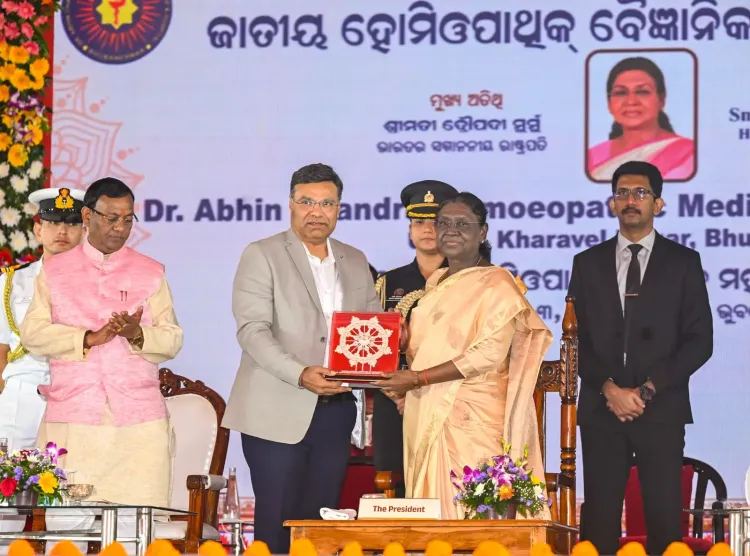
President Droupadi Murmu addressed the National Scientific Convention on Homoeopathy-2026 in Bhubaneswar on 25 November .
She urged homoeopathic institutions to engage with AI , digital health, genomics, big data and precision medicine.
Murmu said homoeopathy’s future credibility will depend on the scientific integrity of its research and clinical evidence.
She called for modern clinical infrastructure, digital health records, research laboratories and interdisciplinary collaboration.
Students were asked to act as architects of the field’s future, guided by questioning, evidence and patient dignity.
Healthcare and education were described as central pillars of Viksit Bharat 2047 , with rural access a priority.
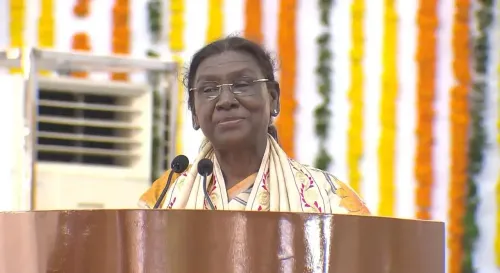
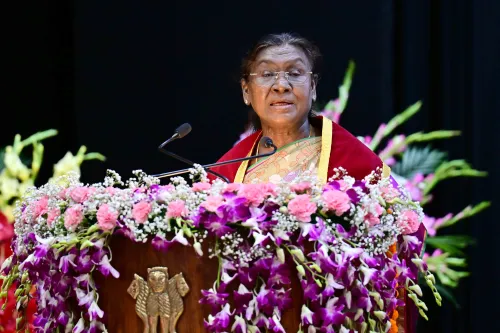
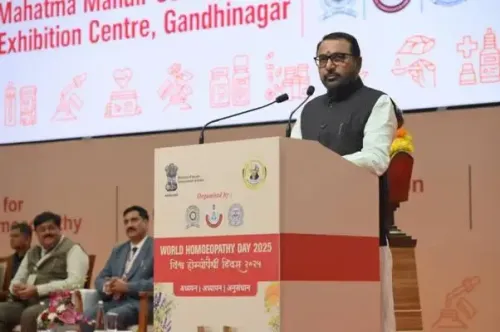
President Droupadi Murmu on Wednesday urged homoeopathic institutions across India to adapt to modern scientific and technological advances, while keeping human compassion, patient dignity and welfare at the core of medical decisions. Speaking at the National Scientific Convention on Homoeopathy-2026 at the Dr Abhin Chandra Homoeopathic Medical College and Hospital in Bhubaneswar on 25 November, she said the present era is witnessing unprecedented scientific and technological transformations.
Call to engage with AI and digital health
Murmu told the gathering that Artificial Intelligence, digital health technologies, advanced diagnostic systems, genomics, big data analytics and precision medicine are changing healthcare and medical education. Homoeopathic institutions, she said, must prepare themselves to engage meaningfully with these developments.
“Artificial Intelligence, digital health technologies, advanced diagnostic systems, genomics, big data analytics and precision medicine are changing healthcare and medical education. Our homoeopathic institutions must prepare themselves to engage meaningfully with these developments. Modern clinical infrastructure, digital health records, research laboratories, interdisciplinary collaboration and contemporary teaching methods are essential for institutional advancement,” the President said.
She congratulated students, research scholars, scientists, delegates and experts attending the national convention. Highlighting India’s significant progress in building infrastructure for homoeopathic education, research and clinical practice, Murmu described that expansion as an important part of the country’s diverse healthcare landscape.
Evidence, research and scientific integrity
Emphasising scientific rigour, evidence-based research and patient safety in every system of medicine, the President said the development of homoeopathy must be accompanied by an unwavering commitment to scientific inquiry, academic excellence and professional accountability.
“This branch of medicine should continuously examine its foundations, evaluate its practices and strengthen its knowledge through appropriate scientific methods,” she added.
Research, Murmu said, should be guided by sound methodology, adequately designed clinical studies, systematic documentation and transparent reporting. She linked the field’s future standing directly to the quality of evidence it produces.
“The future credibility and academic standing of homoeopathy will depend significantly on the scientific integrity of its research and the quality of clinical evidence it generates. I urge research institutions, medical colleges, universities and professional organisations to collaborate in developing a strong research culture,” Murmu said.
She also pointed to room for collaboration among medical disciplines in public health, preventive healthcare, health education, clinical documentation and research, while respecting each discipline’s scientific foundations and limitations. Notably, the President framed modernisation not as a break with homoeopathy but as a condition for its institutional advancement.
Compassion as the foundation of care
Underscoring empathy in patient care, Murmu cautioned against allowing technology to displace the human purpose of medicine.
“We must remember that technology may transform healthcare, but compassion must remain its foundation. Every medical decision must uphold the dignity, safety and welfare of the patient. The ultimate purpose of healthcare is to alleviate suffering and improve the quality of human life,” she said.
Young researchers and Viksit Bharat 2047
She encouraged students and young researchers to see themselves as the “architects” of homoeopathy’s future rather than mere inheritors. Murmu urged them to follow three principles: cultivate a habit of questioning and lifelong learning; have the courage to investigate, the patience to seek evidence and the humility to accept new knowledge; and always remember the hopes, fears and dignity of every patient.
Calling healthcare and education central pillars of the Viksit Bharat 2047 goal, she asked institutions and professionals to help build an accessible, equitable and scientifically responsible healthcare system. The President also stressed prioritising healthcare and educational access for rural citizens who rely heavily on public support to learn and stay healthy.
The Bhubaneswar address places a dual demand on homoeopathic colleges and research bodies: upgrade infrastructure and methods for an AI-driven health system, and generate clinical evidence that can withstand scientific scrutiny. How those institutions respond in laboratories, classrooms and clinics will determine whether the call becomes a research programme or remains a convention theme.
Point of View
Rigorous trials and transparent reporting, academic standing will erode. Homoeopathy’s public presence in India has long rested on usage and institutions; Murmu has now tied future credibility to the quality of clinical evidence it generates. The test is whether that becomes a research mandate, with patient safety and rural access treated as non-negotiable, rather than a talking point at a national convention.
NationPress
25 Nov 2026
Frequently Asked Questions
What did President Murmu say about homoeopathy in Bhubaneswar?
President Droupadi Murmu urged homoeopathic institutions to adapt to modern science and technology while keeping compassion, patient dignity and welfare at the centre of medical decisions. She was speaking at the National Scientific Convention on Homoeopathy-2026 in Bhubaneswar on 25 November.
Which technologies did Murmu say homoeopathic institutions must engage with?
She listed Artificial Intelligence, digital health technologies, advanced diagnostic systems, genomics, big data analytics and precision medicine as forces changing healthcare and medical education. She also called for modern clinical infrastructure, digital health records, research laboratories, interdisciplinary collaboration and contemporary teaching methods.
Why did President Murmu stress research and scientific integrity?
Murmu said the future credibility and academic standing of homoeopathy will depend significantly on the scientific integrity of its research and the quality of clinical evidence it generates. She urged research institutions, medical colleges, universities and professional organisations to build a strong research culture using sound methodology, clinical studies, documentation and transparent reporting.
What three principles did Murmu give students and young researchers?
She asked them to cultivate a habit of questioning and lifelong learning; to have the courage to investigate, the patience to seek evidence and the humility to accept new knowledge; and always to remember the hopes, fears and dignity of every patient. She encouraged them to see themselves as architects of homoeopathy’s future, not mere inheritors.
How did Murmu link homoeopathy to Viksit Bharat 2047?
She called healthcare and education central pillars of the Viksit Bharat 2047 goal and asked institutions to help build an accessible, equitable and scientifically responsible healthcare system. She also stressed prioritising healthcare and educational access for rural citizens who rely heavily on public support.