Homoeopathy's Future: A Roadmap for Integrative Healthcare
Synopsis
The 'World Homoeopathy Day 2026' highlighted critical discussions on the future of homoeopathy within integrative healthcare. Senior officials, experts, and students united to explore new innovations and collaborative practices that promise to reshape patient care.
Key Takeaways
World Homoeopathy Day 2026 emphasized the integration of homoeopathy into sustainable healthcare.
Collaboration between traditional practices and modern science was a focal point.
Acknowledgment of influential contributions in the homoeopathic field was celebrated.
The event featured evidence-based case presentations on complex health issues.
Future strategic priorities for homoeopathy research were outlined.
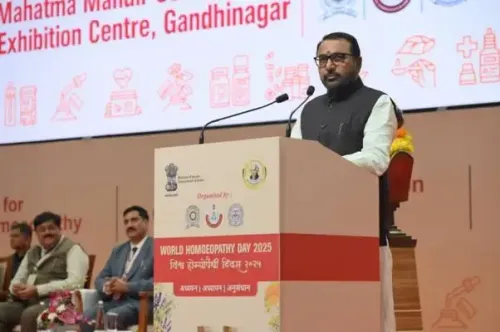
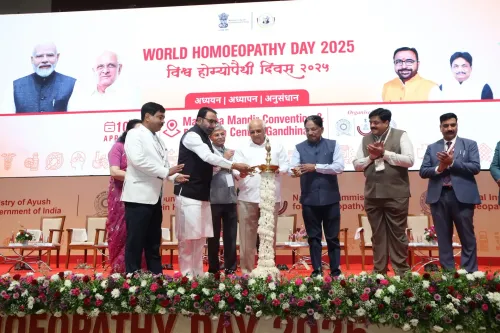
New Delhi, April 12 (NationPress) The ‘World Homoeopathy Day 2026’ emerged as a vital platform for discussions surrounding clinical innovations, policy structures, research focus areas, and the strategic future of homoeopathy, as stated by officials.
This two-day gathering underscored the increasing importance of homoeopathy in promoting sustainable and integrative healthcare solutions.
It brought together key figures from the Ministry of Ayush, specialists, researchers, and representatives from prominent homoeopathic institutions, as reported by the Ayush Ministry.
Alarmelmangai D, the Joint Secretary of the Ministry of Ayush, reaffirmed the government's dedication to enhancing and merging homoeopathy within the larger healthcare landscape, highlighting its pivotal role in fostering accessible, sustainable, and patient-centered health systems.
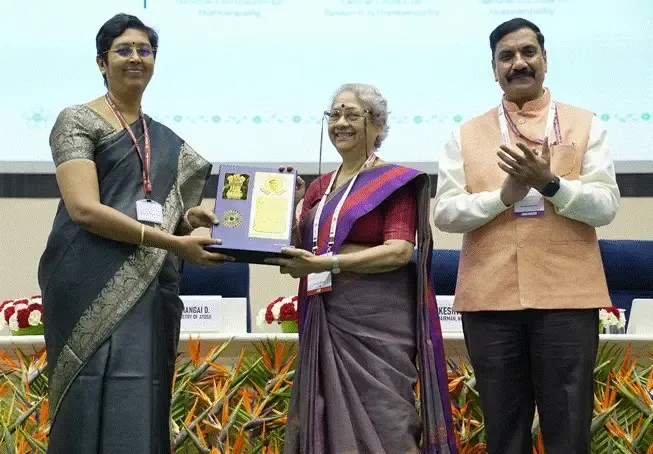
The event also acknowledged outstanding contributions to the homoeopathic field.
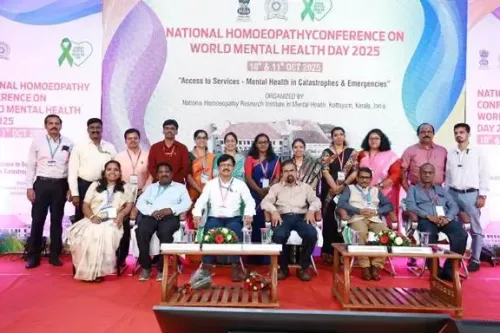
In addition, it celebrated the future cohort of practitioners with a group photo of around 90 students, including STSH and MD awardees.
The convention, themed “Homoeopathy for Sustainable Health” and guided by the vision of “Infinite Possibilities,” served as a thorough platform examining the merger of traditional principles with contemporary scientific advancements.
The National Institute of Homoeopathy (NIH) demonstrated its clinical leadership through evidence-based presentations on complex cases, including brain tumors, autoimmune issues, and endometriotic cysts.
Sessions led by experts delved into pediatric homoeopathy, the therapeutic potential of new remedies like Cassia fistula, and the burgeoning field of Agro-Homoeopathy within agriculture.
A multidisciplinary session unified pulmonologists, oncologists, and neurologists to explore the role of homoeopathy in conjunction with conventional medicine, emphasizing collaborative patient care.
The examination of homoeopathy's role within the WHO Traditional Medicine Strategy highlighted global opportunities and challenges. Discussions also emphasized modernizing practices through scientific innovations and addressing issues such as drug resistance.
Moreover, the applicability of homoeopathy extended into veterinary medicine, showcasing evidence-based strategies for animal health.
A high-level session led by the Ministry of Ayush and the Central Council for Research in Homoeopathy (CCRH) detailed strategic priorities and the future trajectory of research in this field.
Point of View
The proceedings at 'World Homoeopathy Day 2026' reflect a significant shift towards recognizing homoeopathy as a vital component of modern healthcare. The collaborative efforts among policymakers, researchers, and practitioners signal an encouraging future for integrative health.
NationPress
25 Sept 2026
Frequently Asked Questions
What was the main focus of the World Homoeopathy Day 2026?
The event focused on clinical advancements, policy frameworks, research priorities, and the strategic roadmap for homoeopathy in integrative healthcare.
Who attended the World Homoeopathy Day 2026?
The event gathered senior officials from the Ministry of Ayush, experts, researchers, and representatives from leading homoeopathic institutions.
What themes were explored during the event?
Themes included 'Homoeopathy for Sustainable Health' and the integration of traditional practices with modern scientific innovations.
What future directions were outlined for homoeopathy?
The event highlighted strategic priorities for research and emphasized the integration of homoeopathy into broader healthcare systems.
How does homoeopathy contribute to veterinary science?
The event showcased evidence-based approaches in homoeopathy for improving animal healthcare.