Ministry of Ayush to Highlight Homoeopathy Research on World Homoeopathy Day 2026
Synopsis
Join us as the Ministry of Ayush celebrates World Homoeopathy Day 2026 with an engaging forum focused on groundbreaking research and health initiatives that promise to reshape the future of healthcare. Discover how homoeopathy is becoming integral to sustainable health systems in India.
Key Takeaways
World Homoeopathy Day 2026 will take place on April 10 at Vigyan Bhawan.
The event aims to showcase research and public health initiatives in homoeopathy.
Discussions will focus on sustainable healthcare and the role of homoeopathy in chronic disease management.
Homoeopathy is recognized for its minimal ecological footprint and natural healing focus.
India has a significant number of registered homoeopathy practitioners and educational institutions.
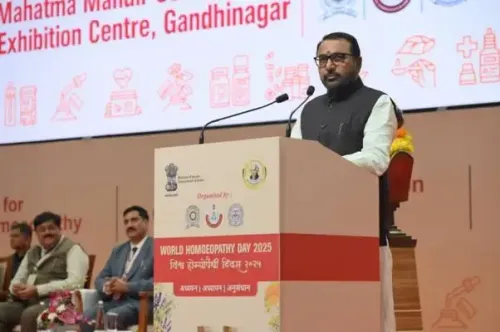
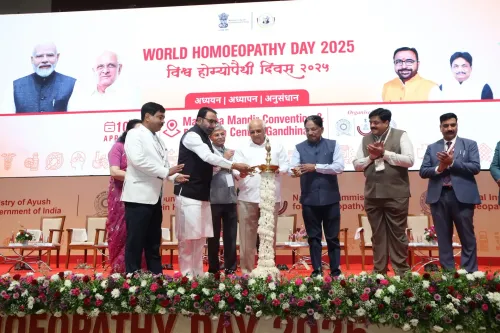
New Delhi, April 9 (NationPress) The Ministry of Ayush is set to celebrate 'World Homoeopathy Day 2026' on April 10 at Vigyan Bhawan with an engaging two-day forum aimed at highlighting advancements in research, public health initiatives, and policy changes within homoeopathy, as stated by officials on Thursday.
This event, organized by the Central Council for Research in Homoeopathy, will include discussions focused on enhancing scientific validation, ethical standards, and the incorporation of homoeopathy into established healthcare systems, according to the Ministry of Ayush.
The forum aims to unite eminent policymakers, researchers, practitioners, and delegates to discuss the progressive role of homoeopathy in creating sustainable healthcare systems.
Special sessions will investigate the contribution of homoeopathy towards preventive and promotive healthcare, the management of chronic diseases, and its role in diminishing reliance on conventional pharmacotherapy.
Topics will also cover eco-friendly pharmaceutical practices, the conservation of biodiversity, and the significance of merging traditional knowledge with contemporary scientific research.
As healthcare costs soar, and chronic disease prevalence escalates alongside concerns like antimicrobial resistance, this event will emphasize homoeopathy’s promise as a viable and sustainable medical system.
The homoeopathy system is known for its minimal ecological impact, judicious resource utilization, and emphasis on activating the body's natural healing abilities, the ministry remarked.
'World Homoeopathy Day 2026' is anticipated to further cement India’s position as a leader in advocating traditional medical practices, as indicated by the statement.
This event will also act as a platform for nurturing dialogue, collaboration, and innovation among stakeholders, ultimately aiming to make healthcare more effective, equitable, environmentally friendly, and sustainable.
Centered on the theme “Homoeopathy for Sustainable Health,” this year’s event will showcase how homoeopathy presents a comprehensive, cost-efficient, and ecologically responsible approach to healthcare, aligning with global objectives such as Universal Health Coverage and the United Nations Sustainable Development Goals, particularly SDG 3 focused on Good Health and Well-being.
Over the years, homoeopathy has gained increased global acceptance, particularly in community healthcare and public health initiatives. The ministry has been proactively broadening its outreach through evidence-based practices, enhanced accessibility, and integration into national health frameworks, as stated.
The roots of homoeopathy in India trace back to 1810 when German missionaries began distributing homoeopathic medicines.
Currently, India boasts 345,000 registered homoeopathy practitioners, 8,593 homoeopathy dispensaries, 277 educational institutions, and 34 research centers.
aar/na
Point of View
It is crucial to acknowledge the Ministry of Ayush's efforts in showcasing homoeopathy as a viable healthcare system. The upcoming World Homoeopathy Day is a significant step in promoting traditional medicine's role in addressing modern health challenges, reflecting a commitment to sustainable health practices.
NationPress
24 Sept 2026
Frequently Asked Questions
What is World Homoeopathy Day?
World Homoeopathy Day is observed to celebrate and promote the practices and contributions of homoeopathy in healthcare, particularly emphasizing its role in sustainable health.
When is World Homoeopathy Day 2026 celebrated?
World Homoeopathy Day 2026 will be celebrated on April 10, 2026.
Where will the event be held?
The event will take place at Vigyan Bhawan in New Delhi.
Who organizes the event?
The event is organized by the Central Council for Research in Homoeopathy under the Ministry of Ayush.
What topics will be covered during the forum?
The forum will address topics such as scientific validation, ethical standards, eco-friendly practices, and the integration of homoeopathy into mainstream healthcare.