Nadda: 23 AIIMS Now Ready, Driving World-Class Medical Education
Synopsis
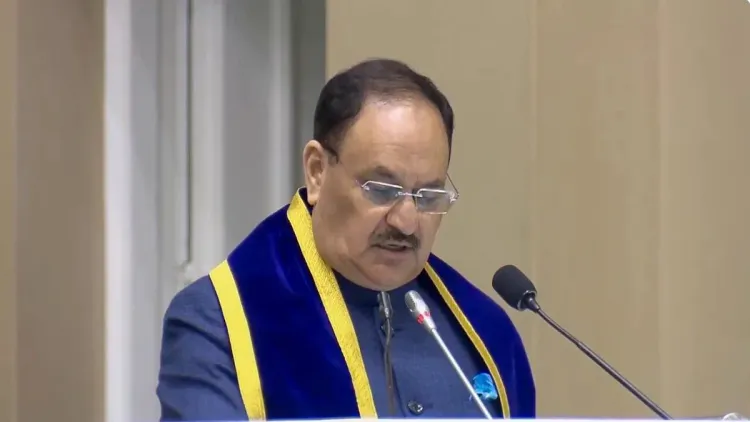
Union Health Minister J. P. Nadda announced that 23 state-of-the-art AIIMS are now ready across India, with ongoing faculty recruitment and research programmes aimed at delivering world-class medical education and expanding tertiary healthcare access beyond major cities.
Key Takeaways
23 AIIMS are now operational across India, up from the single original New Delhi campus established in 1956 .
The expansion is rooted in the Pradhan Mantri Swasthya Suraksha Yojana (PMSSY) , launched in 2003 , to build AIIMS-calibre institutions in underserved states.
Union Health Minister J.
Nadda specifically cited faculty recruitment and research programmes as the mechanisms for achieving world-class medical education standards.
The network is designed to serve dual goals: increasing medical student seats and providing tertiary hospital care in non-metro regions.
Faculty vacancy rates and research output at newer campuses remain the key metrics for assessing whether the infrastructure investment translates into genuine academic excellence.
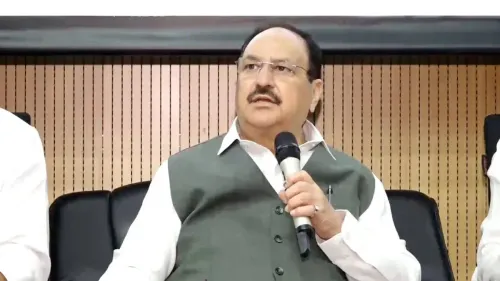
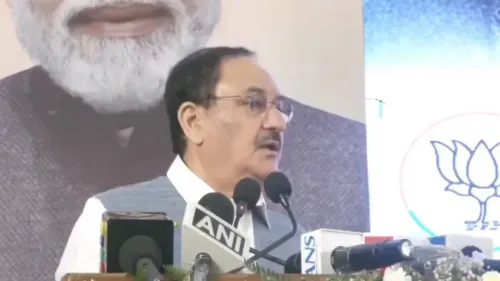
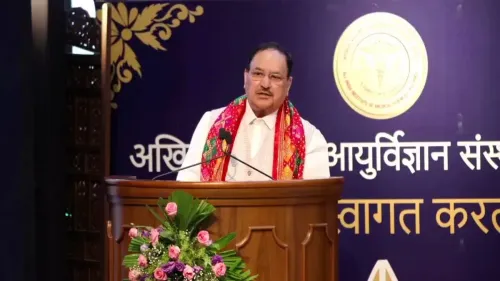
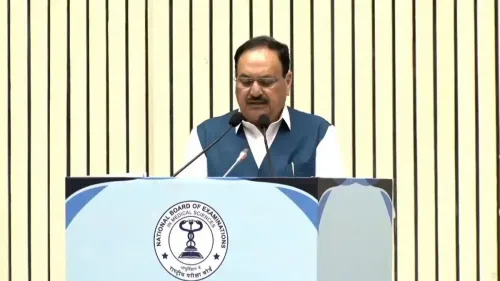
India's medical education landscape is being redrawn, one premier institution at a time. Union Health Minister J. P. Nadda declared on Friday, 20 November 2026 that 23 state-of-the-art AIIMS are now operational across the country, with faculty recruitment drives and research programmes accelerating the push toward globally competitive medical training.
Posting in Hindi, Nadda stated: 'भारत सरकार मेडिकल एजुकेशन और सुविधाओं को बेहतर बनाने के लिए प्रतिबद्ध है' — 'The Government of India is committed to improving medical education and facilities' — and pointed to the 23 cutting-edge AIIMS as evidence, highlighting faculty hiring and research programmes as the twin engines of this transformation.From One Delhi Campus to a 23-Institution National Network
The story of AIIMS is a story of deliberate geographic ambition. The original All India Institute of Medical Sciences, New Delhi, was established in 1956 and long stood alone as the country's singular apex medical institution — a bottleneck as much as a beacon. The expansion began in earnest under the Pradhan Mantri Swasthya Suraksha Yojana (PMSSY), launched in 2003, which set out to plant AIIMS-calibre institutions in states that had been chronically underserved by tertiary care and specialist medical education.
Successive governments built on that foundation. Each new AIIMS campus was designed to serve a dual purpose: widen access to world-class hospital care for patients outside the country's major cities, and dramatically increase the number of seats available for MBBS, postgraduate, and doctoral medical students. The cumulative result, as Nadda's post underscores, is a 23-institution network now spread from the northeastern states to peninsular India.
Faculty Gaps and Research Output: The Harder Test
Brick-and-mortar is the easier half of the equation. The newer AIIMS campuses have consistently faced scrutiny over faculty vacancy rates — a challenge Nadda's specific mention of 'faculty recruitment' directly acknowledges. Attracting senior specialists and researchers to campuses in Tier-2 and Tier-3 cities requires competitive pay, infrastructure, and institutional culture that takes years to build.
Research programme investment is equally consequential. An AIIMS that trains doctors but generates little original research remains a teaching hospital, not a knowledge hub. The ministry's framing — 'world-class medical education' through both hiring and research — signals an intent to close that gap, though the volume and quality of research output from the newer campuses will be the metric that academic and policy observers watch most closely.
What It Means for Students and Patients
For medical students, more AIIMS seats translate to reduced competition at the summit of Indian medical admissions, and crucially, more options in home states rather than the forced migration to Delhi or a handful of other cities. For patients in non-metro regions, each new AIIMS is a tertiary referral centre that can handle complex surgeries, oncology, and rare-disease management closer to home — cutting both costs and the brutal journey that serious illness often imposes on rural families.
India's doctor-to-population ratio has long trailed global benchmarks. A fully staffed, research-active network of 23 AIIMS will not close that gap overnight, but it represents the most structurally significant investment in medical capacity the country has made in its post-independence history. The question now is whether faculty recruitment pipelines and research funding keep pace with the infrastructure already in place.
Point of View
However, is a tactical acknowledgment that previous phases of AIIMS expansion were criticised for opening campuses with structural shortfalls in qualified teaching staff. Whether this round of hiring and research investment produces measurable outcomes — higher research publications, lower vacancy rates, improved National Medical Commission rankings — will determine if the expansion story shifts from a political win to a lasting institutional one. The broader watch is parliamentary scrutiny: health committees have repeatedly pressed the ministry for disaggregated data on how each new AIIMS is performing against its founding mandate.
NationPress
20 Nov 2026
Frequently Asked Questions
How many AIIMS are there in India in 2026?
According to Union Health Minister J. P. Nadda's statement on 20 November 2026 , there are 23 AIIMS now ready across India.
What is the Pradhan Mantri Swasthya Suraksha Yojana?
The Pradhan Mantri Swasthya Suraksha Yojana (PMSSY) was launched in 2003 with the goal of establishing AIIMS-like medical institutions in states underserved by quality tertiary healthcare and medical education.
Why is faculty recruitment important for new AIIMS campuses?
Newer AIIMS campuses have faced significant faculty vacancies since their launch, which limits teaching quality and research output. Filling these positions is considered critical for new campuses to function as genuine world-class institutions rather than simply large hospitals.
What is the original AIIMS and when was it established?
The original All India Institute of Medical Sciences was established in New Delhi in 1956 as India's apex autonomous public medical college and hospital, and long remained the sole institution of its kind before the national expansion began.
How does the AIIMS expansion benefit patients outside big cities?
Each new AIIMS functions as a regional tertiary referral centre capable of handling complex surgeries, oncology, and specialist care, reducing the need for patients in non-metro and rural areas to travel to Delhi or other large cities for advanced treatment.