Nadda cites Lancet data: 90% cancer patients begin treatment within 30 days
Synopsis
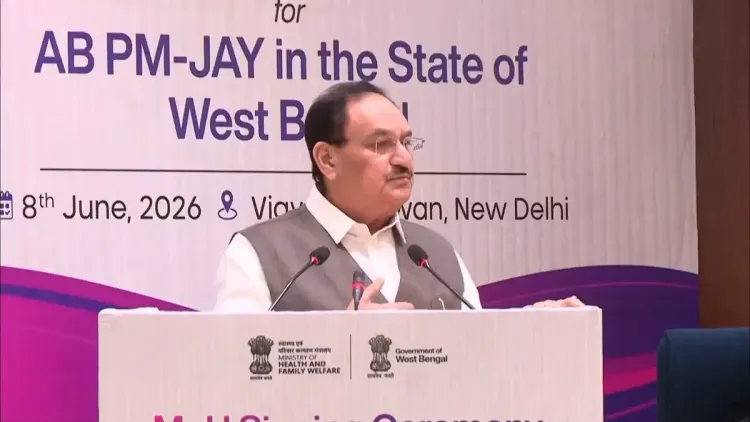
Union Health Minister J. P. Nadda cited a Lancet report on June 8, 2026, stating that 90 per cent of cancer patients in India now begin treatment within 30 days of diagnosis — a milestone he called a significant achievement in Indian healthcare.
Key Takeaways
Union Health Minister J.
Nadda cited a The Lancet report on June 8, 2026 , highlighting India's cancer care progress.
The report states 90 per cent of cancer patients in India begin treatment within 30 days of diagnosis.
The NPCDCS , launched in 2010 , and PM-JAY , launched in 2018 , form the policy backbone behind this improvement.
Ayushman Bharat PM-JAY provides up to Rs 5 lakh annual coverage per family for tertiary care including oncology.
Faster treatment initiation is clinically significant, as delays beyond 30 days are linked to worse survival outcomes in multiple cancer types.
Expansion of state cancer institutes and revised PM-JAY oncology packages are among the next steps being watched by health policy observers.
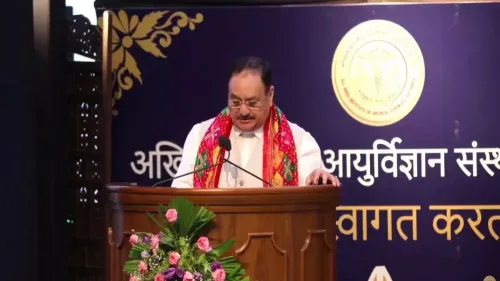
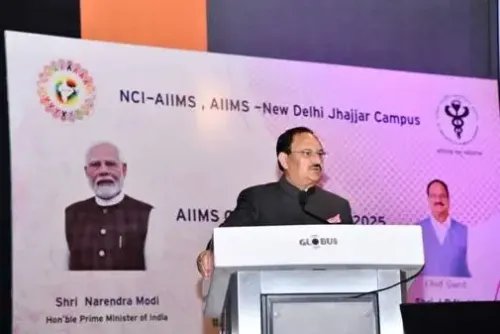
Union Health Minister J. P. Nadda on Monday, June 8, 2026, highlighted a significant milestone in India's cancer care delivery, citing a The Lancet report that found 90 per cent of cancer patients in India begin treatment within 30 days of diagnosis.
Context
Nadda shared the finding on X, writing in Hindi: 'The Lancet ki report ke anusaar, Bharat mein cancer bimari ka pata chalne ke baad 90% mareezon ka ilaaj 30 dinon ke bheetar shuru ho jaata hai' ('According to The Lancet report, in India, 90 per cent of cancer patients begin treatment within 30 days of being diagnosed'). He described it as 'an important achievement in the field of healthcare services.'
The Lancet is among the world's most respected peer-reviewed medical journals, and a citation from it carries significant weight in global health policy discourse. The statistic speaks directly to the long-standing concern over treatment initiation delays in cancer care across low- and middle-income countries.
Policy Backdrop
India's push to reduce cancer treatment delays has been built over more than a decade of policy investment. The National Programme for Prevention and Control of Cancer, Diabetes, Cardiovascular Diseases and Stroke (NPCDCS), launched in 2010, laid the foundation for strengthening screening and treatment infrastructure for non-communicable diseases including cancer.
The Pradhan Mantri Jan Arogya Yojana (PM-JAY), rolled out in 2018 under the Ayushman Bharat umbrella, extended health protection of up to Rs 5 lakh per family per year for secondary and tertiary care — including oncology — to eligible households. Digital referral systems, empanelled hospitals, and state cancer institutes have collectively worked to compress the time between diagnosis and the first line of treatment.
The National Health Policy 2017 had explicitly flagged reduction of out-of-pocket expenditure and improved access to cancer care as priority goals, making the 30-day treatment initiation benchmark a direct measure of that policy intent.
Stakeholders and Impact
The most immediate beneficiaries of faster treatment initiation are cancer patients across income groups, particularly those from economically weaker sections who rely on public health infrastructure and PM-JAY coverage. Early treatment initiation is clinically significant: delays beyond 30 days are associated with worse survival outcomes across several cancer types.
State health departments bear the operational responsibility for maintaining this pace through empanelled hospitals, diagnostic networks, and referral coordination. The Lancet finding, if sustained, would suggest that these state-level systems are performing at a standard comparable to higher-income health systems in at least this specific metric.
What's Next
The government's focus is expected to shift toward consolidating these gains while expanding capacity. The operationalisation of additional state cancer institutes remains on the policy agenda, as does the possible inclusion of expanded oncology packages in the next revision cycle of PM-JAY. Sustaining the 30-day benchmark at scale — as cancer incidence in India continues to rise — will require continued investment in diagnostic infrastructure and specialist workforce, particularly in Tier-2 and Tier-3 cities.
Point of View
Lending international credibility to a domestic policy narrative ahead of what is likely to be a busy legislative and budgetary calendar for the Health Ministry. The 30-day treatment initiation benchmark is a globally recognised quality indicator, and anchoring India's performance to it signals the government's intent to be measured against international standards. This sits within a broader arc in which the BJP-led government has consistently sought to quantify Ayushman Bharat's outcomes in terms that resonate both domestically and with global health institutions. The sustainability of this metric at scale, however, will depend on whether infrastructure expansion keeps pace with rising cancer incidence — a question that the next PM-JAY revision cycle may need to address directly.
NationPress
23 Sept 2026
Frequently Asked Questions
What does the Lancet report say about cancer treatment in India?
According to the Lancet report cited by Union Health Minister J. P. Nadda, 90 per cent of cancer patients in India begin treatment within 30 days of diagnosis, which is considered a significant benchmark in timely cancer care.
What is Ayushman Bharat and how does it help cancer patients?
Ayushman Bharat, specifically its PM-JAY component launched in 2018, provides up to Rs 5 lakh annual health coverage per eligible family for secondary and tertiary care including cancer treatment, reducing out-of-pocket expenses for patients.
Why is the 30-day treatment initiation benchmark important for cancer patients?
Starting cancer treatment within 30 days of diagnosis is clinically significant because delays beyond this window are associated with worse survival outcomes across several types of cancer.
What government schemes support cancer care in India?
Key schemes include the NPCDCS launched in 2010 for non-communicable disease prevention and control, and PM-JAY under Ayushman Bharat launched in 2018, which covers tertiary oncology care for eligible families.
What is next for India's cancer care policy?
Policy observers are watching the operationalisation of additional state cancer institutes and the possible expansion of oncology packages in the next revision of PM-JAY as the government looks to sustain and scale current gains.