Goyal shares Nadda's call for Parliament debate on student justice
Synopsis
Union Minister Piyush Goyal shared BJP chief JP Nadda's call for structured parliamentary debate on student examination issues, asserting the BJP under PM Modi is serious about ensuring no injustice to students and that children are the country's future.
Key Takeaways
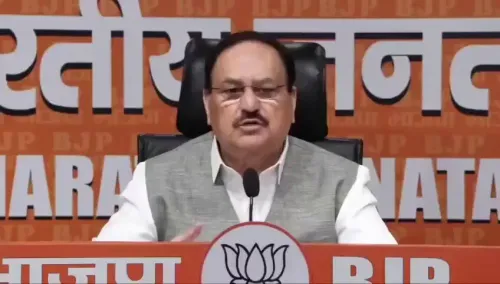
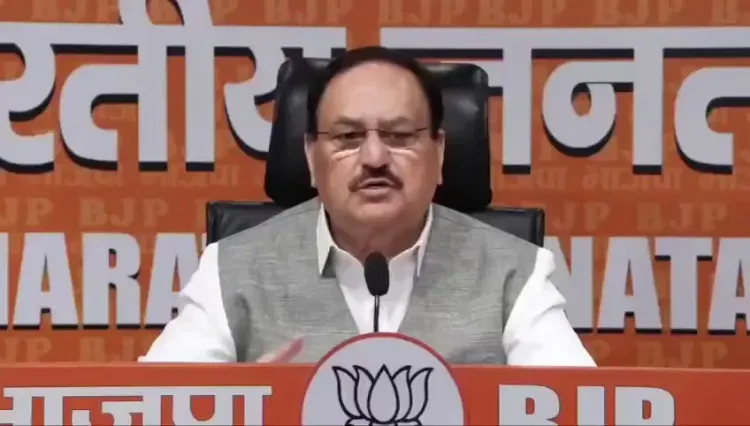
BJP National President JP Nadda , quoted by Piyush Goyal , called for moving beyond allegations and holding in-depth discussion in Parliament on issues affecting students.
Nadda stated the BJP under PM Narendra Modi is 'very serious' about student welfare, saying 'children are the future of the country.' The post signals a coordinated BJP position channelling public exam-related controversies into formal legislative debate.
The National Testing Agency (NTA) , established in 2017 , has faced repeated scrutiny over alleged procedural lapses in NEET and JEE examinations.
The National Education Policy 2020 forms the broader policy backdrop, with exam integrity framed as central to India's human capital development.
Follow-up action is expected in the form of parliamentary statements, possible legislative proposals, and Ministry of Education grievance measures.
Union Commerce and Industry Minister Piyush Goyal on Wednesday, 22 July 2026, shared a statement by BJP National President JP Nadda calling for structured parliamentary debate on issues affecting students, asserting that the ruling party is ready for an in-depth discussion and that children are the nation's future.
Context
Quoting JP Nadda, Goyal's post states: 'हमारा कहना है कि आरोप-प्रत्यारोप से बाहर निकलकर हमें इस पर चर्चा करनी चाहिए' — 'We believe we must move beyond allegations and counter-allegations and discuss this properly.' Nadda identified Parliament as the best forum for such a discussion, adding that the BJP is 'very serious' under Prime Minister Narendra Modi's leadership because 'children are the future of the country.'
The post comes amid recurring public debate over the integrity of competitive examinations and the functioning of the National Testing Agency (NTA), which administers high-stakes tests including NEET and JEE. Goyal, as Leader of the House in the Rajya Sabha, amplifying Nadda's remarks signals a coordinated party position ahead of parliamentary proceedings.
Policy Backdrop
The NTA was established in 2017 to centralise and standardise major entrance examinations across India. Successive sessions of Parliament have seen opposition demands for accountability over alleged procedural lapses and paper leaks in NTA-conducted tests, with the government consistently offering assurances of corrective action.
The National Education Policy 2020 introduced sweeping structural reforms aimed at equity, quality, and reduced examination pressure for Indian students. The BJP has framed education integrity as central to long-term human capital development, a theme that Nadda's quoted remarks reinforce by linking fair exams directly to children's futures.
Stakeholders and Impact
The statement directly addresses the concerns of millions of students and parents across India who depend on centrally administered entrance tests for access to medical, engineering, and other professional courses. Educational institutions that align admissions with NTA results are also stakeholders in any policy or procedural reform that may emerge from parliamentary scrutiny.
Nadda's call to move 'beyond allegations and counter-allegations' and into 'finer details' — 'बारीकियों में जाएं' — suggests the party is positioning itself as the responsible actor willing to engage substantively rather than score political points, a posture aimed at reassuring anxious student communities and their families.
What's Next
All eyes will be on the ongoing or upcoming session of Parliament for formal statements, potential legislative proposals, or committee reports addressing exam reforms and NTA functioning. The Ministry of Education may also be expected to outline grievance redressal mechanisms in response to the debate Nadda and Goyal are publicly inviting.
If Parliament takes up the issue in earnest, the discussion could shape the next phase of examination governance in India — with implications for how competitive tests are designed, administered, and audited to ensure no student faces injustice.
Point of View
Piyush Goyal — as Leader of the House in the Rajya Sabha — is signalling a deliberate party strategy to shift the conversation on student exam controversies from the street to the floor of Parliament, where the BJP controls the narrative more firmly. The framing of 'no injustice to students' and 'children are the nation's future' is classic electoral positioning that simultaneously deflects criticism and claims the moral high ground on education. This mirrors a recurring BJP playbook: absorb public pressure over institutional failures, then redirect it into structured legislative engagement where the government can set the terms of debate. Whether the opposition accepts this invitation or continues to press demands outside Parliament will define the political temperature around exam reform in the near term.
NationPress
21 Oct 2026
Frequently Asked Questions
What did JP Nadda say about student exam issues in Parliament?
BJP National President JP Nadda called for moving beyond political allegations and holding an in-depth parliamentary debate on issues affecting students, asserting the BJP under PM Modi is very serious about ensuring no injustice to students.
Why did Piyush Goyal share JP Nadda's statement on exams?
As Union Commerce Minister and Leader of the House in the Rajya Sabha, Piyush Goyal sharing Nadda's remarks signals a coordinated BJP party position in favour of structured parliamentary discussion on student exam-related controversies.
What is the National Testing Agency and why is it in the news?
The National Testing Agency (NTA) was established in 2017 to centralise major entrance exams including NEET and JEE. It has periodically faced scrutiny over alleged paper leaks and procedural lapses, prompting demands for reform.
What reforms has the government introduced for student welfare in education?
The National Education Policy 2020 introduced structural reforms focused on equity, quality, and reduced exam pressure. The government has also pointed to NTA standardisation as a step toward fair, centralised testing.
What can students and parents expect after this Parliament debate call?
Students and parents can watch for formal statements or legislative proposals in Parliament, as well as potential announcements from the Ministry of Education on grievance redressal and exam reform measures.