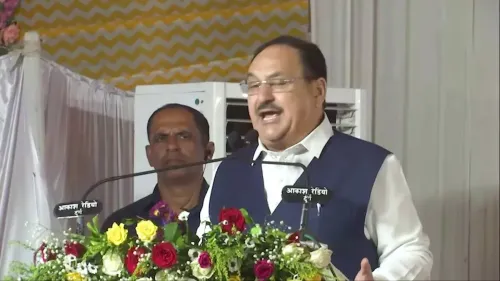
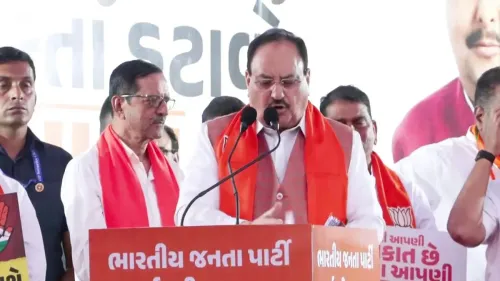
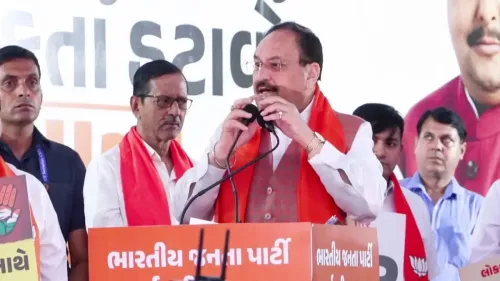
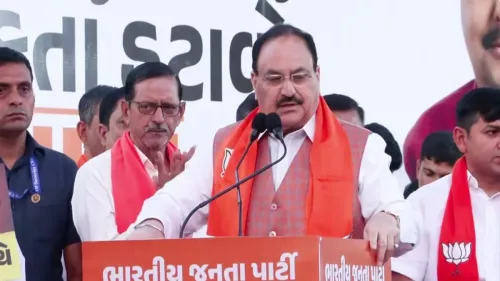
Nadda fires at Rahul Gandhi over Election Commission blame
Synopsis
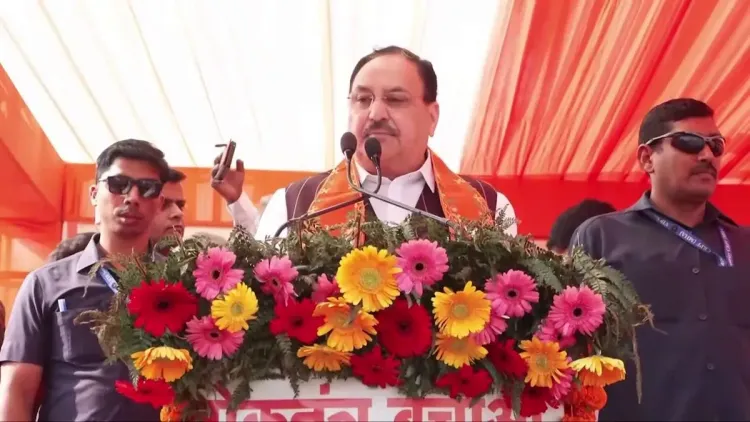
BJP national president J. P. Nadda compared Rahul Gandhi to a child who blames the teacher for failures, accusing the Congress leader of questioning the Election Commission only when his party loses elections — a jab rooted in post-2024 EVM controversy.
Key Takeaways
Nadda posted a sharp criticism of Rahul Gandhi on November 3, 2026 , using a childhood classroom analogy.
Nadda accused Gandhi of crediting his own ability when Congress wins and blaming the Election Commission of India when it loses.
The post carried the hashtag #SaveDemocracyRemoveAnarchy , inverting opposition democratic-legitimacy language.
The BJP has consistently characterised opposition criticism of the Election Commission as an attempt to undermine democratic mandates since the 2024 Lok Sabha elections .
Opposition parties including Congress questioned EVMs and election conduct after the 2024 general election results.
The Exchange reflects a recurring partisan fault line over the credibility of India's electoral institutions.
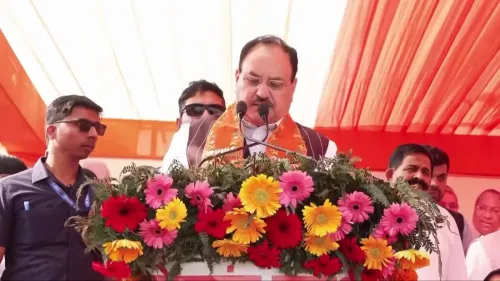
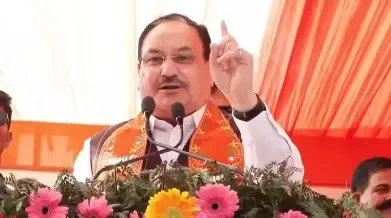
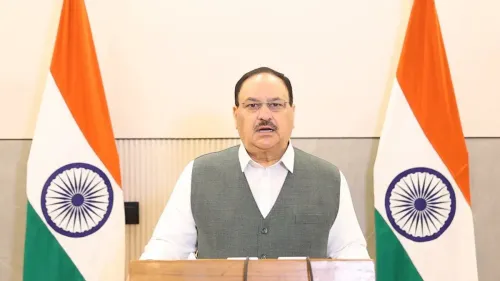
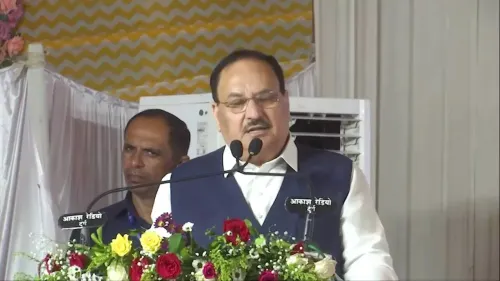
When children fail an exam, they blame the teacher — and when they pass, they take all the credit themselves. Union Health Minister and BJP national president J. P. Nadda deployed exactly that analogy on Tuesday, November 3, 2026, in a sharp broadside against Congress leader Rahul Gandhi, accusing him of measuring the Election Commission of India's credibility purely by whether his party wins or loses.
Nadda's post in Hindi reads: 'Bachpan mein bachche paas hone par khud ko hoshiyar aur fail hone par teacher ko dosh dete hain, Rahul Gandhi bhi kuch aisa hi karte hain.' — 'In childhood, kids call themselves clever when they pass and blame the teacher when they fail; Rahul Gandhi does exactly the same. Win an election and it's his own capability; lose one and he questions the Election Commission. This has become his politics.' The post carried the hashtag #SaveDemocracyRemoveAnarchy.
A pattern rooted in post-2024 EVM disputes
The charge is not new, but its framing is deliberately pointed. After the 2024 Lok Sabha elections, several opposition parties — including the Indian National Congress — raised questions about Electronic Voting Machines (EVMs) and the conduct of the Election Commission. The BJP has consistently characterised that criticism as an attempt to delegitimise democratic mandates the opposition found inconvenient.
Nadda's childhood-classroom analogy is calculated to reframe the debate: not as a policy disagreement about electoral technology, but as a question of character — specifically, the consistency to accept both victory and defeat by the same standard.
Rahul Gandhi, the Election Commission, and a recurring fault line
Rahul Gandhi, the senior Congress leader who led the party through its 2024 Lok Sabha campaign — in which Congress improved its tally significantly — has at various points questioned institutional processes around elections. The BJP's counter-narrative has been consistent: Congress only trusts institutions that deliver results in its favour.
The Election Commission of India, as a constitutional body, has not publicly responded to the political commentary. That restraint itself has become part of the argument — with the BJP pointing to the Commission's continued functioning as evidence of its independence, and opposition critics arguing that silence is not the same as accountability.
The hashtag as a counter-frame
#SaveDemocracyRemoveAnarchy is not incidental. It inverts the 'Save Democracy' language that opposition formations have deployed against the government, repackaging it as a charge against the Congress itself. It is a rhetorical move the BJP has used before: reclaim the vocabulary of democratic legitimacy and turn it back on those who first weaponised it.
In a political environment where both sides claim to be defending democracy from the other, Nadda's post is a reminder that the battle for electoral credibility is now as much about narrative as about any specific institutional reform. Whether Congress responds — and how — will define the next chapter of this particular exchange.
Point of View
He sidesteps a technical debate about EVMs and makes it a character question — harder for Congress to rebut on policy grounds alone. The #SaveDemocracyRemoveAnarchy hashtag signals a broader coordinated counter-narrative, not a solo off-the-cuff remark. How Congress responds will test whether it can reclaim the institutional-credibility argument or finds itself defending a position that the BJP has already pre-framed as hypocrisy.
NationPress
3 Nov 2026
Frequently Asked Questions
What did J. P. Nadda say about Rahul Gandhi and the Election Commission?
Nadda compared Rahul Gandhi to a child who takes credit when he passes an exam but blames the teacher when he fails, arguing that Gandhi similarly claims personal ability when Congress wins elections and questions the Election Commission when it loses.
Why is the BJP criticising Rahul Gandhi over the Election Commission?
The BJP has been critical of Congress and Rahul Gandhi for questioning the Election Commission and EVMs after the 2024 Lok Sabha elections, characterising it as an attempt to delegitimise democratic mandates the opposition found unfavourable.
What is the hashtag #SaveDemocracyRemoveAnarchy about?
#SaveDemocracyRemoveAnarchy is a BJP hashtag that inverts the 'Save Democracy' language used by opposition formations, recasting the Congress as the threat to democratic norms rather than its defender.
Has the Election Commission of India responded to political criticism?
The Election Commission, as a constitutional body, has generally maintained restraint and not publicly responded to the partisan political commentary around its conduct and EVM usage.
What was the Congress stand on EVMs after the 2024 Lok Sabha results?
After the 2024 Lok Sabha elections, Congress and several other opposition parties raised questions about the credibility of Electronic Voting Machines and the overall conduct of the Election Commission, demands the BJP consistently rejected.