Nadda fires back: Why did Rahul, Akhilesh skip EVM hackathon?
Synopsis
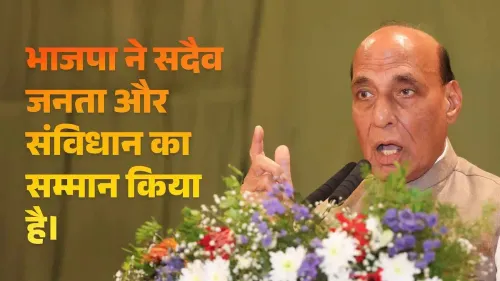
Union Minister and BJP chief J. P. Nadda on November 3, 2026 called out Rahul Gandhi, Congress, and Akhilesh Yadav for skipping the Election Commission's open EVM hackathon, arguing the opposition only questions machines after losing elections.
Key Takeaways
Nadda , BJP national president and Union Health Minister, posted on November 3, 2026 targeting opposition EVM scepticism.
He charged that Rahul Gandhi , Congress , and Akhilesh Yadav declined to participate in the Election Commission of India's open EVM hackathon challenge.
The Election Commission previously organised a public EVM hacking challenge in 2017 ; no successful tampering was demonstrated.
EVMs are standalone, non-networked machines — a point the Commission has repeatedly used to rebut manipulation claims.
Opposition EVM criticism has been a recurring post-election pattern since the mid- 2010s , spanning multiple parties and contests.
No formal response from Congress or Samajwadi Party on future EVM challenges has been issued as of publication.
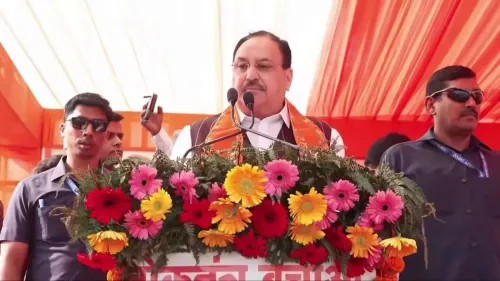
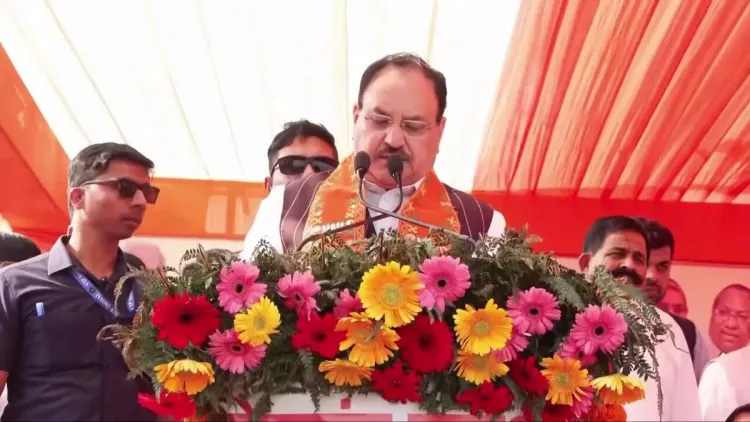
Half a century of democratic elections, and yet the same question resurfaces every time the opposition loses — can India's Electronic Voting Machines be trusted? On Tuesday, November 3, 2026, Union Health Minister and BJP national president J. P. Nadda took that argument head-on, challenging Rahul Gandhi, the Congress party, and Samajwadi Party chief Akhilesh Yadav to explain why they stayed away from the Election Commission of India's open EVM hackathon challenge.
Posting in Hindi, Nadda wrote: 'Aadhi shatabdi se hum loktantra ki raksha kar rahe hain, lekin vipaksh haarne par EVM par sawaal uthata hai.' ('We have been protecting democracy for half a century, but the opposition raises questions about EVMs only when it loses.') He added that the Election Commission issued an open EVM hackathon challenge, yet Rahul Gandhi, Congress, and Akhilesh Yadav chose not to participate — tagging the moment with the hashtag #SaveDemocracyRemoveAnarchy.The hackathon nobody from the opposition showed up to
The Election Commission of India has a track record of meeting EVM scepticism with direct, technical counter-challenges. In 2017, the Commission organised a landmark open hacking challenge, inviting political parties and independent experts to demonstrate any tampering — no successful breach was reported. The Commission has consistently maintained that EVMs are standalone, non-networked machines, making remote manipulation technically implausible.
Nadda's post pointedly notes that the parties loudest in their EVM criticism — Congress and Samajwadi Party — declined to participate in the very challenge designed to test or disprove those claims. For the BJP, that absence is not just an oversight; it is the argument.
A pattern stretching across a decade of defeats
Opposition doubts about EVMs are not new. Since the mid-2010s, multiple parties have raised EVM reliability concerns in the aftermath of election losses — in assembly polls, in general elections, and in by-elections. Rahul Gandhi has been among the most prominent voices, periodically questioning machine integrity and calling for greater VVPAT (Voter Verified Paper Audit Trail) scrutiny.
The BJP's counter-narrative has been equally consistent: framing such criticism as an institutional attack rather than a policy debate. Nadda's post fits squarely within that framing — linking EVM scepticism to electoral sour grapes rather than genuine democratic concern, and using the hackathon boycott as evidence.
What a formal response from Congress and SP would mean
The ball is now visibly in the opposition's court. Whether Congress or the SP respond formally — either by accepting a future EVM challenge, pushing for parliamentary debate on electoral reforms, or defending their earlier abstention — will shape the next chapter of this dispute. Pending responses from either party have not been issued as of publication.
As India's electoral calendar remains packed and the EVM debate shows no signs of fading, the question Nadda is really asking is a simple but sharp one: if you believe the machine is rigged, why not prove it when given the chance?
Point of View
He reframes EVM scepticism not as principled democratic oversight but as convenient post-defeat rhetoric. The broader arc here is significant: the ruling party has successfully kept the 'prove it or stop alleging it' frame alive for nearly a decade, and every time the opposition declines a technical challenge, that frame gets reinforced. For Congress and SP, the strategic cost of continued silence on future EVM challenges may be higher than the cost of participation.
NationPress
3 Nov 2026
Frequently Asked Questions
What is the EVM hackathon challenge that Nadda mentioned?
The Election Commission of India organised an open EVM hacking challenge in 2017, inviting political parties and independent experts to demonstrate any tampering with the machines. No successful breach was reported.
Did Rahul Gandhi and Congress participate in the EVM hackathon?
According to J. P. Nadda's post on November 3, 2026, Rahul Gandhi, Congress, and Akhilesh Yadav did not participate in the Election Commission's EVM hackathon challenge.
Can India's EVMs be hacked or tampered with?
The Election Commission of India maintains that EVMs are standalone, non-networked machines, making remote manipulation technically implausible. No party or expert successfully demonstrated tampering during the Commission's 2017 open challenge.
Why does the opposition question EVMs after election losses?
Multiple Indian opposition parties have raised EVM reliability concerns after defeats since the mid-2010s. Critics argue for greater VVPAT audit scrutiny, while the ruling BJP frames such criticism as an attempt to undermine institutional trust rather than a substantive policy concern.
What is the BJP's position on EVM controversy?
The BJP, led by J. P. Nadda, consistently argues that EVM scepticism is raised selectively after losses and that the opposition's refusal to participate in the Election Commission's technical challenges undermines the credibility of their own allegations.