Nadda greets pilgrims as Amarnath Yatra begins

Synopsis
Union Health Minister J. P. Nadda greeted pilgrims as the Shri Amarnath Yatra began on 3 July 2026, praying for a safe and auspicious journey for Shiva devotees undertaking the high-altitude pilgrimage to the Amarnath cave shrine in the Kashmir Himalayas.
Key Takeaways
Nadda , Union Health Minister and BJP national president, extended greetings to Amarnath pilgrims on 3 July 2026 .
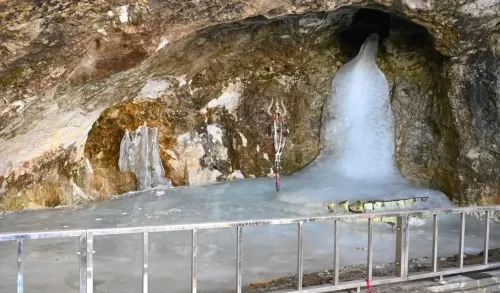
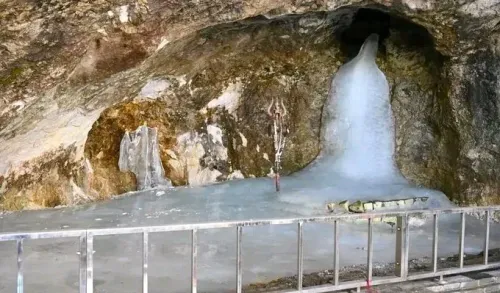
The Shri Amarnath Yatra is an annual Hindu pilgrimage to an ice lingam inside a cave at roughly 3,888 metres altitude in the Kashmir Himalayas .
The pilgrimage is managed by the Shri Amarnath Shrine Board , a statutory body established by an Act of Parliament in 2000 .
Two principal routes — Baltal and Pahalgam — serve pilgrims, with security and logistics coordinated by central forces and the Jammu and Kashmir administration.
The Yatra draws several lakh registered participants annually and is a major driver of religious tourism in the Union Territory.
Nadda prayed that the journey of all devotees be 'pleasant, safe, and auspicious,' invoking Devadhi Dev Mahadev .
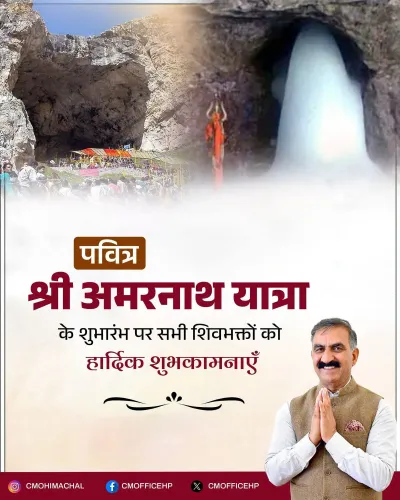
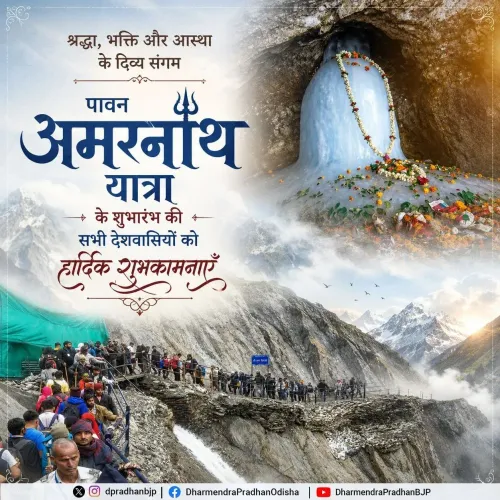
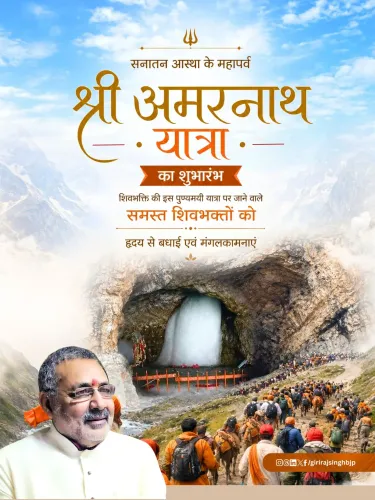
Union Health Minister J. P. Nadda on Friday, 3 July 2026, extended warm greetings to Shiva devotees across the country as the annual Shri Amarnath Yatra commenced, calling the pilgrimage a sacred symbol of Sanatan faith and praying for a safe and auspicious journey for all devotees undertaking the arduous trek to the Amarnath cave shrine in the Kashmir Himalayas.
Context
Posting in Hindi on 3 July 2026, Nadda described the Yatra as 'alaukik aur divya' (otherworldly and divine) and conveyed heartfelt congratulations to pilgrims setting out with the desire for the divine darshan of Baba Barfani — the ice lingam at the heart of the shrine. He wrote: 'I pray to Devadhi Dev Mahadev that your journey be pleasant, safe, and auspicious. Jai Baba Barfani!'
The Amarnath cave, situated at an altitude of roughly 3,888 metres above sea level, is accessible via two principal routes — the Baltal route and the longer Pahalgam route — both of which require significant physical endurance and logistical support.
Policy Backdrop
The annual pilgrimage has been managed by the Shri Amarnath Shrine Board (SASB), a statutory body established under an Act of Parliament in 2000, which oversees pilgrim registration, route infrastructure, and on-ground facilities. The Board coordinates with central security forces and the Jammu and Kashmir Union Territory administration to ensure safe passage during the summer season.
Since 2019, following the reorganisation of Jammu and Kashmir into a Union Territory, the administration has placed greater emphasis on improving road connectivity, medical camp deployments, and pilgrim amenities along both routes. The Yatra routinely draws several lakh registered participants each season and is considered a significant driver of religious tourism in the region.
Stakeholders and Impact
Hindu pilgrims from across India undertake the Yatra each year, making it one of the country's most prominent religious events. The pilgrimage has economic implications for local communities in Jammu and Kashmir, supporting livelihoods in hospitality, transport, and trade along the route.
Successive central governments have treated major pilgrimages such as the Amarnath Yatra as events requiring coordinated logistics, medical aid, and security deployment. Senior ministers and constitutional functionaries routinely issue greetings at the commencement of the Yatra, reflecting its national significance in the political and cultural calendar.
What's Next
Authorities are expected to release official data on registered pilgrim numbers for the 2026 season, along with details of medical camp deployments and security arrangements along the Baltal and Pahalgam routes. Parliamentary questions on infrastructure upgrades and safety measures for this season's pilgrimage are also anticipated.
As the Yatra gets under way, the focus will be on ensuring smooth movement of devotees through high-altitude terrain, with the Shri Amarnath Shrine Board and Union Territory administration jointly monitoring ground conditions throughout the pilgrimage period.
Point of View
Signalling the ruling establishment's alignment with Hindu religious sentiment. For Nadda, who holds both a key cabinet portfolio and the BJP's organisational presidency, the greeting serves a dual function — affirming cultural continuity and reinforcing the party's outreach to its core voter base. The post fits a broader pattern in which the central government has progressively elevated the administrative and symbolic profile of major pilgrimages since the reorganisation of Jammu and Kashmir in 2019. The Yatra's smooth conduct each season is also read as a barometer of normalcy and governance capacity in the Union Territory.
NationPress
3 Jul 2026
Frequently Asked Questions
When did the Amarnath Yatra 2026 start?
The Shri Amarnath Yatra 2026 commenced on 3 July 2026 , as indicated by Union Health Minister J. P. Nadda's post marking the beginning of the pilgrimage.
Who manages the Amarnath Yatra?
The Shri Amarnath Shrine Board (SASB) , a statutory body established by an Act of Parliament in 2000 , manages the annual pilgrimage, overseeing registration, route facilities, and coordination with security agencies.
What are the two routes to the Amarnath cave?
Pilgrims can reach the Amarnath cave shrine via two principal routes: the shorter Baltal route and the longer, traditional Pahalgam route , both in the Kashmir Himalayas .
What did JP Nadda say about Amarnath Yatra?
J. P. Nadda extended heartfelt greetings to all Shiva devotees embarking on the Yatra, calling it a divine and sacred pilgrimage, and prayed to Mahadev that every pilgrim's journey be 'pleasant, safe, and auspicious.'
How high is the Amarnath cave shrine?
The Amarnath cave shrine is situated at an altitude of approximately 3,888 metres above sea level in the Kashmir Himalayas , making it one of India's most demanding high-altitude pilgrimages.