Nadda hails India's first hydrogen train on Jind-Sonipat route

Synopsis
Union Minister J. P. Nadda hailed PM Modi's inauguration of India's first hydrogen-powered train on the Jind–Sonipat route in Haryana on 17 July 2026, calling the 10-coach, indigenously built fuel-cell locomotive a milestone for clean energy, green mobility, and the Atmanirbhar Bharat vision.
Key Takeaways
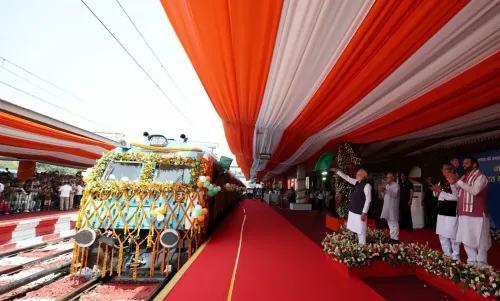
PM Narendra Modi dedicated India's first hydrogen-powered train to the nation on 17 July 2026 on the Jind–Sonipat rail section in Haryana .
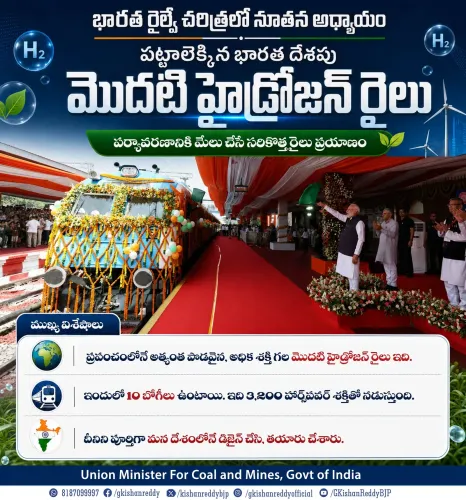
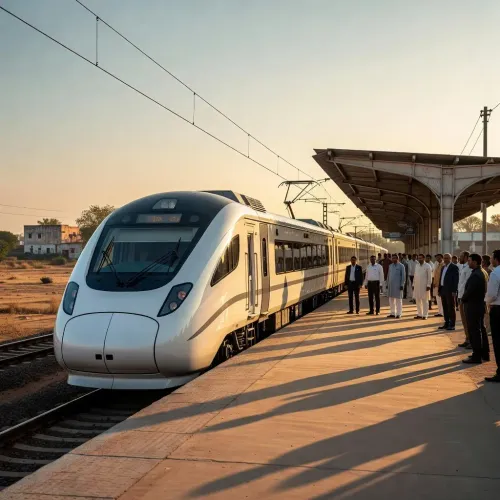
The 10-coach train is powered by indigenously developed hydrogen fuel-cell technology and is claimed to be the world's most powerful hydrogen-powered passenger train in its class.
Nadda described the launch as a 'epoch-making step' toward clean energy, green transport, and a developed India.
The project is backed by the National Green Hydrogen Mission (2023) and aligns with the Atmanirbhar Bharat policy of domestic technology development.
Indian Railways has been pursuing 100% broad-gauge electrification alongside hydrogen and alternative-propulsion pilots since 2014 .
Next steps include potential route extensions, fleet orders, and dedicated refuelling infrastructure allocations in the upcoming Railway Budget.
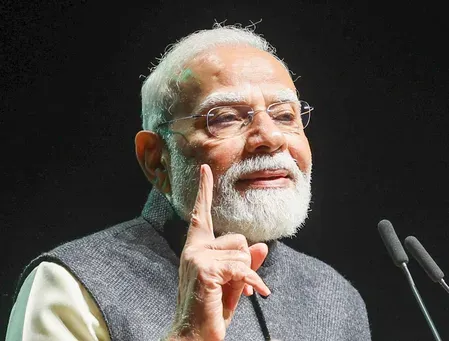
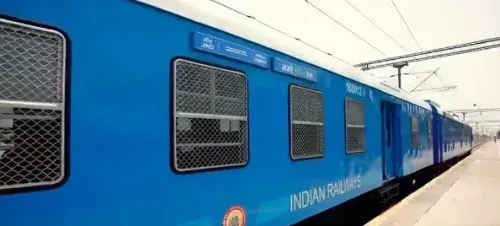
Union Health Minister and BJP national president J. P. Nadda on Friday, 17 July 2026, praised Prime Minister Narendra Modi for dedicating India's first hydrogen-powered train to the nation, flagging off the indigenous fuel-cell locomotive on the Jind–Sonipat rail section in Haryana. The 10-coach train, driven by domestically developed hydrogen fuel-cell technology, has been described as the world's most powerful hydrogen-powered passenger train in its class.
Context
Posting on X in Hindi, Nadda wrote: 'आदरणीय प्रधानमंत्री श्री नरेन्द्र मोदी जी ने आज हरियाणा के जींद–सोनीपत रेलखंड पर भारत की पहली हाइड्रोजन-पावर्ड ट्रेन राष्ट्र को समर्पित की' ['Respected Prime Minister Narendra Modi today dedicated India's first hydrogen-powered train to the nation on the Jind–Sonipat rail section in Haryana']. He called the development a 'epoch-making step' (युगांतरकारी कदम) toward clean energy, green transport, and the vision of a 'Viksit Bharat' — a developed India. Nadda also extended congratulations to all citizens and expressed 'immense gratitude' to PM Modi for the milestone.
The minister contrasted the present with an era when Indian Railways ran predominantly on coal and diesel, framing the hydrogen train as emblematic of the rapid modernisation that has taken place under the current government.
Policy Backdrop
The launch sits at the intersection of two flagship policy tracks. The National Green Hydrogen Mission, approved by the Union Cabinet in 2023, set out to scale domestic production and sectoral use of green hydrogen, with transport identified as a priority segment. Separately, the Atmanirbhar Bharat initiative has pushed Indian Railways to indigenise rolling stock and propulsion systems, reducing dependence on imported diesel locomotives and foreign technology.
The policy groundwork was laid as early as the 2021 Union Budget, which announced a National Hydrogen Energy Mission to develop hydrogen as a clean fuel for industry and mobility. Indian Railways subsequently floated tenders and formed industry consortia in 2022–23 for the development of an indigenous hydrogen fuel-cell train — the project that has now culminated in the Jind–Sonipat deployment.
The broader railway modernisation drive since 2014 has prioritised 100% electrification of broad-gauge routes alongside alternative-propulsion pilots, positioning hydrogen trains as the next frontier in hard-to-abate or non-electrified segments.
Stakeholders and Impact
Railway passengers on the Haryana corridor stand to benefit immediately from a cleaner, quieter mode of travel — hydrogen fuel-cell trains emit only water vapour, eliminating localised diesel particulate pollution. For India's renewable energy sector, the project signals a new commercial demand stream for green hydrogen, potentially accelerating investment in electrolyser capacity and refuelling infrastructure.
The indigenisation angle carries industrial significance: domestic manufacture of fuel-cell stacks and associated components could seed a supply chain that competes globally, aligning with the government's production-linked incentive framework for advanced chemistry and clean-tech manufacturing.
What's Next
Attention will now turn to whether the government extends hydrogen train operations to additional rail sections and whether the forthcoming Railway Budget carries dedicated allocations for refuelling infrastructure and fleet expansion. Analysts will also watch for any formal performance data — energy efficiency, range, and load capacity — that validates the 'world's most powerful' claim for the 10-coach consist. The trajectory of India's net-zero 2070 commitment in the transport sector will depend significantly on how quickly hydrogen propulsion can be scaled beyond this inaugural deployment.
Point of View
It allows the BJP to claim a tangible green-tech dividend from years of railway modernisation rhetoric. Nadda's post, framing the launch explicitly through the Atmanirbhar Bharat and Viksit Bharat lenses, signals the party's intent to weave clean-energy milestones into its 2029 general election narrative. For Indian Railways, the Jind–Sonipat pilot is the critical proof-of-concept: if operational data holds up, it could unlock large-scale fleet orders and position India as a credible exporter of hydrogen rail technology. The broader policy arc — from the 2021 Hydrogen Energy Mission to the 2023 Green Hydrogen Mission to this inauguration — reflects a deliberate, multi-year sequencing that the government will now seek to accelerate.
NationPress
15 Oct 2026
Frequently Asked Questions
What is India's first hydrogen-powered train and where does it run?
India's first hydrogen-powered train is a 10-coach locomotive driven by indigenously developed hydrogen fuel-cell technology, inaugurated on the Jind–Sonipat rail section in Haryana on 17 July 2026 by Prime Minister Narendra Modi.
What makes this hydrogen train significant globally?
The train is described as the world's most powerful hydrogen-powered passenger train in its class, and it is built on domestic fuel-cell technology, making it a milestone for both green mobility and India's self-reliance in advanced rail propulsion.
What is the National Green Hydrogen Mission and how is it linked to this train?
The National Green Hydrogen Mission, approved by the Union Cabinet in 2023, aims to scale domestic production and use of green hydrogen across sectors including transport; the hydrogen train project is a direct outcome of that policy push.
What did J. P. Nadda say about the hydrogen train launch?
Nadda called the launch an 'epoch-making step' toward clean energy, green transport, and a developed India, and credited PM Modi's government with rapidly modernising Indian Railways from a coal-and-diesel era to world-class, cutting-edge facilities.
What are the next steps after India's hydrogen train inauguration?
Key developments to watch include the extension of hydrogen train services to additional rail sections, dedicated budget allocations for refuelling infrastructure, and the release of formal operational performance data to validate the train's capabilities.