Nadda highlights NHP 2017's push for holistic healthcare
Synopsis
Union Health Minister J. P. Nadda invoked the National Health Policy 2017, crediting PM Modi's leadership for shifting India's healthcare approach to an inclusive five-pillar model covering preventive, promotive, curative, palliative, and rehabilitative care — a framework still guiding national health planning.
Key Takeaways
Union Health Minister J.
Nadda posted on X on October 29, 2026 highlighting the National Health Policy 2017 .
The NHP 2017 was formulated under PM Narendra Modi 's government and replaced the earlier National Health Policy 2002 .
The policy's core framework spans five types of care: preventive, promotive, curative, palliative, and rehabilitative .
Its overarching goal was to make health services inclusive and holistic , aligned with international Universal Health Coverage commitments.
The 2017 policy continues to serve as the foundational blueprint for India's health programmes and NITI Aayog reviews.
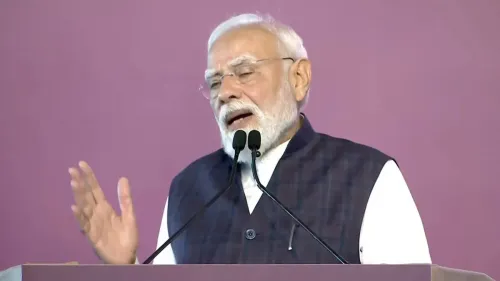
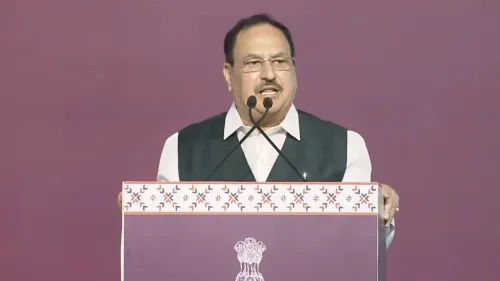
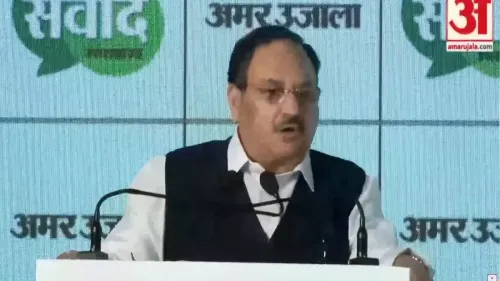
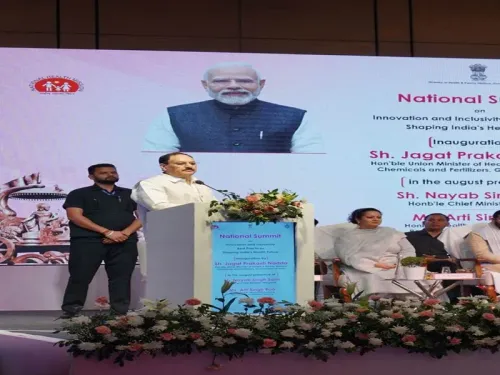
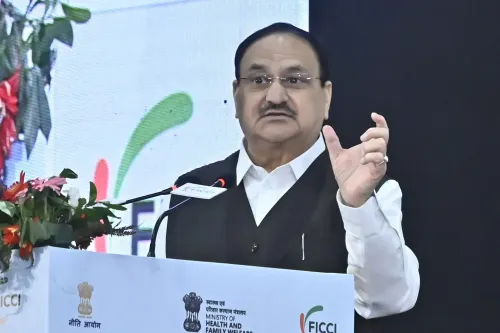
A health policy doesn't just treat the sick — it decides who gets care, how early, and whether they ever bounce back. On Thursday, October 29, 2026, Union Health Minister J. P. Nadda took to X to spotlight the foundational philosophy of India's National Health Policy 2017, framing it as a landmark shift toward inclusive and comprehensive healthcare under Prime Minister Narendra Modi.
Posting in Hindi, Nadda wrote: '2017 में आदरणीय प्रधानमंत्री श्री @narendramodi जी के नेतृत्व में लाई गई नई राष्ट्रीय स्वास्थ्य नीति का उद्देश्य स्वास्थ्य सेवाओं को समावेशी और समग्र बनाना था।' — 'The new National Health Policy brought in 2017 under the leadership of respected Prime Minister Shri Narendra Modi aimed to make health services inclusive and holistic.' The post highlighted the policy's five-pillar care framework: preventive, promotive, curative, palliative, and rehabilitative care.From selective treatment to the full spectrum of care
The National Health Policy 2017 marked a deliberate break from India's earlier frameworks. Its predecessor, the National Health Policy 2002, had focused largely on disease control targets and infrastructure benchmarks. The 2017 edition expanded the canvas dramatically — placing equal weight on keeping people healthy in the first place (preventive and promotive care), treating illness when it strikes (curative), managing serious long-term conditions with dignity (palliative), and restoring functional capacity after illness or injury (rehabilitative).
That five-pronged architecture was not merely aspirational. It aligned India's domestic health agenda with international commitments on Universal Health Coverage (UHC), placing the country in step with the Sustainable Development Goal 3 framework that world governments had committed to in the years prior. The policy also served as a blueprint for subsequent flagship programmes in primary healthcare and insurance coverage.
Why the 2017 policy still shapes today's health decisions
Nearly a decade on, the NHP 2017 continues to function as the overarching policy compass for India's health architecture. State health departments, NITI Aayog reviews, and parliamentary committee reports regularly reference its targets when evaluating progress on primary health centres, wellness infrastructure, and disease burden metrics. Nadda's post — accompanied by a video — signals continued ministerial intent to keep the policy's core philosophy in public view, particularly as debates around mid-term reviews and state-level implementation gaps gain momentum.
The emphasis on palliative and rehabilitative care is especially pointed: these remain the most under-resourced tiers of India's health system, where the gap between policy promise and ground reality is most visible. Surfacing them alongside curative care is a reminder that the 2017 policy's ambition was always about the full life-cycle of illness — not just the hospital bed.
Point of View
By extension, in PM Modi's leadership. The timing may reflect a broader BJP effort to consolidate the health policy record ahead of any mid-term review cycle or legislative session. More substantively, foregrounding palliative and rehabilitative care signals acknowledgment that India's health system remains weakest at these stages, and that the gap between the policy's stated ambition and ground-level delivery is where the ministry's credibility will ultimately be judged.
NationPress
29 Oct 2026
Frequently Asked Questions
What is India's National Health Policy 2017?
The National Health Policy 2017 is the government of India's overarching framework for healthcare, introduced under PM Narendra Modi's government. It aims to achieve universal health coverage by focusing on five types of care: preventive, promotive, curative, palliative, and rehabilitative.
How does the NHP 2017 differ from the National Health Policy 2002?
While the 2002 policy focused primarily on disease control targets and infrastructure expansion, the 2017 policy took a broader, more holistic approach — encompassing health promotion, prevention, palliative support, and rehabilitation alongside curative treatment.
What did J. P. Nadda say about the NHP 2017?
On October 29, 2026, Union Health Minister J. P. Nadda posted on X highlighting that the NHP 2017, brought in under PM Modi's leadership, aimed to make health services inclusive and holistic, with focus on all five dimensions of care.
What is preventive and rehabilitative care in the context of Indian health policy?
Preventive care focuses on stopping illness before it occurs through measures like vaccination and hygiene. Rehabilitative care helps individuals regain function after illness or injury. Both were formally integrated into India's national health framework through the NHP 2017.
Is NHP 2017 still in effect in India?
Yes, the National Health Policy 2017 remains the foundational policy document guiding India's health architecture. State health departments and planning bodies like NITI Aayog continue to reference its targets when evaluating health system progress.