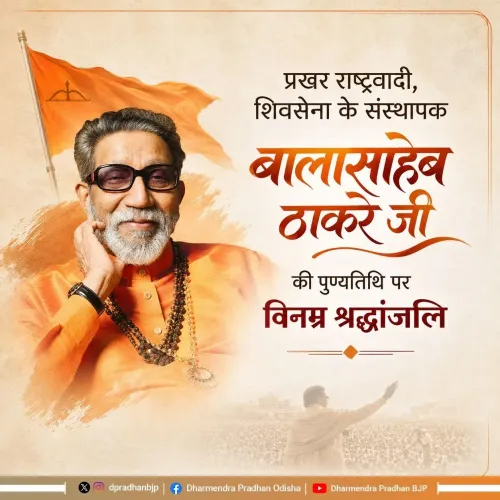
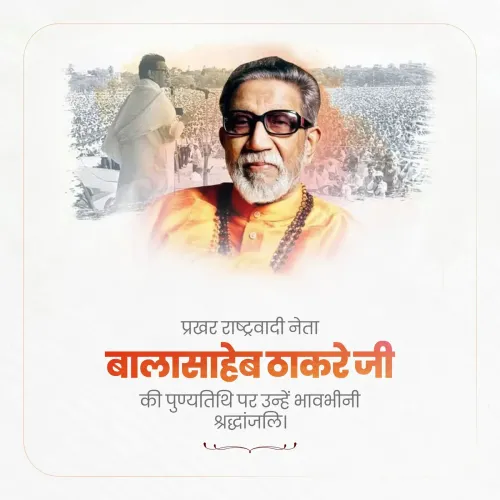
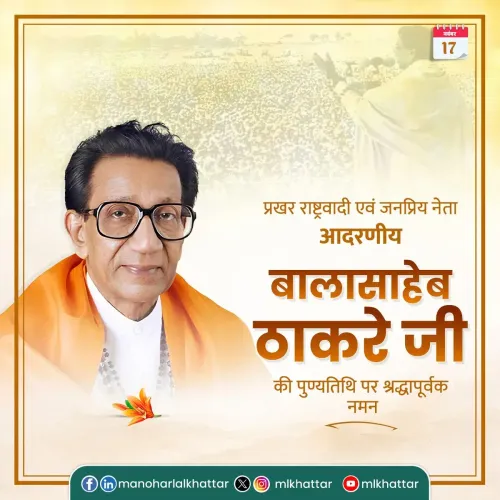
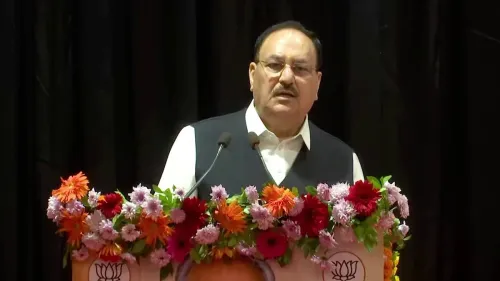
Nadda pays tribute to Bal Thackeray on death anniversary
Synopsis
Union Health Minister J. P. Nadda honoured Shiv Sena founder Balasaheb Thackeray on his November 17 death anniversary, praising him as a champion of nationalism, Sanatan culture, and the welfare of the poor — a tribute that also signals BJP's enduring ties with Thackeray's political legacy in Maharashtra.
Key Takeaways
Nadda , Union Health Minister and BJP national president, posted a tribute to Balasaheb Thackeray on November 17, 2026 , his death anniversary.
Thackeray founded Shiv Sena in 1966 and is remembered as a defining figure of Maharashtrian and Hindu cultural nationalism.
Nadda praised Thackeray's 'courage, fearlessness, and cultural self-respect' and his lifelong defence of Sanatan culture and national interest.
The tribute is consistent with BJP's pattern of publicly honouring Thackeray on November 17 each year, reinforcing its political alignment with Shiv Sena in Maharashtra.
Thackeray passed away on November 17, 2012 , leaving a legacy that continues to shape Maharashtra's political landscape.
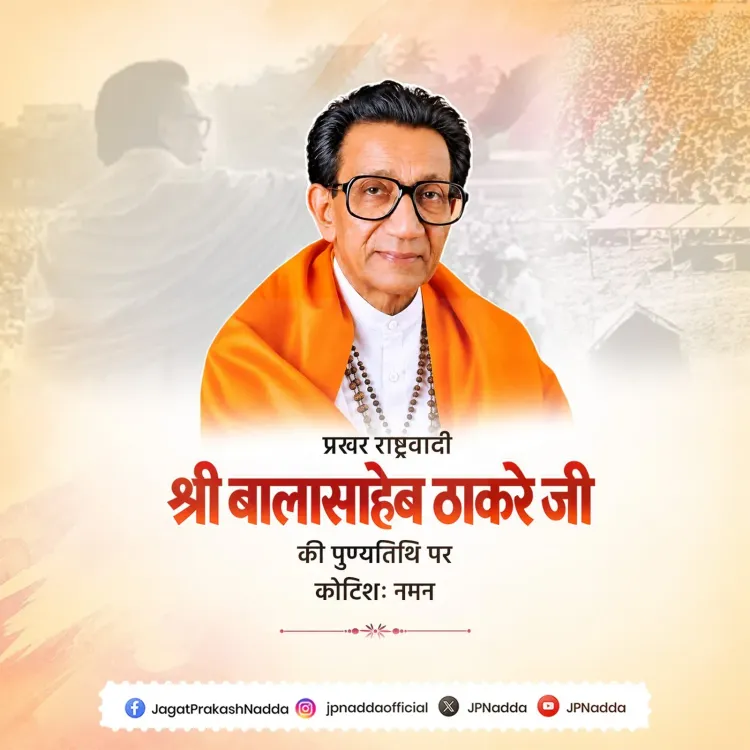
On the death anniversary of Shiv Sena founder Balasaheb Thackeray, Union Health Minister J. P. Nadda offered a solemn tribute on Tuesday, November 17, 2026, honouring the late leader as a 'flag-bearer of ardent nationalist thought' — words that carry weight far beyond ceremony in Maharashtra's charged political landscape.
Nadda's post, written in Hindi, reads: 'Prākhar rāṣṭravādī vicāroṃ ke dhvajavāhak evam Shivsena ke saṃsthāpak śraddheya Bāla Sāheb Ṭhākre jī kī puṇyatithi par unheṃ śraddhāpūrvak naman kartā hūṃ' — 'On the death anniversary of the revered Balasaheb Thackeray, founder of Shiv Sena and standard-bearer of fervent nationalist ideas, I bow to him with deep reverence.' Nadda went on to describe Thackeray as someone who 'remained ever vocal against anti-national forces' and 'fought throughout his life to protect Indian culture, one's own faith, and national interest.'
Who was Balasaheb Thackeray
Balasaheb Thackeray founded the Shiv Sena in 1966, initially as a movement asserting the rights of native Maharashtrians in employment and public life. Over the following decades, the organisation evolved into one of Maharashtra's most powerful political forces, anchored in Hindu cultural nationalism and an uncompromising regional pride. Thackeray passed away on November 17, 2012, leaving behind a legacy that continues to define Maharashtra's political identity.
Nadda described Thackeray's entire political life as 'filled with courage, fearlessness, clear conviction, and cultural self-respect,' adding that 'his commitment to the preservation of Sanatan culture, public service, and the welfare of the poor will forever guide the youth.' The tribute echoes a register of reverence that transcends party lines in Maharashtra, where Thackeray remains a figure of near-mythic stature.
BJP's pattern of Thackeray tributes and the Maharashtra alliance
Nadda's tribute fits a consistent pattern: BJP leaders have regularly marked November 17 — Thackeray's death anniversary — with public statements of respect, a practice that reflects the party's long-running political alignment with Shiv Sena in Maharashtra. The two parties have historically shared governments in the state, and acknowledging Thackeray is both a cultural gesture and a political signal to Maharashtrian voters and Shiv Sena's base.
The language Nadda chose — 'anti-national forces,' 'Sanatan culture,' 'national interest' — mirrors the ideological vocabulary common to both BJP and the Thackeray legacy, underscoring the shared civilisational-nationalist framework that has long cemented their alliance.
Fourteen years after his passing, Balasaheb Thackeray's anniversary remains a moment when national leaders queue to pay respects — a measure of how thoroughly one man's politics embedded itself into the country's mainstream.
Point of View
The BJP national president reinforces the ideological common ground that underpins the BJP-Shiv Sena alliance in Maharashtra. Such tributes serve a dual function: consolidating the loyalty of Thackeray's traditional voter base and signalling continuity of the alliance's shared cultural-nationalist project. The consistency of this November 17 ritual across BJP leadership underscores how central Maharashtra's political arithmetic remains to the party's national strategy.
NationPress
17 Nov 2026
Frequently Asked Questions
Why is November 17 significant for Balasaheb Thackeray?
November 17 is the death anniversary of Shiv Sena founder Balasaheb Thackeray , who passed away on this date in 2012 . Politicians across Maharashtra and nationally mark the day with public tributes.
What did JP Nadda say about Bal Thackeray?
J. P. Nadda called Thackeray a 'flag-bearer of ardent nationalist thought,' praising his courage, fearlessness, and lifelong commitment to Sanatan culture , national interest, and the welfare of the poor.
Who founded Shiv Sena and when?
Balasaheb Thackeray founded the Shiv Sena in 1966 to advocate for the rights of native Maharashtrians and promote Hindu cultural nationalism in Maharashtra.
Why does BJP pay tribute to Bal Thackeray?
The BJP and Shiv Sena have been long-term political allies in Maharashtra. Paying tribute to Thackeray on his death anniversary is a gesture of alliance solidarity and an appeal to Thackeray's large voter base in the state.
What is Balasaheb Thackeray's legacy in Indian politics?
Balasaheb Thackeray is remembered as a towering figure of Maharashtrian regional identity and Hindu nationalist politics. He shaped Maharashtra's political culture for over five decades through Shiv Sena , which he founded in 1966 .