Nadda Inaugurates Burn ICU, Cancer Centre at AIIMS Bathinda
Synopsis
Union Health Minister J. P. Nadda on June 2, 2026, inaugurated a Burn ICU, High Energy Linear Accelerator Centre, PET-CT Scan unit, and Child Development and Early Intervention Centre at AIIMS Bathinda, praising the institute's NABL-accredited laboratories and expanding specialised tertiary care in Punjab.
Key Takeaways
Four facilities inaugurated at AIIMS Bathinda on June 2, 2026 : Burn ICU, High Energy Linear Accelerator Centre, PET-CT Scan unit, and Child Development and Early Intervention Centre.
Nadda praised the institute's NABL-accredited laboratories as a sign of its commitment to quality and reliability.
AIIMS Bathinda was set up under PMSSY , a scheme launched in 2003 to address regional gaps in tertiary healthcare access.
The High Energy Linear Accelerator and PET-CT scanner make AIIMS Bathinda a regional hub for cancer diagnosis and treatment in Punjab .
The Child Development and Early Intervention Centre fills a critical gap in public-sector paediatric care for conditions such as autism and cerebral palsy.
The expansion is expected to reduce patient out-migration from Punjab to metros for advanced treatment.
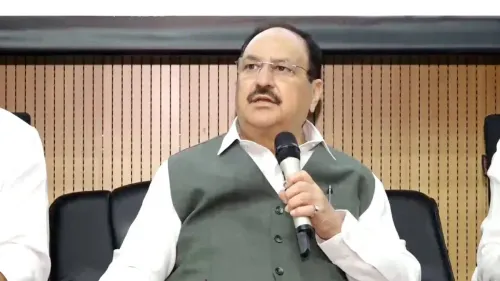
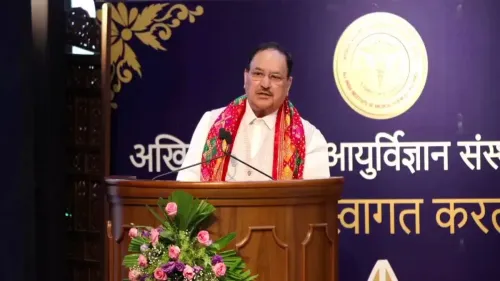
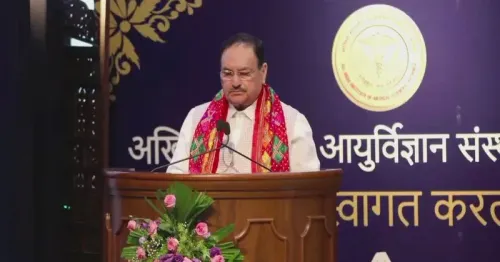
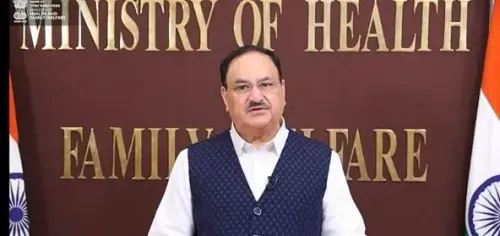
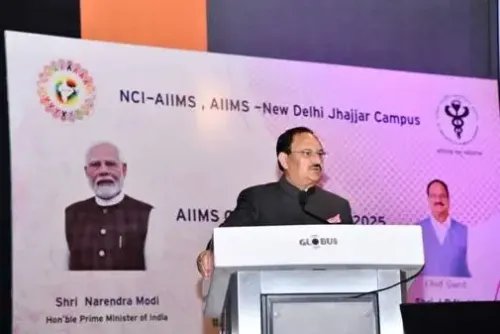
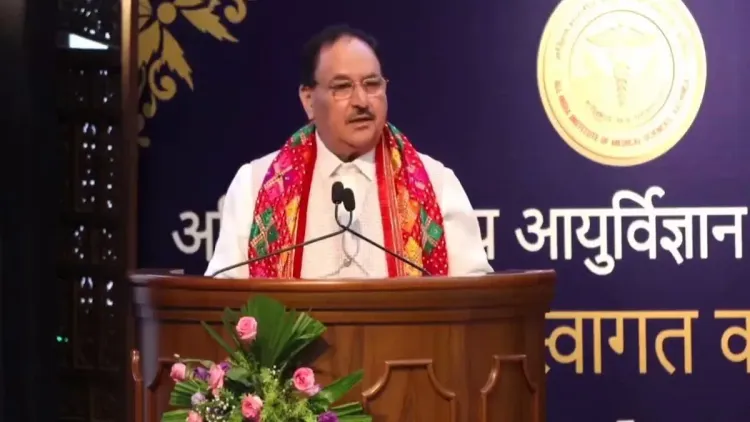
Union Health Minister J. P. Nadda on Tuesday, June 2, 2026, inaugurated four new specialised facilities at AIIMS Bathinda in Punjab, marking a significant expansion of tertiary healthcare services at one of the country's newer central medical institutes. The facilities include a Burn ICU, a High Energy Linear Accelerator Centre, a PET-CT Scan unit, and a Child Development and Early Intervention Centre.
Context
Posting on X, Nadda said he was pleased to get the opportunity to inaugurate the facilities and praised the institute's staff for the quality of infrastructure developed. 'जिस तरीके से आप लोगों ने Facilities Develop की हैं, वो सच में सराहनीय हैं' ('The way you have developed these facilities is truly commendable'), he wrote, specifically highlighting the institute's NABL-accredited laboratories as a reflection of its commitment to quality and reliability.
NABL — the National Accreditation Board for Testing and Calibration Laboratories — is India's apex body for accrediting medical testing labs to ISO standards, and its recognition is considered a benchmark for diagnostic credibility in government hospitals.
Policy Backdrop
AIIMS Bathinda was established under the Pradhan Mantri Swasthya Suraksha Yojana (PMSSY), launched in 2003 to correct regional imbalances in access to affordable tertiary healthcare. PMSSY Phase-I approved six new AIIMS institutions across India, including the one at Bathinda, with subsequent phases funding specialised oncology, critical care, and paediatric infrastructure at these greenfield campuses.
The addition of a High Energy Linear Accelerator — a machine used for precision radiotherapy in cancer treatment — and a PET-CT scanner for advanced diagnostic imaging positions AIIMS Bathinda as a regional oncology hub for Punjab and neighbouring states. These are high-cost technologies that patients in the region would otherwise have had to seek in metros such as Delhi or Chandigarh.
Stakeholders and Impact
The inauguration directly benefits several underserved patient groups: burn victims who previously lacked a dedicated critical care unit in the region, cancer patients requiring radiotherapy, and children with developmental disorders who can now access early intervention services locally. Residents across Punjab, parts of Haryana, and Rajasthan stand to gain from reduced out-migration for advanced treatment.
The Child Development and Early Intervention Centre addresses a largely neglected gap in public tertiary care — structured, multidisciplinary support for conditions such as autism spectrum disorder, cerebral palsy, and developmental delays, which are typically managed only at private centres in large cities.
What's Next
The inauguration is expected to prompt parliamentary scrutiny of patient footfall and equipment utilisation at AIIMS Bathinda, a metric frequently raised in budget discussions on PMSSY-funded institutions. The Union Health Ministry's rollout of similar specialised centres — linear accelerators, PET-CT units, and paediatric intervention blocks — at other newer AIIMS campuses such as Bilaspur and Deoghar is also being watched closely. The Bathinda model, combining oncology, burns care, and paediatric development under one roof, could serve as a template for the next phase of infrastructure upgrades across the network.
Point of View
The ministry is signalling breadth of intent rather than a single-disease focus. Nadda's specific mention of NABL accreditation is also notable; it shifts the narrative from construction milestones to quality benchmarks, a softer but politically durable credential. The real test will be equipment utilisation rates and patient volumes, metrics that parliamentary committees and opposition benches are increasingly scrutinising at the newer AIIMS campuses.
NationPress
16 Oct 2026
Frequently Asked Questions
What facilities were inaugurated at AIIMS Bathinda in June 2026?
Union Health Minister J. P. Nadda inaugurated four facilities at AIIMS Bathinda on June 2, 2026: a Burn ICU, a High Energy Linear Accelerator Centre for cancer radiotherapy, a PET-CT Scan unit, and a Child Development and Early Intervention Centre.
What is AIIMS Bathinda and how was it set up?
AIIMS Bathinda is one of six new All India Institutes of Medical Sciences established under the Pradhan Mantri Swasthya Suraksha Yojana (PMSSY), a central government scheme launched in 2003 to expand tertiary healthcare access across India's regions.
What is a High Energy Linear Accelerator and why does it matter for Punjab patients?
A High Energy Linear Accelerator is a machine used to deliver precision radiotherapy for cancer treatment. Its availability at AIIMS Bathinda means cancer patients in Punjab no longer need to travel to Delhi or Chandigarh for this advanced treatment.
What does NABL accreditation mean for a hospital laboratory?
NABL — the National Accreditation Board for Testing and Calibration Laboratories — certifies that a lab meets ISO standards for accuracy and reliability. NABL accreditation at AIIMS Bathinda's labs means test results meet nationally recognised quality benchmarks.
What is the Child Development and Early Intervention Centre at AIIMS Bathinda?
It is a specialised centre providing multidisciplinary support for children with developmental conditions such as autism spectrum disorder and cerebral palsy, filling a gap in public-sector paediatric care that was previously available mainly at private facilities in large cities.