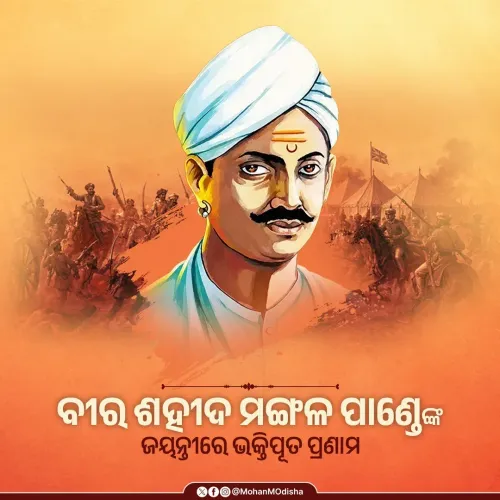
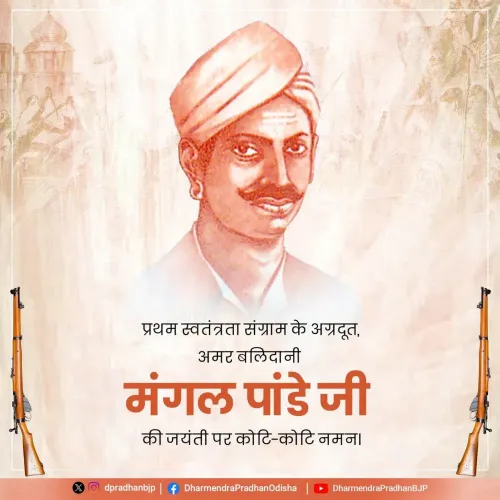
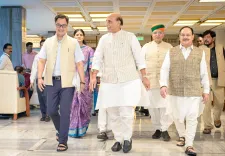
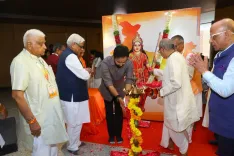
Nadda pays tribute to Mangal Pandey on birth anniversary
Synopsis
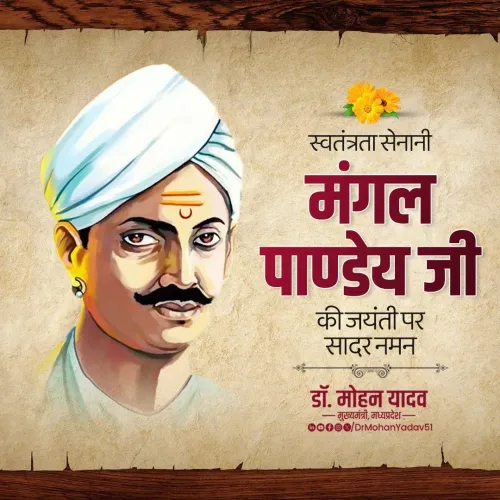
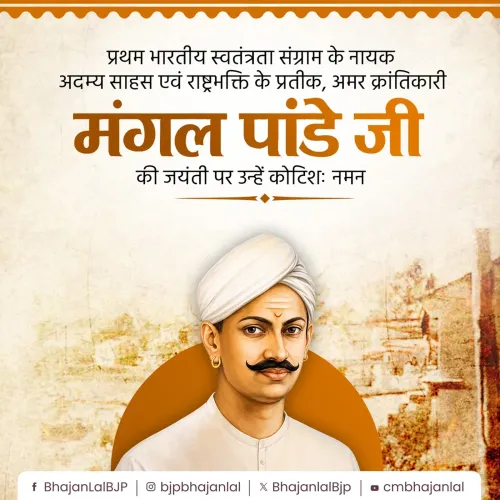
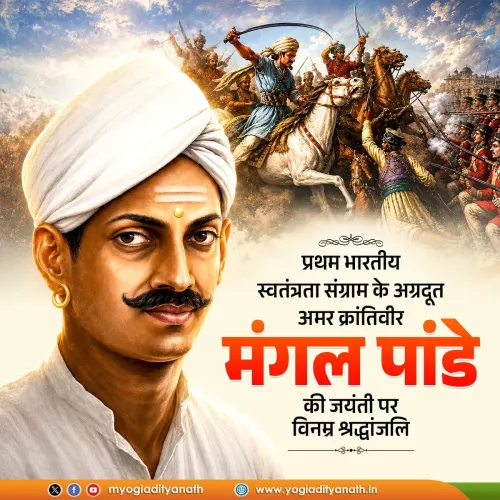
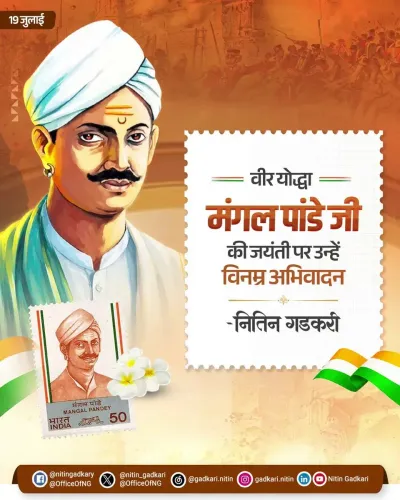
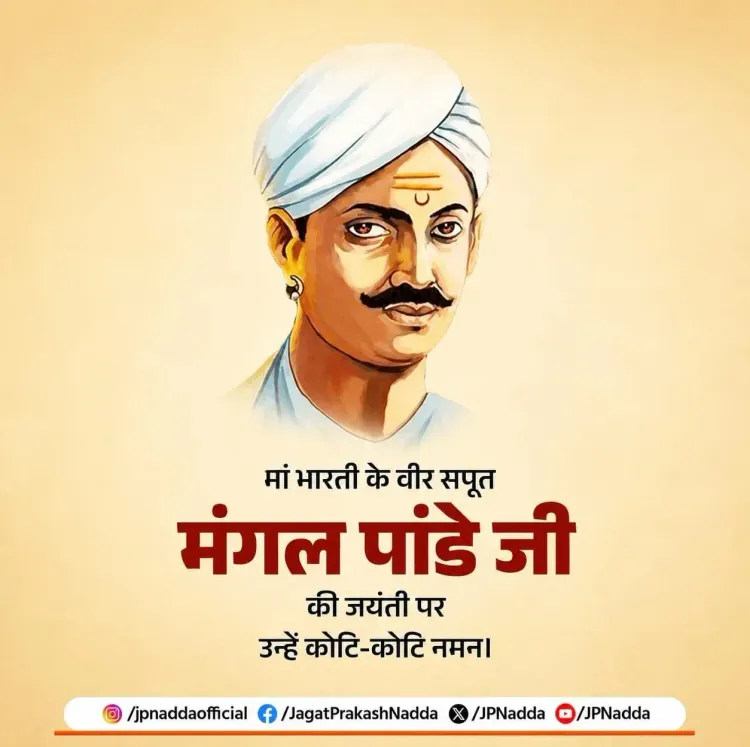
Union Health Minister J. P. Nadda on 19 July 2026 paid homage to Mangal Pandey on his birth anniversary, calling the 1857 sepoy 'a great son of Mother India' whose courage laid the foundation of India's freedom struggle and lit a nationwide flame of resistance against British rule.
Key Takeaways
Nadda , Union Health Minister and BJP national president, posted a tribute to Mangal Pandey on his birth anniversary on 19 July 2026 .
Nadda credited Pandey with 'sounding the bugle of revolution' against British rule in 1857 and laying the foundation of India's freedom struggle.
Mangal Pandey (1827–1857) was a sepoy in the 34th Bengal Native Infantry whose actions at Barrackpore are seen as an early trigger for the 1857 Revolt .
The 1857 uprising , also called the First War of Independence, led to the end of East India Company rule and the transfer of power to the British Crown in 1858 .
The tribute comes weeks ahead of India's 79th Independence Day in August 2026 , a period that typically sees heightened commemorative activity around freedom movement figures.
Union Health Minister and BJP national president J. P. Nadda on Sunday, 19 July 2026 paid homage to freedom fighter Mangal Pandey on his birth anniversary, hailing him as a foundational figure of India's independence struggle whose courage ignited a nationwide flame of resistance against British rule.
Context
Posting in Hindi on X, Nadda wrote: 'ब्रिटिश हुकूमत के खिलाफ 1857 में क्रांति का बिगुल फूंकने वाले महान स्वाधीनता सेनानी मंगल पांडे जी की जयंती पर उन्हें शत-शत नमन करता हूँ' — 'I offer a hundred salutes to the great freedom fighter Mangal Pandey, who sounded the bugle of revolution against British rule in 1857, on his birth anniversary.' He further described Pandey as a 'great son of Mother India' whose indomitable courage and sacrifice against British rule 'laid the foundation of our freedom struggle and ignited the flame of independence across the entire country.'
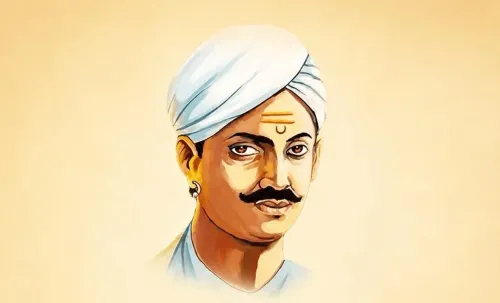
Mangal Pandey, born in 1827, served as a sepoy in the 34th Bengal Native Infantry. His attack on British officers at Barrackpore in early 1857 is widely regarded as one of the earliest sparks of the broader uprising that swept northern and central India that year.
Policy Backdrop
The Revolt of 1857 — also referred to as the First War of Independence — began as a series of sepoy mutinies and civilian uprisings against the East India Company, ultimately leading to the transfer of governance to the British Crown in 1858. The Government of India marked the 150th anniversary of the revolt in 2007 with nationwide exhibitions, seminars, and memorials honouring key figures, including Mangal Pandey.
Senior BJP leaders have consistently paid tribute to figures associated with the 1857 uprising as part of a broader emphasis on early anti-colonial resistance. Such commemorations align with governmental efforts to integrate select historical icons into public discourse, education, and official commemorative calendars.
Stakeholders and Impact
The tribute is directed at Indian citizens and students, reinforcing the cultural and historical significance of pre-Independence resistance movements in public memory. Statements of this nature by senior ministers carry weight in shaping how historical figures are perceived in civic and educational contexts.
With the 79th Independence Day approaching in August 2026, tributes to 1857 figures are expected to intensify across political and governmental platforms, amplifying discourse around India's colonial past and the early roots of the freedom movement.
What's Next
Commemorative programming tied to the 79th Independence Day celebrations in August 2026 is likely to feature further recognition of figures like Mangal Pandey. Observers will also watch for any updates to NCERT or state textbook curricula that may expand coverage of the 1857 revolt and its key protagonists, in keeping with the government's stated emphasis on anti-colonial history.
Point of View
Framing the revolt as the true origin of India's freedom struggle rather than a later, Congress-led movement. Issued weeks before the 79th Independence Day, the post is part of a broader commemorative calendar that senior BJP leaders deploy to reinforce an anti-colonial historical narrative. The emphasis on 'indomitable courage' and 'sacrifice for the motherland' reflects language deliberately chosen to connect 19th-century resistance with contemporary nationalist sentiment. As curriculum debates around NCERT textbooks continue, such high-profile tributes from cabinet ministers can also signal political priorities in how history is taught and remembered.
NationPress
19 Jul 2026
Frequently Asked Questions
Who was Mangal Pandey and why is he famous?
Mangal Pandey (1827–1857) was a sepoy in the 34th Bengal Native Infantry of the East India Company whose attack on British officers at Barrackpore in 1857 is widely considered one of the earliest sparks of the 1857 Revolt, also called the First War of Independence.
When is Mangal Pandey's birth anniversary?
Mangal Pandey was born on 19 July 1827, and his birth anniversary is observed on 19 July each year.
What did JP Nadda say about Mangal Pandey?
Union Health Minister J. P. Nadda said that Mangal Pandey's 'indomitable courage and struggle against British rule laid the foundation of our freedom struggle and ignited the flame of independence across the entire country.'
What was the 1857 Revolt?
The Revolt of 1857, also known as the First War of Independence, was a widespread uprising of sepoys and civilians across northern and central India against the East India Company, which ultimately led to direct British Crown governance from 1858 onward.
Why do BJP leaders frequently tribute 1857 figures?
Senior BJP leaders regularly pay tribute to figures associated with the 1857 uprising as part of a broader emphasis on early anti-colonial resistance, framing the revolt as the foundational moment of India's freedom struggle in public discourse and commemorative events.