Nadda Reviews Project SARATHI Expansion With Mandaviya
Synopsis
Union Health Minister J. P. Nadda and Minister Mansukh Mandaviya reviewed the expansion of Project SARATHI on 1 August 2026, designing a scalable framework to deploy MY Bharat youth volunteers for non-clinical patient support across Indian hospitals, aiming to ease patient experience and free healthcare professionals for clinical work.
Key Takeaways
Project SARATHI deploys trained youth volunteers in hospitals for non-clinical assistance such as patient navigation, queue guidance, and attendant support.
Union Health Minister J.
Nadda and Union Minister Mansukh Mandaviya met on 1 August 2026 to review the programme's expansion.
Volunteers are drawn from MY Bharat , the national youth community-service platform overseen by Minister Mandaviya.
The meeting focused on building a scalable institutional framework to replicate the model across additional healthcare institutions.
The initiative aligns with the National Health Policy 2017 's emphasis on community participation in health service delivery.
The stated goal is to allow healthcare professionals to focus exclusively on clinical care while volunteers handle non-clinical patient needs.
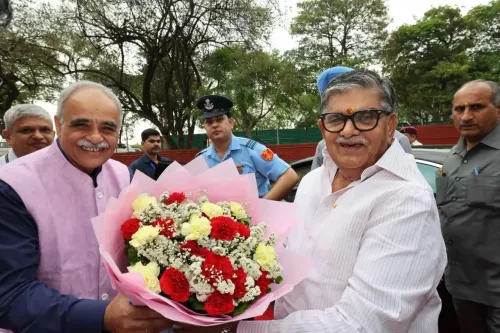
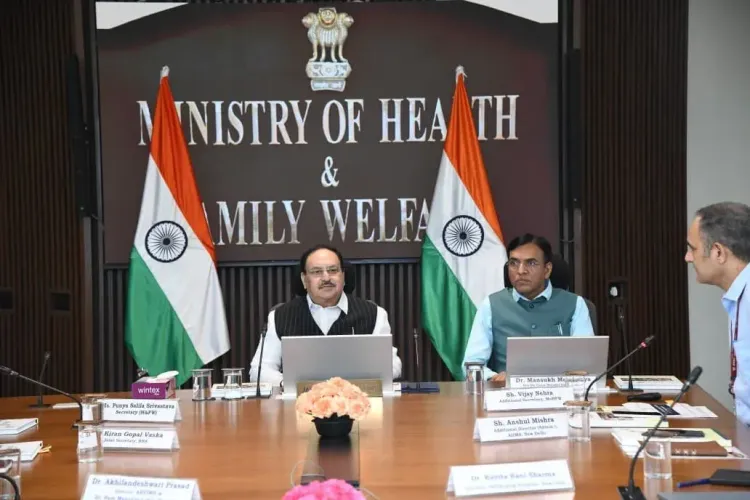
A quiet revolution is reshaping the hospital corridor experience for millions of Indians — and it runs on the energy of young volunteers. Union Health Minister J. P. Nadda on Saturday, 1 August 2026 reviewed the expansion of Project SARATHI across healthcare institutions, meeting with Union Minister Mansukh Mandaviya to chart a scalable framework for institutionalising the youth-led initiative.
At the heart of the review was a deceptively simple idea: free doctors and nurses to do what only they can do, while trained volunteers handle everything else. Nadda described the session as focused on 'ensuring that every patient and attendant receives timely guidance, support and compassion throughout their hospital journey' — a goal that sounds obvious but has historically fallen through the cracks of India's overstretched public health system.
What Project SARATHI Does on the Ground
Project SARATHI deploys trained youth volunteers inside hospitals to provide non-clinical assistance — guiding patients through registration queues, helping attendants navigate ward systems, offering language support, and reducing the ambient confusion that makes a hospital visit feel like an ordeal. The programme draws its volunteer base from MY Bharat, the national platform for youth community service overseen by Minister Mandaviya, giving it a ready pipeline of motivated young people already oriented toward public service. The logic is clean: a first-time patient in a large government hospital often spends more time lost and anxious than in actual clinical care. SARATHI volunteers absorb that friction. Healthcare professionals, in turn, reclaim time and attention for clinical decisions.A Framework to Take It to Scale
Saturday's meeting moved beyond the pilot phase. Nadda and Mandaviya discussed building a scalable institutional framework — the kind of structure that can replicate a working model across dozens or hundreds of facilities without losing quality. The National Health Policy 2017 had flagged community participation as a pillar of patient-centric care; what is now being designed is the administrative architecture to make that aspiration operational at the system level. The minister credited the direction to Prime Minister Narendra Modi's emphasis on accessible, compassionate healthcare — framing SARATHI not as a standalone scheme but as part of a broader government commitment to community-anchored health delivery. The next test is whether the institutional framework translates into measurable reach: more hospitals enrolled, more volunteers trained, and a feedback loop that keeps the model honest. If it does, India's public hospitals may be about to feel meaningfully different — not because of a new machine or a new drug, but because of a young person at the door who knows exactly where to send you.Point of View
Properly structured, can paper over the chronic human-resource gaps in India's public hospital system without additional clinical hiring. The pairing of the Health Ministry with the Youth Affairs portfolio — Nadda and Mandaviya in the same room — signals an intent to institutionalise cross-ministry collaboration on health delivery, a model that has rarely been sustained beyond pilot phases. The emphasis on a 'scalable framework' is the telling phrase: it suggests the government is aware that good pilots die without bureaucratic scaffolding. Whether SARATHI avoids that fate will depend on whether the institutional design announced here translates into enforceable standards, training pipelines, and accountability metrics — details that Saturday's meeting has yet to make public.
NationPress
16 Sept 2026
Frequently Asked Questions
What is Project SARATHI in Indian hospitals?
Project SARATHI is a government initiative that places trained youth volunteers in hospitals to provide non-clinical support — such as guiding patients through registration, helping attendants navigate wards, and reducing confusion — so that healthcare professionals can focus on clinical care.
What is MY Bharat and how does it relate to SARATHI?
MY Bharat is India's national platform for youth volunteering and community service, overseen by Union Minister Mansukh Mandaviya. Project SARATHI draws its volunteer base from MY Bharat, giving the hospital programme a structured pipeline of trained young volunteers.
What did JP Nadda and Mansukh Mandaviya discuss on 1 August 2026?
The two ministers reviewed the expansion of Project SARATHI across healthcare institutions and discussed building a scalable institutional framework to deploy MY Bharat volunteers in more hospitals nationwide.
How does Project SARATHI improve patient experience?
Volunteers trained under SARATHI assist patients and their attendants with non-clinical tasks — navigation, paperwork guidance, language support — reducing the anxiety and confusion that often accompany hospital visits, particularly in large public facilities.
Which national policy supports community participation in Indian healthcare?
The National Health Policy 2017 explicitly highlighted patient-centric care and community participation as pillars of India's health system, providing the policy foundation on which initiatives like Project SARATHI are built.